

Overview
A 9-horse semi trailer for sale is a specialized equine transport vehicle designed to carry up to nine horses in a single load, typically used by professional racehorse trainers, large breeding operations, and commercial equine haulers. The configuration can take two forms: a gooseneck trailer pulled by a heavy-duty pickup, or a semi-trailer coupled to a road tractor through a fifth wheel.
The distinction matters at the procurement stage because the two configurations have different towing requirements, licensing implications, and price structures. A gooseneck 9-horse trailer is the more common specification for private and small commercial operations, while a semi-trailer configuration is used for larger-scale transport where the volume justifies a dedicated tractor and commercial driver. This FAQ addresses the configuration choices, price ranges, and inspection priorities that determine whether a 9-horse trailer purchase fits the operation.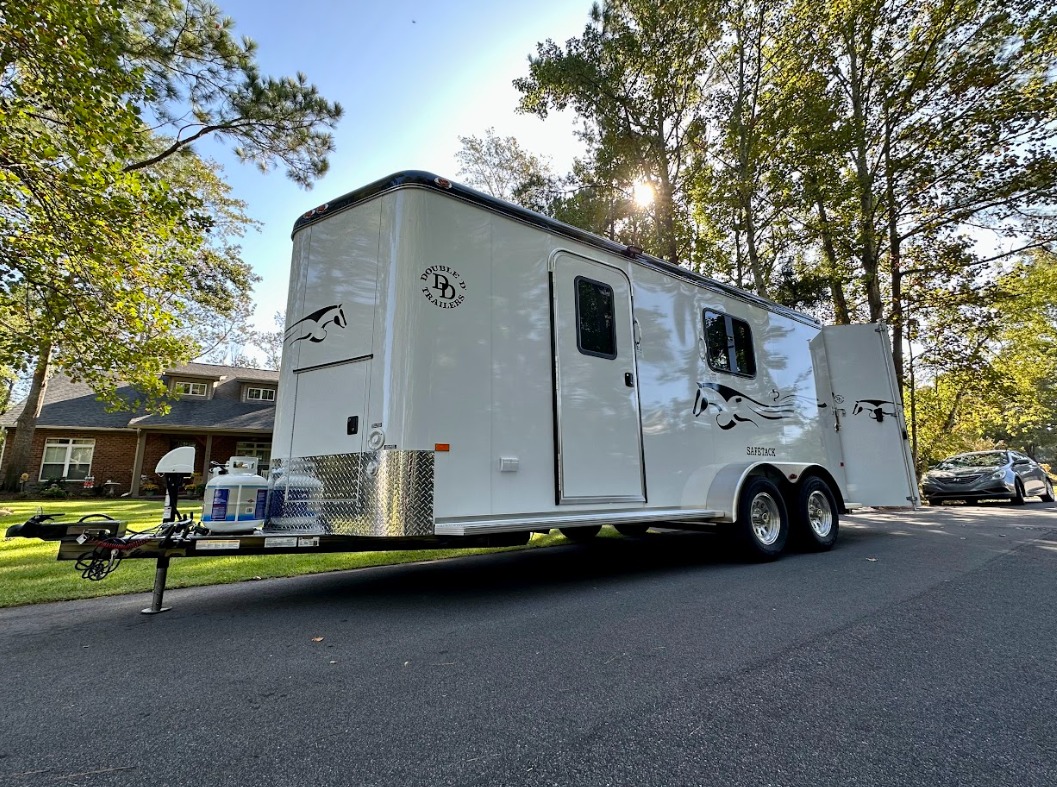
Frequently Asked Questions
What is the difference between a gooseneck and a semi-trailer 9-horse configuration?
A gooseneck 9-horse trailer attaches to a pickup truck bed hitch and is the dominant specification in the North American equine market. A representative new 2026 Twister 9-horse gooseneck lists 38 feet length, 8 feet width, 7 feet 6 inches height, three 8,000 lb axles, and a 9-horse slant load layout with drop-down windows on both sides and a 4-foot trainers split tack room .
A semi-trailer 9-horse configuration couples to a road tractor through a fifth wheel and is more common in European commercial equine transport. One European builder offers a Volvo FH-based horse truck with space for 9 horses and insulated walls and roof for hot-climate operation, though this is a motorized truck rather than a towed trailer . The towed semi-trailer form is less common for equine transport than the gooseneck, because the horse trailer market is dominated by pickup-towed units.
What is the typical price range for a 9-horse trailer?
A new 9-horse gooseneck trailer is a premium specification with a price that reflects its size, axle count, and features. Used 9-horse trailers trade at lower prices depending on age and condition. A 1986 Lite Line 9-horse trailer was listed at $15,000, with a versatile slant layout and a clean title .
The price of a new 9-horse trailer is not directly available from the search results, but the specification provides context: three 8,000 lb axles, aluminum construction, drop-down windows, mangers, an integrated hay pod, and a trainers split tack room are all features that place the unit in the premium segment . For comparison, general semi-trailer pricing ranges from $20,000–$40,000 for basic box or skeleton trailers, $30,000–$70,000 for mainstream products, and $70,000–$120,000+ for high-end specialized models . A purpose-built 9-horse equine trailer sits at the specialized end of that spectrum, and the buyer should request a written specification and quotation rather than relying on a generic price range.
What axle and suspension specifications should a 9-horse trailer have?
A 9-horse trailer should be specified with three axles rated at 7,000–8,000 lb each, providing adequate capacity for the trailer, the horses, and the tack and living systems. The Twister 9-horse configuration uses three 8,000 lb axles with 17.5-inch wheels and electric/hydraulic brakes .
The axle rating is the governing safety specification. Nine horses can weigh 9,000 to 13,500 lb depending on size and breed, and the trailer’s own weight, tack, hay, and water add several thousand pounds more. A three-axle configuration distributes that load across six wheel positions and provides margin for uneven loading. The suspension should be matched to the trailer’s intended use—air suspension offers a smoother ride for horses, while leaf spring suspension is simpler and more durable in rough service. Brakes should be electric/hydraulic on all axles, with a breakaway system and a battery backup.
What interior features matter for 9-horse transport?
The interior features that matter most for 9-horse transport are stall dividers, ventilation, flooring, and headroom. The Twister configuration lists Ai Flow dividers, stud dividers, drop-down windows on both head and tail sides, mangers, and an escape door . These features address the two primary risks in equine transport: injury from horse-to-horse contact, and respiratory stress from poor air quality.
The stall layout is equally important. A slant load configuration angles the horses at approximately 45 degrees to the direction of travel, which allows more horses to fit in a shorter trailer and is thought to be more natural for the horses’ balance . The stalls should be wide enough for the horses to stand comfortably and take a step in either direction, and the dividers should be padded to reduce injury risk. Flooring should be non-slip with mats, and the trailer should have adequate headroom—at least 75 cm (29.5 inches) above the horse’s withers .
What should I inspect on a used 9-horse trailer before buying?
Inspect the frame and undercarriage, floor and ramp condition, axle and brake system, and the interior dividers and padding. A used 9-horse trailer has often carried significant weight over many miles, and the structural and running gear condition determines whether it is a sound purchase or a repair project.
The inspection should cover:
-
Frame and chassis: Check for rust, cracks at the gooseneck attachment, and prior weld repairs.
-
Floor and ramps: Walk the full floor and feel for soft spots. A soft floor under a horse is a catastrophic failure risk. Check the ramp hinges and the non-slip surface.
-
Axles and brakes: Measure brake lining thickness, check for wheel seal leaks, and verify that the breakaway system functions.
-
Interior: Inspect the stall dividers for bends and the padding for tears. Check that the escape door and windows operate correctly.
-
Tires: Check tread depth and DOT date codes. Old tires on a heavy trailer are a blowout risk.
What documentation should come with a 9-horse trailer purchase?
The purchase should include a clear title, a bill of sale with the VIN, and any warranty documentation for a new unit. A used trailer should have a title that matches the VIN on the frame and the VIN plate, and the seller should be able to explain any discrepancies.
For a new trailer, the buyer should obtain the manufacturer’s warranty terms in writing, including the coverage period for the frame, axles, and living quarters if fitted. For a used trailer, the maintenance records—particularly for the brakes, bearings, and floor—provide evidence of how the trailer was cared for. A 9-horse trailer is a high-value asset, and the documentation protects the buyer’s investment and supports resale.
Conclusion
A 9-horse semi trailer for sale comes down to matching the configuration to the towing capability and the operation’s scale. The gooseneck slant-load is the dominant specification for North American buyers, with a new unit offering three 8,000 lb axles, drop-down windows, and a trainers tack room . The semi-trailer form is less common for equine transport but appears in European commercial operations. The price of a new 9-horse trailer reflects its specialized construction and premium features; used units trade at a discount that should be weighed against the inspection findings. The trailer’s data plate, the manufacturer’s specification sheet, and a pre-purchase inspection by a qualified equine trailer technician remain the controlling references for every purchase.