

Introduction
In today's high-stakes mining environment, the pressure to maximize productivity while minimizing operational costs is relentless. Fuel consumption alone can account for up to 40% of operating costs for a large excavator, and with ever-increasing depth in open-pit mines, the efficiency of loading and haulage systems is more critical than ever . The hydraulic excavator stands as a cornerstone of modern mining, yet many operations fail to unlock its full potential due to suboptimal usage and a lack of systematic adaptation to harsh geological conditions. This guide provides a comprehensive, data-driven approach to maximizing the efficiency of your hydraulic excavator fleet, focusing on powertrain optimization, advanced hydraulics, and strategic operational planning to deliver significant gains in productivity and total cost of ownership (TCO).
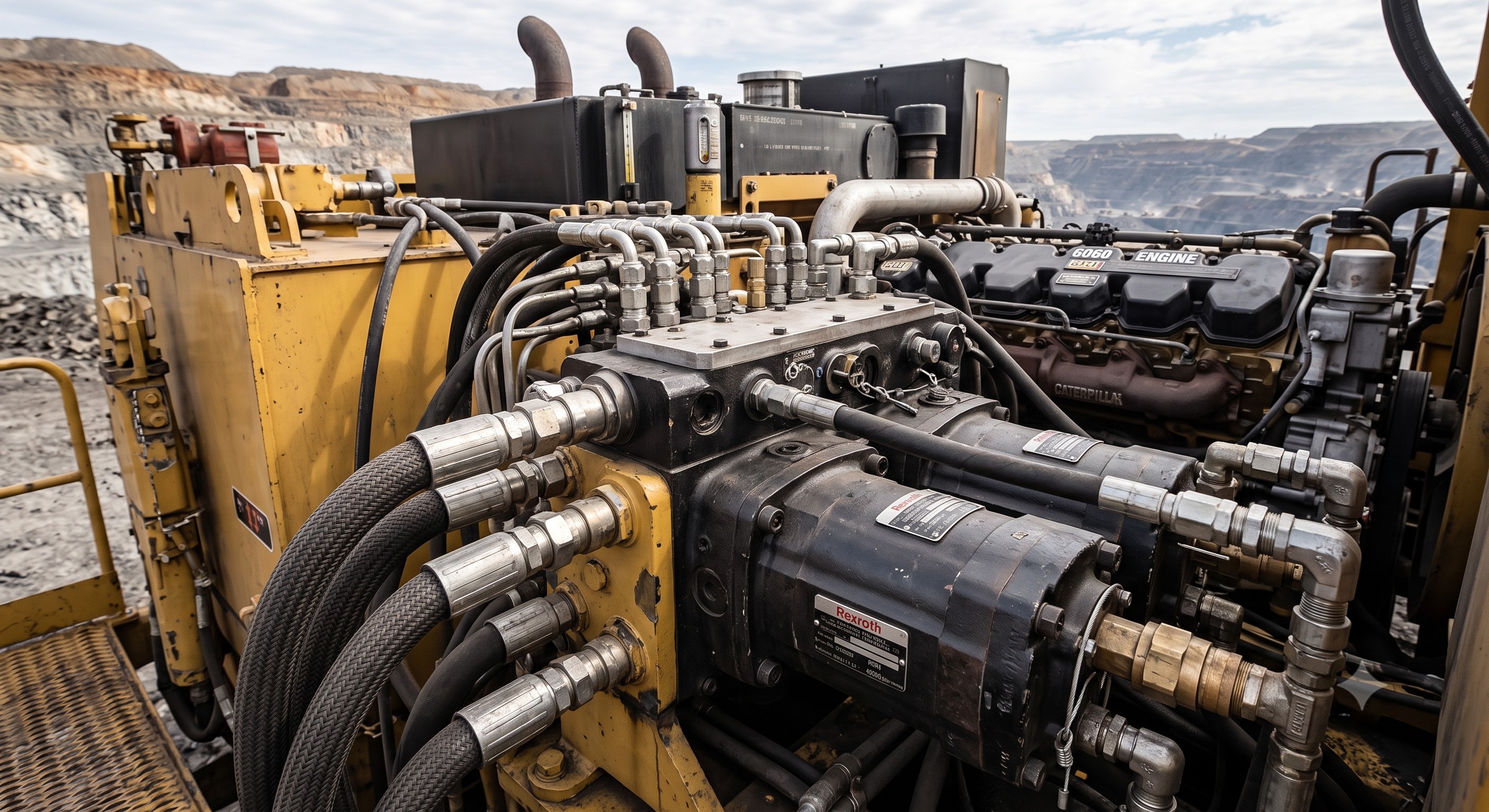
Core Powertrain & Structural Design
Maximizing excavator efficiency begins with understanding its core systems: the engine, hydraulics, and structural design. Modern mining excavators are engineered to deliver high productivity while meeting stringent emissions standards like EPA Tier 4 and EU Stage V, balancing power with fuel economy. For instance, the Komatsu PC950-11 is powered by a 405kW (543HP) Komatsu SAA6D140E-7 engine, offering three selectable work modes—P+, P, and E—to prioritize power or fuel efficiency as needed . This is complemented by a redesigned hydraulic system featuring an electronically controlled closed-loop swing circuit, which enables independent control of swing and digging operations for smoother, more efficient cycles.
Hydraulic System Optimization
The hydraulic system is the heart of an excavator's productivity. Efficiency is maximized through advanced systems like the Liebherr Power Efficiency (LPE) engine and hydraulic management, which has demonstrated up to 30% better fuel efficiency over previous generations . Key advancements include:
- Electro-Hydraulic Control: Systems like those on the Liebherr R 9100 G8 provide smoother, more precise operation, reducing pressure losses and improving cycle times .
- Hybrid Technology: Field trials, such as Macmahon's study at the Martabe Gold Mine, show that hybrid excavators can deliver a 9.6% reduction in hourly fuel consumption, showcasing the potential of hybrid technology in high-swing load cycles .
- Reduced Pressure Losses: Optimized attachments and hydraulic circuits minimize energy waste, directly translating to lower fuel consumption and faster cycle times .
Durability and Structural Integrity
Mining environments are exceptionally harsh, and structural durability is paramount. Reinforced booms, arms, and undercarriages with additional rock protection and internal welds are standard on high-performance models . The undercarriage on the R 9100 G8, for example, features lifetime-sealed travel drives, while the cab is FOPS-certified for operator safety . This robust construction ensures consistent performance and reduces costly downtime, contributing to lower TCO.
Technical Specifications
To truly maximize efficiency, it is essential to match the excavator's technical specifications to the specific mining application. Below is a comparative overview of key parameters for two market-leading models .
| Key Parameter | Komatsu PC950-11 | Liebherr R 9100 G8 |
|---|---|---|
| Engine Horsepower | 405 kW (543 HP) | Fuel-combustion-optimized D9512 |
| Operating Weight | 94–99 tonnes | 100-tonne class |
| Bucket Capacity | 4–6 m³ | 7.0-7.5 m³ (Backhoe) / 7.3 m³ (Face Shovel) |
| Fuel Efficiency Gain | Up to 40% less fuel vs. predecessor | 30% better fuel efficiency vs. G6 |
| Emissions Standard | EPA Tier 4 / EU Stage V | Tier 4 / Stage V (planned) |
Heavy-Duty Application Scenarios
The efficiency of a hydraulic excavator is not solely determined by its design but also by its application. In large-scale mining, the choice between a hydraulic excavator and a rope shovel is critical. Research indicates that while rope shovels are more efficient in hard rock formations, hydraulic excavators offer higher utilization factors (over 0.7) in zones with a low concentration of drilling and blasting operations . A combined approach, using hydraulic excavators in areas where a rope shovel's utilization factor falls below 0.5, can significantly improve overall mine efficiency .
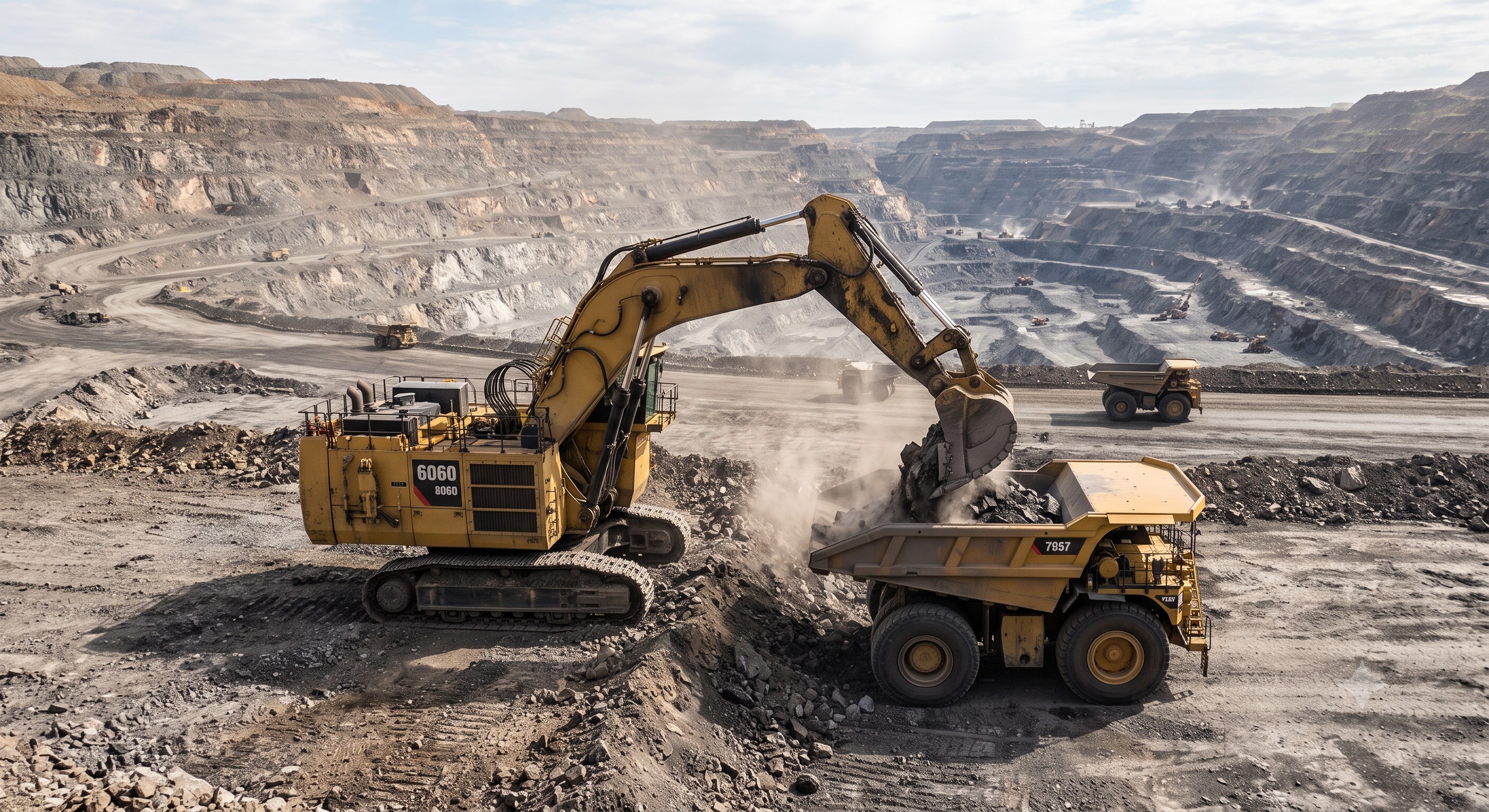
The strategic deployment of hydraulic excavators can lead to a 10% reduction in the operational stripping ratio, particularly when using backhoe-type excavators that allow for narrower working benches and steeper pit slopes . Furthermore, advancements in electric drive technology offer a pathway to reduce CO2 emissions by up to 95% and lower TCO by as much as 50%, making hydraulic excavators a sustainable choice for the future of mining .
Conclusion
Maximizing the efficiency of a hydraulic excavator in mining is a multi-faceted challenge that demands a systematic approach. By optimizing the powertrain, leveraging advanced hydraulic technologies, and strategically deploying machines based on their optimal application zones, mining operations can achieve substantial gains in productivity and profitability. The data is clear: modern excavators like the Komatsu PC950-11 and Liebherr R 9100 G8 are delivering unprecedented fuel efficiency and productivity . As the industry moves towards electrification and sustainability, the hydraulic excavator will continue to be a versatile and indispensable tool for efficient, cost-effective mining.