

Overview
Sourcing a mini excavator for direct purchase is a strategic decision that goes beyond comparing price tags. For B2B procurement and fleet managers, the best approach involves a comprehensive evaluation of the supplier's technical compliance, production capacity, customization options, and after-sales support. This FAQ article provides expert answers to the most critical questions, helping you navigate the sourcing process, understand key specifications, and establish a robust maintenance plan to protect your investment and ensure long-term reliability.
Frequently Asked Questions
Q1: What is the best way to source a mini excavator for direct B2B purchase?
The best way to source a mini excavator directly is to use a structured supplier evaluation framework that prioritizes technical compliance, operational reliability, and transaction security over price alone . Start by verifying that potential suppliers hold critical certifications for your market, such as CE for Europe, EPA Tier 4 for North America, and ISO 9001 for quality management . Assess their production infrastructure by confirming factory size (ideally >5,000 m²) and in-house capabilities like welding, painting, and hydraulic testing, which reduce outsourcing risks . Finally, mitigate risk by ordering a sample unit first, using trade assurance for payments, and conducting a virtual or third-party factory audit to inspect build quality before committing to a bulk order .
Q2: What is the standard operating capacity and engine power for a mini excavator?
The standard operating capacity and engine power for a mini excavator vary significantly based on its weight class, typically ranging from 1 to 6 tons. For instance, a 1.8-ton model like the Bull 18-X offers a breakout force of up to 4,144 pounds and is powered by a 19.5-horsepower Kubota diesel engine . In contrast, larger units, such as the 3.5-ton Cat 303.5 CR, can weigh over 9,200 lb and generate up to 23.6 hp . John Deere's 2.7-ton 26 P-Tier model provides 20 horsepower, an arm tearout force of 3,410 lbf, and a bucket breakout force of 4,994 lbf . When sourcing, look for models with engines from reputable brands like Kubota or Yanmar, and ensure the unit's specifications match your project's digging depth and lifting requirements .
Q3: What are the standard maintenance intervals for a mini excavator?
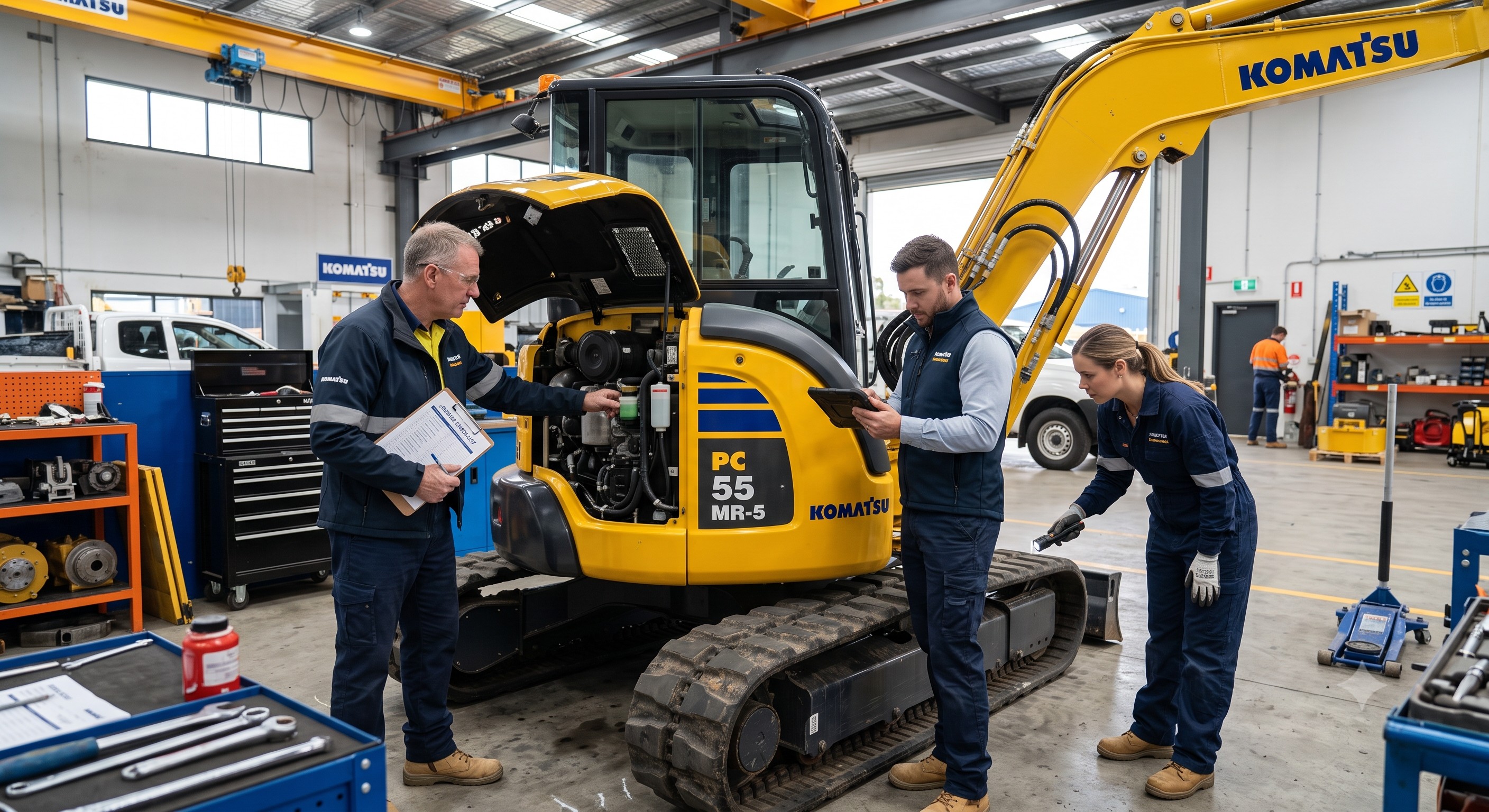
The standard maintenance intervals for a mini excavator follow a structured schedule based on engine hours, with critical checks and replacements scheduled from the first 50 hours up to every 1,000 hours of operation. Initial service after the first 50 hours requires replacing the engine oil, oil filter, fuel filter, and hydraulic filter . After every 50 hours, you should grease the swing bearing and swing pinion, and drain water from the fuel tank . At 500-hour intervals, the engine oil, oil filter, and hydraulic filters must be replaced, and the cooling system should be cleaned . For hydraulic fluid, some manufacturers recommend replacement at 1,000 hours , while others, like Cat, allow up to 3,000 hours before changing the fluid, though filters are replaced more frequently . Adhering to this schedule is critical for preventing major mechanical issues and extending the machine's lifespan .
Q4: What are the key engine emissions and compliance requirements for mini excavators?
Engine emissions compliance for mini excavators is strictly dictated by the target market, with EPA Tier 4 Final being mandatory for new equipment sold in North America and Stage V regulations required for Europe . For direct purchases from overseas suppliers, it is non-negotiable to request official documentation matching the engine model number to prove compliance with these standards . Established suppliers in manufacturing hubs like Shandong province are increasingly offering EPA-certified models, making it easier for B2B buyers to ensure regulatory alignment and avoid customs clearance issues . For indoor or eco-sensitive applications, electric mini excavators are also gaining traction as they eliminate emissions, though they are generally limited to lighter-duty tasks .
Q5: What attachments are compatible with a mini excavator, and can they be customized?
Mini excavators are highly versatile and can be equipped with a wide range of attachments, including augers, rippers, grading buckets, hydraulic thumbs, and forks, to handle various tasks like demolition, trenching, and material sorting . Compatibility hinges on the machine's hydraulic system; thus, when sourcing, you can request advanced modifications such as adjustments to hydraulic flow rates and integration of auxiliary circuits for specific attachments . Top-tier suppliers like Shandong Infront and Shandong Baisway offer deep customization options, allowing you to configure hydraulic systems with multi-way valves, pilot controls, and hydraulic thumbs, as well as functional upgrades like telescopic tracks and enclosed cabins . When ordering, clearly specify your attachment needs to ensure the machine is factory-plumbed with the correct coupler standards .
Q6: What is the typical lead time for direct purchase and shipping of a mini excavator?
The typical lead time for a direct purchase order is 15–30 days for production, followed by an additional 25–40 days for ocean freight transit to major ports . For urgent sample units, air freight is possible and can deliver in 7–10 days, but the cost often exceeds the unit price, making it impractical for multiple units . Many suppliers offer FOB (Free on Board) terms from Chinese ports like Qingdao or Yantai, but CIF (Cost, Insurance, and Freight) arrangements are negotiable to simplify logistics for first-time importers . To minimize delays, confirm the supplier's stock status and production schedule, and require them to provide a Bill of Lading and packing list prior to shipment .
Q7: How can I verify the credibility of a mini excavator supplier before placing a large order?
Verify a supplier's credibility by implementing a multi-layered due diligence process that includes reviewing performance metrics, requesting documentation, and conducting inspections. On digital platforms, examine key performance indicators like on-time delivery rate (aim for ≥99%), reorder rate (a high rate like 80% indicates strong customer satisfaction ), and response time (≤2 hours is a sign of operational discipline) . Request and verify certificates such as CE, ISO 9001, and EPA Tier 4 compliance, and ask for third-party inspection reports from firms like SGS or Bureau Veritas . Finally, do not rely solely on claims; arrange a live video tour of the factory to observe welding quality, paint finish, and assembly processes before releasing the final payment .
Q8: What are the spare parts availability and after-sales support options when buying directly?
When buying directly, spare parts availability and after-sales support are crucial and should be verified before placing an order, as they directly impact machine uptime and operational costs. Top-tier suppliers typically offer accessible technical support and can provide a list of common wear items like buckets, pins, hoses, and filters that you should stock proactively to improve service agility . Evaluate the supplier's responsiveness to technical inquiries and their ability to provide multilingual service teams, which reduces downtime for your end customers . It is also advisable to confirm if they can provide regional warehouses for parts distribution . While some suppliers offer remote diagnostics for IoT-enabled machines, this is a premium feature, so prioritize partners who can demonstrate a clear logistics plan for parts delivery .