

Introduction
Semi trailer ramps are the loading interface between the ground and the trailer deck, allowing wheeled or tracked machinery to be driven onto a lowbed, drop-deck, or flatbed trailer. The category divides into two dominant mechanisms: hydraulic ramps, which use an electric hydraulic power unit to adjust angle and fold automatically, and spring-assisted ramps, which rely on high-strength built-in springs to let one worker open and close the ramp manually . The choice between them is not a matter of preference but of duty cycle, labor availability, and site conditions.
The operational pressure on ramp selection is concrete. A ramp that is too weak for the machinery it must support will bend under the load, creating a safety hazard and a loading failure. A ramp that requires two workers and 20 minutes to deploy adds labor cost and turnaround time to every load. A ramp without adequate fall protection exposes workers to OSHA violations and injury risk. For fleet managers and contractors, the ramp is a productivity and safety component whose specification determines whether loading is a routine operation or a recurring bottleneck.
This guide examines the two ramp mechanisms, the capacity ranges that determine suitability for different machinery weights, the regulatory requirements that apply to ramp use, and the selection considerations that match the ramp to the fleet's actual loading profile.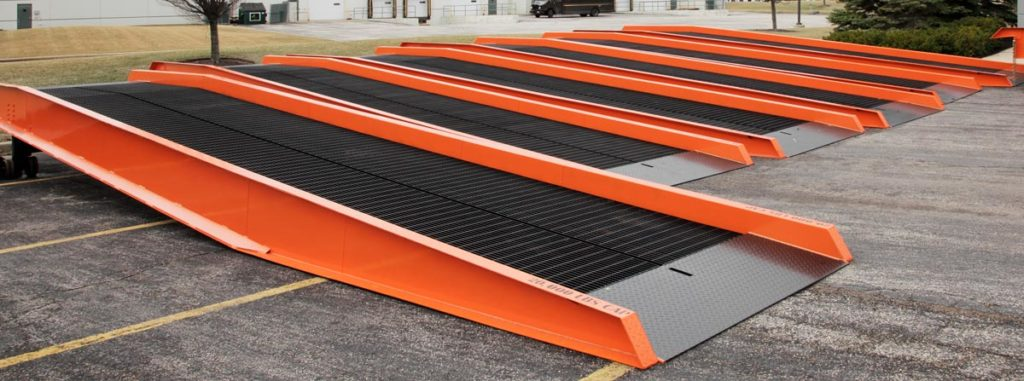
Core Powertrain and Structural Design
Engine and Transmission
Semi trailer ramps have no relationship to the tractor's engine or transmission. Their performance is defined by the ramp's structural capacity, the deployment mechanism, and the surface condition of the loading area. The ramp is a passive structure that transfers the machinery's weight from the ground to the trailer deck, and its design must account for the dynamic loads imposed during loading—acceleration, braking, and the shifting center of gravity as the machine climbs.
Hydraulic System
Hydraulic ramps use an electric hydraulic power unit to control ramp angle and folding. The operator presses a button, and the ramp adjusts automatically, folding up and down without manual effort . This mechanism is suited to fleet operations with daily high-volume transport work, where the labor and time saved on each loading cycle accumulate into significant productivity gains. The hydraulic system adds maintenance surface area—cylinders, hoses, pump, and control valves—but eliminates the physical effort of manual ramp handling.
Spring-assisted ramps have no hydraulic system. High-strength built-in springs counterbalance the ramp's weight, allowing one worker to open and close it easily . The structure is simple, with no hydraulic pipelines or electric parts, and it rarely breaks down. This makes it suitable for occasional field jobs and small engineering teams where maintenance access is limited and loading frequency is low.
Chassis and Structural Durability
The ramp's load-bearing structure is its defining durability factor. For heavy machinery, ramps are built from thick anti-slip steel with reinforced bracing. Industry sources indicate that a properly specified spring-assisted ramp can hold stable when loading 60 to 80-ton tracked equipment . The ramp thickness and the quality of the spring or hydraulic mechanism determine whether the ramp survives repeated loading cycles or deforms under a single overweight machine.
Surface treatment matters for safety and longevity. Anti-slip steel provides traction for tracked and wheeled machinery, particularly in wet or muddy conditions. The ramp's hinges, pins, and mounting points are the wear points that require inspection at defined intervals.
Technical Specifications
The table below presents representative parameters for semi trailer ramp types. Values are typical industry references; actual specifications vary by manufacturer, trailer model, and configuration.
Comparative Advantages TCO and ROI
The ramp decision is a labor versus capital comparison. Hydraulic ramps cost more upfront but save labor on every loading cycle. Spring-assisted ramps cost less and require almost no maintenance but depend on manual effort and are best suited to infrequent use.
A defensible comparison requires stated assumptions. Consider a fleet operating a lowbed trailer with two loading cycles per day, 250 days per year. If a spring-assisted ramp requires 15 minutes of manual effort per cycle and a hydraulic ramp reduces that to 2 minutes, the hydraulic ramp saves approximately 108 hours of labor per year. At a labor rate of 150 CNY per hour, the annual saving is 16,200 CNY. Against a hydraulic ramp premium that varies by manufacturer and configuration, the payback period depends on the actual labor cost and loading frequency. For a fleet with daily high-volume work, the hydraulic ramp's labor savings accumulate quickly . For a contractor loading a machine once a week, the spring-assisted ramp's lower cost and simpler maintenance are the better fit.
Maintenance cost tilts the comparison in the other direction. Hydraulic ramps have cylinders, hoses, and valves that require inspection and occasional replacement. Spring-assisted ramps have no hydraulic components and rarely break down . The fleet's maintenance capability and the ramp's operating environment determine which trade-off is more favorable.
Safety and compliance add a non-financial factor. Where personnel must access the trailer deck via the ramp, OSHA requires guardrails or other fall protection at heights exceeding 6 feet . This is a separate requirement from the ramp's vehicle-loading function, but it affects the overall loading setup and may require additional equipment.
Heavy Duty Application Scenarios
-
Daily high-volume machinery transport: Hydraulic ramps are the appropriate specification. The button-operated adjustment and automatic folding save labor and time on every cycle, and the system works smoothly even on bumpy, uneven ground .
-
Occasional field jobs and small teams: Spring-assisted ramps are the practical choice. The simple structure, low maintenance, and one-worker operation suit operations where loading frequency is low and maintenance access is limited .
-
Heavy tracked equipment: Ramps must be specified for the machine's weight with margin for dynamic loading. A spring-assisted ramp rated for 60–80 tons of tracked equipment is adequate for excavators and dozers in occasional use, provided the ramp thickness and bracing are appropriate .
-
Personnel access during loading: Where workers must walk on the ramp or trailer deck, OSHA fall-protection requirements apply. Guardrails are required above 6 feet of elevation, and the ramp setup must accommodate them .
Selection and Maintenance Considerations
Selecting semi trailer ramps begins with the machinery weight and loading frequency, not the ramp's price. The first question is: what is the heaviest machine the ramp must support, and how often will it be loaded? The second is: who will operate the ramp, and what maintenance capability is available on site?
Key considerations include:
-
Match the ramp capacity to the machinery weight with margin. A ramp rated for 60–80 tons of tracked equipment is adequate for many excavators and dozers, but the machine's actual weight and the dynamic loads during loading must be considered .
-
Choose hydraulic for frequency, spring for simplicity. Hydraulic ramps reduce labor on every cycle and suit daily high-volume operations. Spring-assisted ramps cost less, require almost no maintenance, and suit occasional field jobs .
-
Verify OSHA fall-protection requirements for personnel access. If workers must access the trailer deck via the ramp, guardrails are required above 6 feet . This may require additional equipment beyond the ramp itself.
-
Inspect ramp hinges, pins, and surface condition at defined intervals. The deployment mechanism and the anti-slip surface are the wear points. A ramp with a bent hinge or worn traction surface is a safety hazard.
-
Consider the loading environment. Hydraulic ramps adjust smoothly on uneven ground, while spring-assisted ramps may require more careful positioning on soft or sloped surfaces .
Conclusion
Semi trailer ramps are specified by mechanism, capacity, and duty cycle. Hydraulic ramps use an electric power unit to adjust angle and fold automatically, saving labor and time in daily high-volume operations. Spring-assisted ramps use built-in springs for one-worker manual operation, offering simplicity and low maintenance for occasional field jobs . A properly specified spring-assisted ramp can handle 60–80 tons of tracked equipment, and hydraulic ramps provide the labor efficiency that frequent loading demands.
The engineering priorities are clear: match the ramp capacity to the machinery weight with margin, choose the mechanism that fits the loading frequency and maintenance capability, and verify OSHA fall-protection requirements where personnel access is involved . The commercial priorities follow: hydraulic ramps pay back through labor savings in high-frequency operations, while spring-assisted ramps deliver lower cost and simpler maintenance for occasional use. The ramp that fits the machinery, the loading schedule, and the site conditions is the one that turns loading from a bottleneck into a routine operation.