

Introduction
In the rapidly evolving landscape of urban construction, mining development, and industrial earthmoving, procurement managers and fleet owners face a relentless challenge: securing compact machinery that delivers maximum uptime, superior fuel efficiency, and strict regulatory compliance without sacrificing breakout force. The era of simply comparing price tags is over. Today, a strategic mini excavator source supplier selection demands a forensic analysis of powertrain engineering, hydraulic architecture, structural durability, and Total Cost of Ownership (TCO). This guide, authored by a Lead Mechanical Engineer with 15 years in heavy equipment, provides an objective, data-driven framework to navigate the sourcing process, ensuring your investment yields measurable productivity gains for the next decade.
Core Powertrain & Structural Design
The performance of any mini excavator is dictated by the synergy between its engine, hydraulic system, and undercarriage. This section dissects these critical subsystems.
Engine & Emissions Compliance
Modern mini excavators are powered by liquid-cooled, direct-injection diesel engines. For global sourcing, two primary emission standards dominate: EPA Tier 4 Final (North America) and EU Stage V (Europe). These standards mandate the use of advanced after-treatment systems, including Diesel Particulate Filters (DPF) and Selective Catalytic Reduction (SCR). While these systems increase initial cost, they are non-negotiable for sites enforcing strict environmental regulations. Evaluate suppliers based on their ability to provide engines that meet these standards without compromising on power density. Key metrics to compare include net horsepower (hp) measured at the flywheel and peak torque rise—a higher percentage (20-30%) indicates better lugging capability under load.
Hydraulic Architecture
The hydraulic system is the neural network of the machine. A superior mini excavator source supplier employs a load-sensing, closed-center hydraulic system with a variable-displacement piston pump. This configuration offers significant advantages over open-center systems by reducing parasitic losses and improving fine control during precision tasks like pipe laying and grading. Evaluate the auxiliary hydraulic flow (GPM/L/min) and system relief pressure (psi/bar). Higher flow and pressure directly correlate to the machine’s ability to run high-demand attachments, such as hydraulic breakers and compactors. Additionally, the use of proportional joystick controls with electric-over-hydraulic (EOH) valves enhances operator efficiency and reduces fatigue, a critical factor in long-duration projects.
Undercarriage & Durability
The undercarriage comprises the track frame, final drives, and track chains. For heavy-duty applications, prioritize suppliers that offer sealed and lubricated track (Sealed and Lubricated Track - SALT) systems, which extend track life by preventing internal bushing wear. The track gauge and ground contact area determine the machine’s ground pressure (psi). A lower ground pressure is essential for operating on soft, swampy, or finished surfaces to prevent rutting. Furthermore, assess the structural integrity of the X-frame or box-section chassis. The use of high-tensile strength steel (e.g., Q345B or equivalent) in the mainframe is a hallmark of a durable design capable of withstanding torsional stresses during heavy lifting and demolition.
Technical Specifications
To make an objective decision, raw data is paramount. Below is a comparative analysis of a representative high-performance mini excavator in the 5-8 metric ton class, a sweet spot for versatility in both construction and utility work.
| Key Parameter | Technical Specification (7-Ton Class) |
|---|---|
| Engine Horsepower (Net) | 67 hp (50 kW) @ 2200 rpm |
| Operating Weight | 7,500 kg (16,534 lbs) |
| Hydraulic System Pressure | 4,500 psi (310 bar) |
| Auxiliary Hydraulic Flow | 22 GPM (83 L/min) |
| Fuel Tank Capacity | 45 gal (170 L) |
| Maximum Digging Depth | 14.1 ft (4.3 m) |
| Ground Pressure (with standard tracks) | 4.7 psi (32.4 kPa) |
| Emissions Standard | EPA Tier 4 Final / EU Stage V |
| Safety Certification | ROPS/FOPS (ISO 3471/ISO 3449) |
Comparative Advantage: TCO, Fuel Efficiency, and ROI Analysis
When evaluating a mini excavator source supplier, the purchase price is only the beginning. A comprehensive cost model must consider Total Cost of Ownership (TCO), which encompasses purchase price, fuel consumption, maintenance, and residual value.
Fuel Efficiency: The implementation of auto-idle and economy (Eco) modes can reduce fuel consumption by 15-20% during light-duty cycles. For a machine working 2,000 hours annually, at an average diesel price of $3.50/gallon, a 1 gallon/hour saving translates to $7,000 saved per year per machine.
Maintenance Intervals: Look for suppliers that extend service intervals (e.g., engine oil change every 500 hours, hydraulic oil every 2,000 hours). Extended intervals reduce machine downtime and consumable costs. The ease of access to service points (ground-level maintenance) is a critical design feature that directly impacts technician efficiency.
Resale Value: Machines from top-tier manufacturers often retain 60-70% of their value after 5 years. This is attributed to brand equity, parts availability, and certified pre-owned (CPO) programs. When sourcing, consider the supplier’s global footprint for parts distribution; a 24-hour parts delivery guarantee can mitigate expensive project delays.
ROI Analysis: A well-sourced mini excavator should achieve a payback period of under 18 months in rental or active construction use. Calculate the daily operating cost against daily revenue generation. A machine with superior hydraulic flow can reduce cycle times by 10%, directly boosting project margins.
Heavy-Duty Application Scenarios
The versatility of the compact excavator is unmatched. Here are the primary applications where a correctly sourced machine proves its merit.
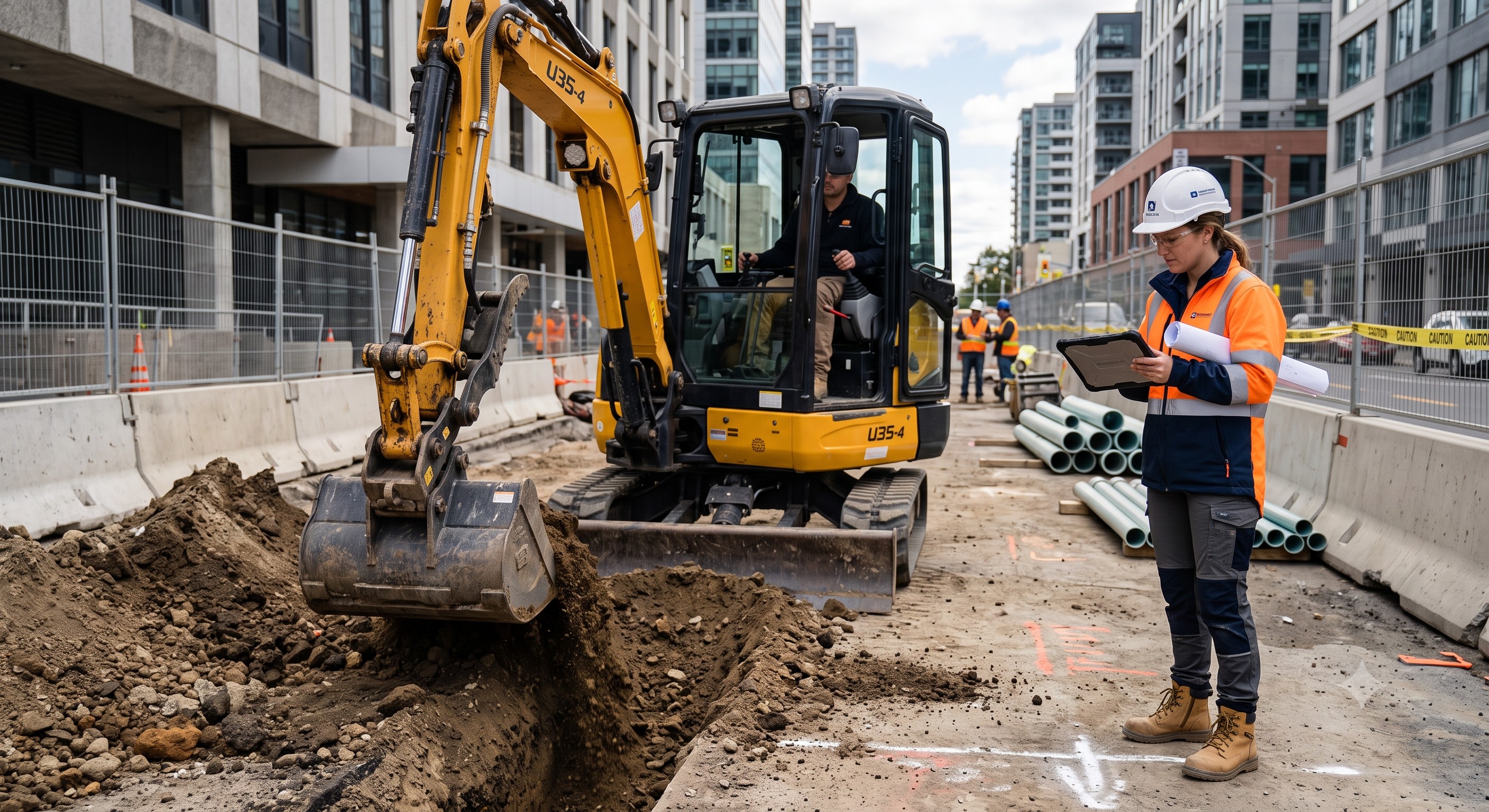
[CONTENT_IMAGE_2]- Urban Construction & Demolition: In confined sites, mini excavators excel at basement excavation, trenching for utilities, and interior demolition. The compact swing radius and zero-tail-swing (ZTS) designs are crucial for navigating tight alleyways without endangering structural integrity.
- Mining & Quarrying: Here, the emphasis shifts to breakout force and undercarriage durability. Mini excavators are used for shotcrete placement, light rock scaling, and channel excavation. The integration of ROPS/FOPS (Roll-Over Protective Structure / Falling Object Protective Structure) certified cabs is non-negotiable for operator safety in these high-risk environments.
- Earthmoving & Landscaping: For large-scale grading and land clearing, performance in deep digging and high-speed travel is essential. Key metrics include maximum digging depth and dump height. The ability to quickly change attachments (from buckets to grading blades to augers) drastically increases machine utilization rates.
- Manufacturing & Recycling: In plant environments, these machines manage bulk material handling, feeding crushers, and scrap yard management. Specialized guarding and high-temperature cooling packages are often required to protect the powertrain in dusty or extreme heat conditions.
Conclusion
Selecting the optimal mini excavator source supplier is a strategic engineering decision that goes beyond basic specifications. It requires a holistic evaluation of powertrain efficiency, hydraulic intelligence, structural resilience, and global compliance. By prioritizing data—from specific fuel consumption curves to hydraulic pump displacement—procurement teams can ensure their fleets are equipped for the demanding productivity requirements of modern industry. The future of heavy machinery lies in electrification and telematics, but the fundamental principles of robust, reliable engineering remain. Utilize this guide as your technical baseline to forge partnerships with suppliers that demonstrate excellence in manufacturing, quality control, and post-sale support. Invest wisely, and your operation will yield dividends in efficiency and profitability for years to come.