

Introduction
Wood mills generate substantial quantities of sawdust, wood chips, shavings, and fine particulate matter during sawing, planing, sanding, grinding, and other processing operations. Managing these materials efficiently is important for maintaining production continuity, reducing housekeeping requirements, protecting workers, and controlling airborne dust.
A wood mill dust collection system connected to a semi trailer can form part of an integrated material-handling arrangement. Depending on the facility's requirements, the configuration may involve stationary dust collectors that discharge collected material into a trailer, mobile collection equipment mounted on a trailer, or a pneumatic conveying system that transfers wood residues into a bulk transport body.
These arrangements serve different purposes. A stationary collector primarily captures dust at production equipment, while a trailer provides temporary storage or transportation capacity. A mobile trailer-mounted system combines collection and transport functions but requires appropriate power, filtration, material handling, and safety engineering.
The most suitable configuration depends on the type and moisture content of the wood waste, particle size, required collection volume, transport distance, available loading infrastructure, and local environmental and fire-safety requirements.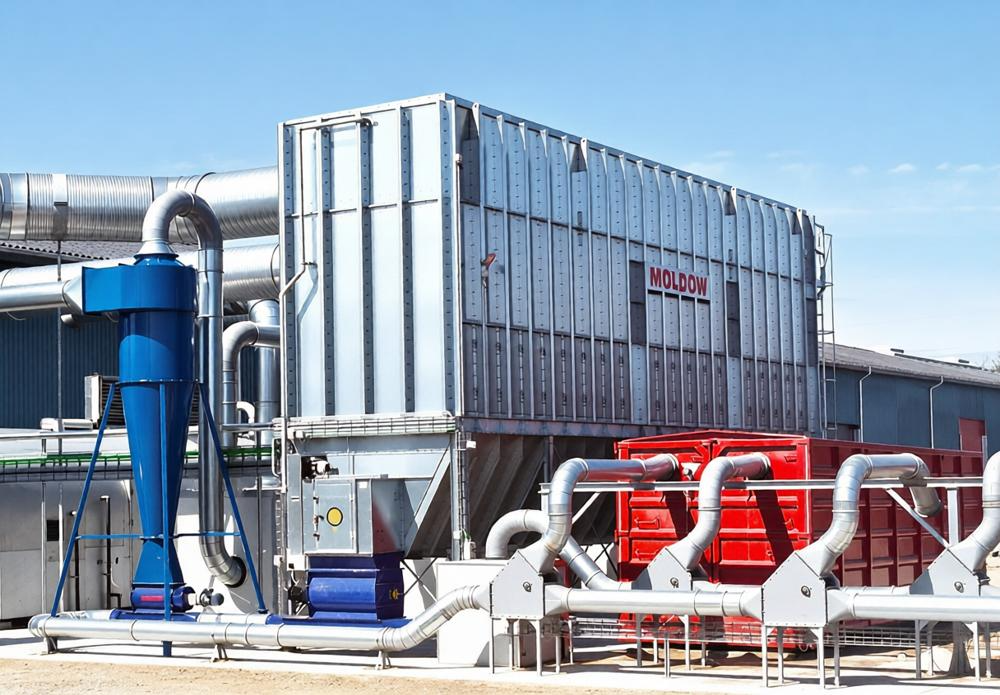
Core Powertrain and Structural Design
Unlike a conventional semi trailer designed only for cargo transportation, a wood mill dust collection trailer may incorporate fans, filters, ducting, discharge equipment, or other auxiliary components. Its engineering must therefore consider both road transportation and industrial material handling.
Collection Fan and Airflow System
The collection fan creates the airflow needed to transport airborne wood particles from production equipment to a filtration or separation unit.
Important design considerations include:
-
Airflow capacity: The required airflow depends on the number and type of collection points, duct dimensions, particle characteristics, and system layout.
-
Static pressure: The fan must overcome resistance from ducts, bends, filters, separators, and discharge components.
-
Duct velocity: Air velocity must be appropriate for the material being conveyed to reduce settling and blockage risks.
-
Fan construction: Materials, impeller design, and wear protection should suit the expected dust concentration and operating conditions.
A trailer-mounted fan should not be selected simply by horsepower. Airflow and static-pressure performance must be evaluated together against the complete system resistance.
Filtration and Dust Separation
Filtration equipment separates airborne particles from the conveying air. Depending on the design, a system may use cartridge filters, bag filters, cyclonic separators, or combinations of these technologies.
A cyclone uses centrifugal action to separate larger particles from the air stream, while a fabric or cartridge filter captures finer particles. The choice depends on the particle-size distribution, dust loading, required emission performance, and maintenance strategy.
Key considerations include:
-
Filter media compatibility with wood dust.
-
Available filtration area and operating pressure.
-
Dust discharge and collection arrangements.
-
Differential-pressure monitoring.
-
Filter cleaning method and maintenance access.
-
Appropriate containment of collected material.
The filtration unit must be designed for the actual dust characteristics. Fine sanding dust, for example, presents different filtration and handling challenges from larger wood chips or planer shavings.
Semi Trailer Chassis and Storage Structure
The trailer chassis supports the collection equipment, storage body, auxiliary power components, and road loads. The structural design must account for the combined weight of the equipment and collected material.
Possible trailer configurations include:
-
Enclosed bulk trailers: Provide contained storage for dry wood residues and can be designed around pneumatic loading and unloading arrangements.
-
Walking-floor trailers: Use a moving floor mechanism to discharge suitable bulk materials without conventional tipping.
-
Tipper trailers: Use a hydraulic lifting arrangement to discharge compatible loose materials at suitable receiving facilities.
-
Custom equipment trailers: Carry stationary or mobile collection equipment, including filters, fans, separators, and ducting.
The trailer body must be compatible with the material's density, moisture content, flow characteristics, and unloading method. Sawdust and wood shavings can occupy considerable volume relative to their weight, so volumetric capacity may become a more important constraint than maximum payload.
Auxiliary Power and Drive Systems
A trailer-mounted collection system may require electrical power or an independent engine-driven power unit. The appropriate arrangement depends on whether the trailer operates at a fixed wood mill, moves between facilities, or performs collection work without access to external electricity.
Possible power arrangements include:
-
Facility electrical supply for stationary loading operations.
-
Generator-powered systems for mobile applications.
-
Dedicated engine-driven fan systems.
-
Tractor-powered auxiliary equipment where the design supports it.
Power requirements should be calculated from the fan, filtration system, conveying equipment, hydraulic components, and control equipment. The selected power source must support the actual operating load rather than only the nominal fan rating.
Fire and Combustible-Dust Safety
Wood dust requires particular attention because fine combustible particles can create fire and explosion hazards under suitable conditions.
A collection and trailer-loading system should be evaluated for:
-
Dust accumulation and housekeeping requirements.
-
Ignition-source control.
-
Electrical equipment suitability for the classified environment, where applicable.
-
Static electricity and bonding or grounding requirements.
-
Appropriate explosion prevention, protection, or isolation measures.
-
Safe filter and dust-bin arrangements.
-
Fire detection and emergency response provisions.
The applicable requirements depend on the jurisdiction, system layout, dust characteristics, and facility risk assessment. Standards such as NFPA 660 may be relevant to combustible-dust management in applicable US facilities. Equipment selection and installation should be reviewed by qualified fire-protection and dust-collection engineers.
Technical Specifications
The technical specifications of a wood mill dust collection semi-trailer should cover both the collection system and the transportation platform. A trailer with sufficient cargo volume may still be unsuitable if its fan cannot provide the required airflow or if its discharge system cannot handle the collected material.
The following parameters are design considerations rather than specifications for a particular manufacturer or model.
|
Key Parameter |
Typical Technical Specification |
Operational Significance |
|---|---|---|
|
Collection airflow |
Project-specific, based on collection points |
Determines the system's ability to capture and convey dust |
|
Fan power |
Calculated from airflow and static pressure |
Influences energy demand and collection performance |
|
Filtration system |
Cartridge, bag, cyclone, or combined design |
Determines particle separation and maintenance requirements |
|
Storage capacity |
Based on trailer volume and material density |
Controls collection frequency and transport efficiency |
|
Trailer configuration |
Enclosed bulk, walking floor, tipper, or custom |
Determines material containment and unloading method |
|
Payload rating |
Manufacturer-rated for the selected chassis |
Limits the permitted transported material and equipment weight |
|
Discharge arrangement |
Pneumatic, gravity, hydraulic, or mechanical |
Determines compatibility with the receiving facility |
|
Safety provisions |
Project-specific combustible-dust protection |
Reduces fire, explosion, and occupational safety risks |
Understanding the Main Performance Parameters
Airflow and static pressure determine whether the system can collect material effectively across the connected duct network. The fan must be selected using the complete system curve, not airflow alone.
Storage capacity should be calculated using the expected bulk density of the wood residues. Sawdust, shavings, and wood chips can have significantly different bulk densities, and moisture content can change both their weight and handling characteristics.
Payload capacity must account for the empty trailer weight, mounted equipment, collected material, and any additional components. The legal gross vehicle and axle limits must also be respected.
Discharge performance is another important selection factor. Pneumatic discharge may suit facilities with compatible receiving equipment, while walking-floor and tipping arrangements may be more appropriate for other material types and site layouts.
Comparative Advantages TCO and ROI
Integrating wood mill dust collection with semi trailer transportation can improve material-handling organization, but the financial benefits depend on the facility's existing collection and waste-removal arrangements.
Three common approaches can be considered.
Stationary dust collection with separate waste transportation
A fixed dust collector captures material at production equipment and transfers it into a separate storage container or trailer. This approach can be appropriate for large mills with stable production layouts and established waste-handling infrastructure.
Its main advantage is the ability to optimize collection equipment independently of the transportation fleet. However, the facility may need additional storage space, transfer equipment, and scheduled container replacement.
Trailer-mounted collection equipment
A mobile collection system can serve multiple work areas or facilities. It may be useful for smaller mills, temporary operations, or locations where a permanent installation is impractical.
The trade-off is that trailer-mounted equipment must balance collection performance, road weight, available space, power supply, and maintenance access.
Conventional bulk transport trailer
A bulk trailer can receive already-collected sawdust or wood chips from a stationary system. This arrangement separates dust capture from transportation and may be simpler to maintain when the mill already has an effective collection network.
However, it requires suitable transfer equipment and a compatible loading connection.
Total Cost of Ownership
The total cost of ownership (TCO) should include more than the trailer purchase price. Important cost categories include:
-
Trailer chassis, body, and auxiliary equipment.
-
Collection fans, filters, ducting, and controls.
-
Electrical or engine-driven power consumption.
-
Filter replacement and cleaning.
-
Fan, motor, hydraulic, and mechanical maintenance.
-
Loading, unloading, and transportation labor.
-
Insurance, licensing, and regulatory compliance.
-
Downtime and replacement equipment requirements.
A basic operating-cost comparison can use the following relationship:
Annual operating cost = Energy cost + Maintenance cost + Labor cost + Transportation cost + Consumables cost
For example, a mill comparing a mobile collection trailer with a stationary collector and separate bulk trailer should use the same annual material volume, operating hours, labor assumptions, energy prices, and transportation distances for both options.
The mobile system may reduce material transfers or improve flexibility, but it could also introduce additional maintenance and power requirements. Its financial advantage should therefore be established through a site-specific cost model rather than assumed in advance.
Return on Investment
ROI depends on whether the new arrangement reduces labor, downtime, waste-handling costs, or production interruptions.
A practical evaluation should compare:
-
The current cost of collecting and transporting wood residues.
-
The capital cost of the proposed trailer and collection equipment.
-
Annual electricity or fuel consumption.
-
Filter, fan, and mechanical maintenance expenses.
-
Expected utilization and annual operating hours.
-
Changes in loading time and transportation efficiency.
If the system improves material recovery or allows wood residues to be sold or reused, any additional revenue should be based on actual material quality, local demand, processing costs, and transportation expenses.
A realistic payback estimate requires measured operating data. No fixed savings or payback period can be assumed without knowing the mill's production volume and existing handling costs.
Heavy Duty Application Scenarios
Wood mill dust collection semi-trailers can support different types of wood-processing operations, provided that the collection equipment, storage body, and discharge system match the material and production environment.
Sawmills and Timber Processing Facilities
Sawmills generate sawdust, bark fragments, wood chips, and other residues during cutting and trimming operations.
A collection arrangement may connect several production points to a centralized dust-handling system. A compatible semi trailer can provide bulk storage and transportation capacity, helping mills move collected residues to biomass facilities, recycling operations, or other approved destinations.
For these applications, trailer capacity, loading frequency, material moisture, and access for bulk unloading are important considerations.
Furniture and Cabinet Manufacturing
Furniture factories produce fine dust from sanding, cutting, routing, and machining. Fine particles can create more demanding filtration and housekeeping requirements than larger wood chips.
A suitable collection arrangement should prioritize effective source capture, appropriate filtration, and controlled discharge. The trailer should be designed to prevent dust escape during storage and transportation.
Wood Pellet and Biomass Production
Pellet plants and biomass facilities handle sawdust and other wood residues as feedstock. Collection and transportation systems must preserve material quality while supporting consistent production flow.
Important factors include:
-
Moisture content and material consistency.
-
Storage capacity and loading frequency.
-
Compatibility with conveyors or pneumatic transfer systems.
-
Protection against contamination.
-
Fire prevention and dust-management procedures.
The trailer configuration should also reflect whether material is delivered directly to processing equipment or stored before further handling.
Industrial Woodworking and Planing Mills
Planing and machining operations can generate a mixture of shavings, chips, and fine dust. These materials may have different flow and compaction characteristics.
The collection system should be designed around the actual production equipment and duct network. A trailer with a large volume does not necessarily provide effective collection if the transfer equipment cannot handle the material reliably.
Multi-Site Wood Waste Collection
A mobile collection trailer may serve several smaller woodworking facilities or temporary processing locations.
This application can benefit from a transportable system, but the operator must consider road access, power availability, collection-point connections, loading procedures, and the time required to move between sites.
The system should be evaluated for both its industrial operating requirements and its road-transport responsibilities.
Selection and Maintenance Considerations
Selecting a wood mill dust collection semi-trailer requires coordination between the mill's production team, equipment supplier, trailer manufacturer, and qualified engineering professionals.
Define the Material and Production Requirements
Start by identifying the materials that the system must handle.
Important questions include:
-
Is the material fine sanding dust, sawdust, wood chips, shavings, or a mixture?
-
What is the approximate daily or hourly material volume?
-
What is the expected moisture content?
-
How many collection points must be connected?
-
Will the system operate continuously or intermittently?
-
Does the material need to be transported to another facility?
These details determine the required airflow, filtration arrangement, storage capacity, and unloading method.
Select the Correct Trailer Configuration
The trailer should be selected according to both material properties and site infrastructure.
An enclosed bulk trailer may be suitable for contained storage and pneumatic transfer. A walking-floor design may be appropriate where mechanical unloading is preferred. A tipper trailer may suit compatible loose materials and receiving locations with adequate clearance and ground conditions.
Before purchasing, confirm:
-
Maximum permitted gross vehicle weight.
-
Axle and suspension ratings.
-
Trailer body volume.
-
Equipment mounting loads.
-
Tractor and coupling compatibility.
-
Overall height, width, and length restrictions.
-
Loading and unloading access.
The equipment supplier should provide a complete weight calculation covering the chassis, body, collection equipment, accessories, and expected material load.
Evaluate Filtration and Combustible-Dust Protection
Filtration equipment should be selected according to the dust characteristics and required emission performance.
The buyer should request information about filter media, filtration area, cleaning method, differential-pressure monitoring, dust discharge, and maintenance access.
A combustible-dust hazard assessment is essential where fine wood particles are collected. The design should address ignition prevention, static control, explosion protection or isolation where required, and safe cleaning procedures.
A standard cargo trailer should not be assumed suitable for combustible-dust collection simply because it can transport wood waste.
Plan Preventive Maintenance
Regular maintenance helps preserve collection performance and trailer reliability.
A practical maintenance program should cover:
-
Inspection of duct connections, flexible hoses, and seals.
-
Monitoring of filter differential pressure.
-
Inspection and replacement of filters according to manufacturer guidance.
-
Inspection of fan impellers, bearings, motors, and drive components.
-
Checking electrical connections and control systems.
-
Inspection of trailer tires, brakes, suspension, lights, and coupling.
-
Examination of hydraulic components where fitted.
-
Removal of accumulated dust using approved housekeeping procedures.
Maintenance frequency should follow manufacturer recommendations and actual operating conditions. High dust loading, abrasive material, moisture, and continuous operation can increase maintenance requirements.
Confirm Supplier and After-Sales Support
A supplier should be able to explain how the collection system and trailer are engineered as one integrated arrangement.
Before placing an order, request:
-
General arrangement drawings.
-
Fan performance curves.
-
Filtration specifications.
-
Trailer payload and gross-weight information.
-
Material compatibility information.
-
Electrical and power requirements.
-
Discharge-system details.
-
Safety documentation and applicable conformity information.
-
Recommended spare parts and maintenance procedures.
It is also important to confirm whether the supplier provides installation support, commissioning, operator training, technical documentation, and replacement filters or components.
Conclusion
A wood mill dust collection system connected to a semi trailer can provide an integrated approach to collecting, storing, and transporting sawdust, wood chips, and other wood-processing residues. The most suitable configuration depends on whether the trailer serves as a bulk transport unit, carries mobile collection equipment, or combines both functions.
Successful selection requires more than comparing trailer volume or fan horsepower. Airflow, static pressure, filtration performance, material characteristics, payload, unloading compatibility, and combustible-dust protection must all be considered together.
For wood mills and industrial buyers, the best long-term investment is a properly engineered system that matches production requirements, supports reliable material handling, meets applicable safety and transportation regulations, and remains practical to maintain throughout its operating life.