
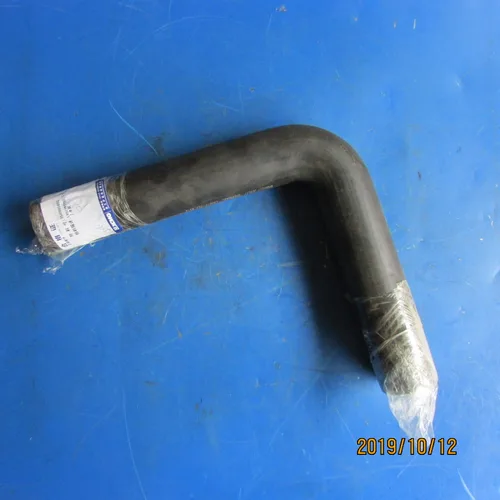
XCMG Loader Spare: Upper Radiator Hose 250900401 | Cooling Circuit Pipe
最小起订量: 3件
- Material code::
- 250900402
- Material Description::
- LW321F (TD). 1-2 water supply pipe
- 参考价格:
- USD $7.00
- 最小起订量:
- 3件

产品特点与应用
This Upper Radiator Hose 250900401 is a pipe component in the engine cooling system of heavy equipment, connecting the radiator to the upper passage of the engine block (or cylinder head outlet). The part is associated with drawing number LW321F(TD).1-2, but the suffix "TD" has no publicly available explanation. Applicable models, fitting dimensions, and material specifications should all be confirmed against the nameplate, drawings, or sample before ordering.
An upper radiator hose is the pipe connecting the top outlet of the radiator to the inlet port on the engine block within the engine cooling loop, working together with the lower radiator hose to form a closed coolant circulation path. Driven by the water pump, coolant absorbs heat as it passes through the engine, returns to the radiator via the upper hose to dissipate heat, and is then pumped back into the engine—completing the heat-exchange cycle. Its sealing integrity and flow smoothness directly affect engine heat dissipation efficiency and operational safety.
Operating in harsh field conditions, the upper radiator hose is exposed long-term to high temperature, vibration, oil contamination, and mud-water washing. Rubber material tends to age and crack, hose clamps may loosen, and the inner wall can delaminate—making it one of the more leak-prone components in the cooling system. When symptoms such as elevated water temperature, seepage at joints, or surface cracking appear, inspection and timely replacement are necessary to avoid engine overheating and cylinder scoring due to coolant loss.
This 250900401 is associated with drawing number LW321F(TD).1-2. The prefix LW321F corresponds to XCMG's 3.2-ton-class wheel loader (powered by a Yuchai YC6108G engine rated at 92 kW, with enlarged fan diameter and radiator surface area ), but whether it is exclusively used on this model, and the exact meaning of the suffix "TD", cannot be directly confirmed from publicly available sources and should be verified through XCMG's parts system or catalog numbering. XCMG's official spare-parts service notes that construction machinery encompasses a vast range of components, and entering the part number, model, or keyword enables quick lookup of the required genuine spare parts .
When replacing the upper radiator hose, work only after the engine has completely cooled. First drain the coolant, loosen the clamps at both ends, then remove the old hose and inspect the joint inner walls for corrosion or deformation. When installing the new hose, ensure the routing matches the original without twisting or kinking, tighten the clamps to the torque specified in the service manual, then refill with coolant, bleed the system, and check for leaks after startup.
技术规格
- Material code:
- 250900402
- Material Description:
- LW321F (TD). 1-2 water supply pipe
交易规格
- 参考价格
- USD $7.00
- 最小起订量
- 3件

徐州恒铭机械设备有限公司
徐州恒铭机械设备有限公司扎根徐州 —— 徐工品牌的发源地与全国工程机械核心产业聚集地,长期深耕徐工工程机械配件配套行业,具备正规进出口经营资质,是面向全球徐工设备使用者的一站式配件源头供应商。
- 所在地
- 徐州经济技术开发区三环东路淮海五金机电大市场一期 D32#-1-115(线下门店:淮海五金机电城 D32-115/116 门面,徐工道路北门 50 米)
- 主营产品
- 徐工全系备件
- 员工人数
- 50 人以下
- 工厂面积
- 1,000-5,000 m²
- 年销售额
- 100 万 - 500 万美元
- 主要市场
- 欧洲 / 中东与北非 / 非洲