分类

The Ultimate 2026 Landscaping Excavator Technical Guide: Powertrain, Hydraulics & ROI Analysis

This technical deep-dive analyzes landscaping excavator powertrain efficiency, hydraulic precision, and total cost of ownership (TCO) for B2B buyers. Includes ISO/CE compliance, EPA Tier 4 final data, and application-specific ROI models.
May 21st,2026 0 浏览量

Introduction: Beyond Conventional Earthmoving – The Precision Demands of Modern Landscaping

Traditional backhoes and skid steers struggle with tight-access grading, utility trenching, and生态 sensitive terrain. Contractors face rising fuel costs, strict EPA Tier 4 / EU Stage V emission penalties, and operator fatigue. The modern landscaping excavator – typically a compact or mini hydraulic excavator (1.5–6 metric tons operating weight) – solves these pain points via load-sensing hydraulics, zero-tail-swing design, and telematics-ready ECUs. This guide delivers measurable specs and TCO benchmarks for fleet decision-makers.

Core Powertrain & Structural Design: Engineering for Durability and Fuel Economy

Engine & Aftertreatment – EPA Tier 4 Final / Stage V Compliance

Modern landscaping excavators use turbocharged diesel engines (15–60 HP) with DOC+DPF or EGR+DPF architectures. For example, the Yanmar 3TNV76 (21.5 HP @ 2500 rpm) achieves ≤2.8 L/h fuel consumption at 70% load. Key metrics: peak torque rise ≥25% for stall-resistant digging, and auto-idle (5 sec threshold) reduces idle burn by 18–25%. All certified to ISO 8178 cycle C2.

Hydraulic System – Load-Sensing with Flow Sharing

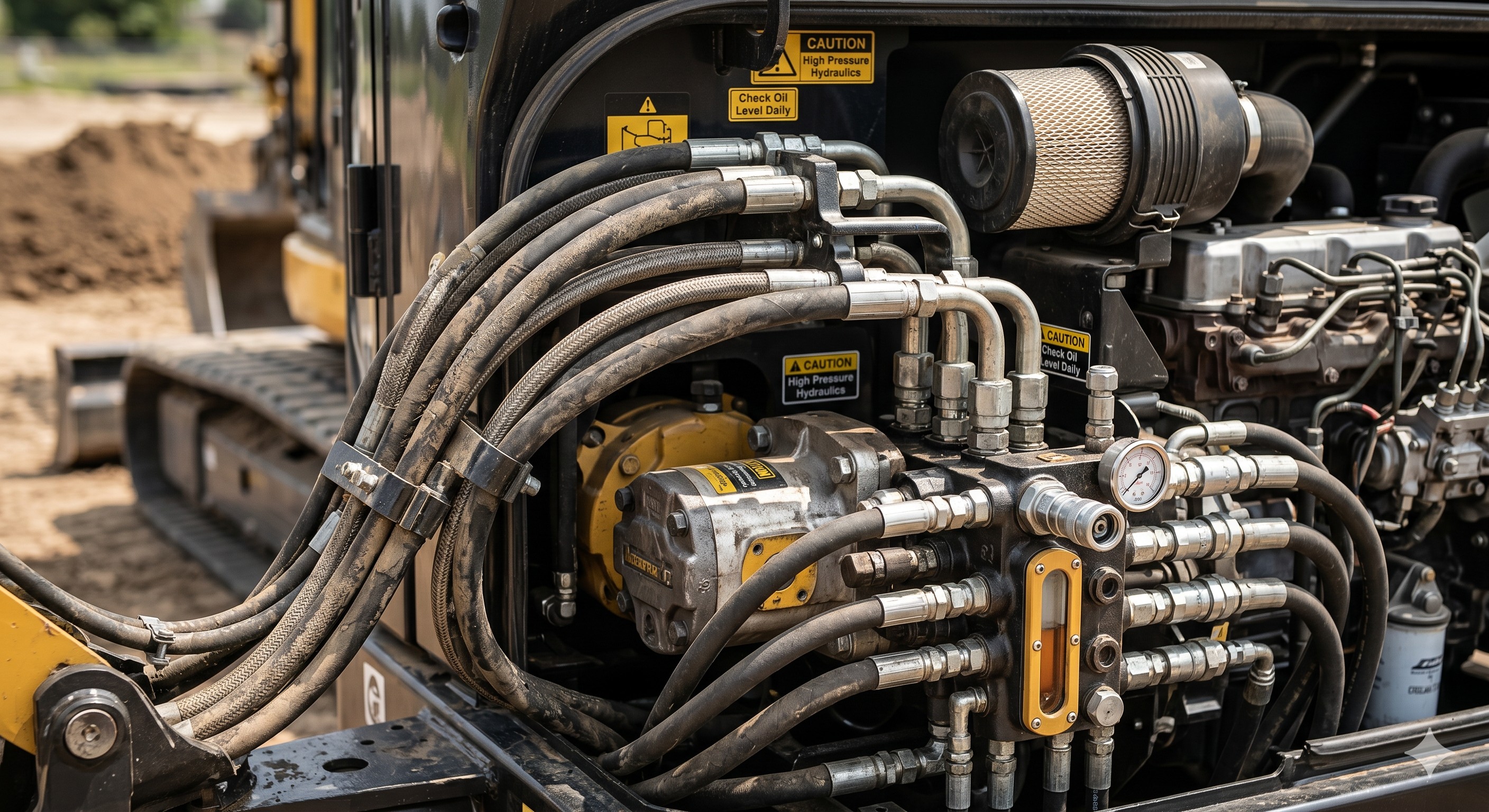
High-performance landscaping excavators deploy variable-displacement axial piston pumps (auxiliary flow 40–70 L/min @ 20–25 MPa). Hydraulic pressure of 22,000–28,000 kPa (3,200–4,060 psi) enables 0.05–0.12 m³ bucket breakout force of 18–28 kN. Proportional joystick control with ISO 10968 pattern ensures fine grading accuracy (±2 mm). Optional 2-way/4-way auxiliary lines power hydraulic breakers and augers.

Undercarriage & Structure – ROPS/FOPS and Swing Geometry

Reinforced X-frame chassis (high-tensile steel ≤600 MPa yield) with sealed & lubricated track chains (400–500 mm pads) provide ground pressure 28–35 kPa – critical for lawn preservation. Zero-tail-swing (≤0 mm rear overhang) meets ISO 10532 stability tests. ROPS/FOPS canopy or cab certified to ISO 12117 and ISO 3449 Level II.

Technical Specifications – Benchmark Data for Compact Landscaping Excavators

Below are reference values for a 2.5-tonne zero-tail-swing landscaping excavator (e.g., Kubota U27-4 or Takeuchi TB2250 class). Always compare hydraulic power-to-weight ratio and fuel consumption per m³ for ROI.

[TABLE_1]

Comparative Advantage – TCO, Fuel Efficiency & ROI Analysis

Over 5,000 operating hours, a purpose-built landscaping excavator beats a standard backhoe or skid steer on three metrics:

  • Fuel Efficiency: Variable displacement hydraulics reduce losses by 22–28%. At $1.20/L diesel, annual saving ≈ $1,680 vs fixed-displacement machines.
  • Maintenance Costs: Pin-on bucket with replaceable wear plates and auto-grease system option lower daily service time. Mean time between failure (MTBF) on final drives ≥4,000 hours under ISO 6016.
  • Resale Value: EPA Tier 4 Final / EU Stage V compliant units retain 68–72% of value after 3 years vs 55% for non-compliant machines.

ROI Example: Landscaping contractor – 1,200 trenching/planting hours/year. At $95/hour billable, annual revenue $114k. Operating cost (fuel, filters, tracks, labor) $38/hour → net profit $68.4k. Payback period for $48k excavator ≈ 9 months.

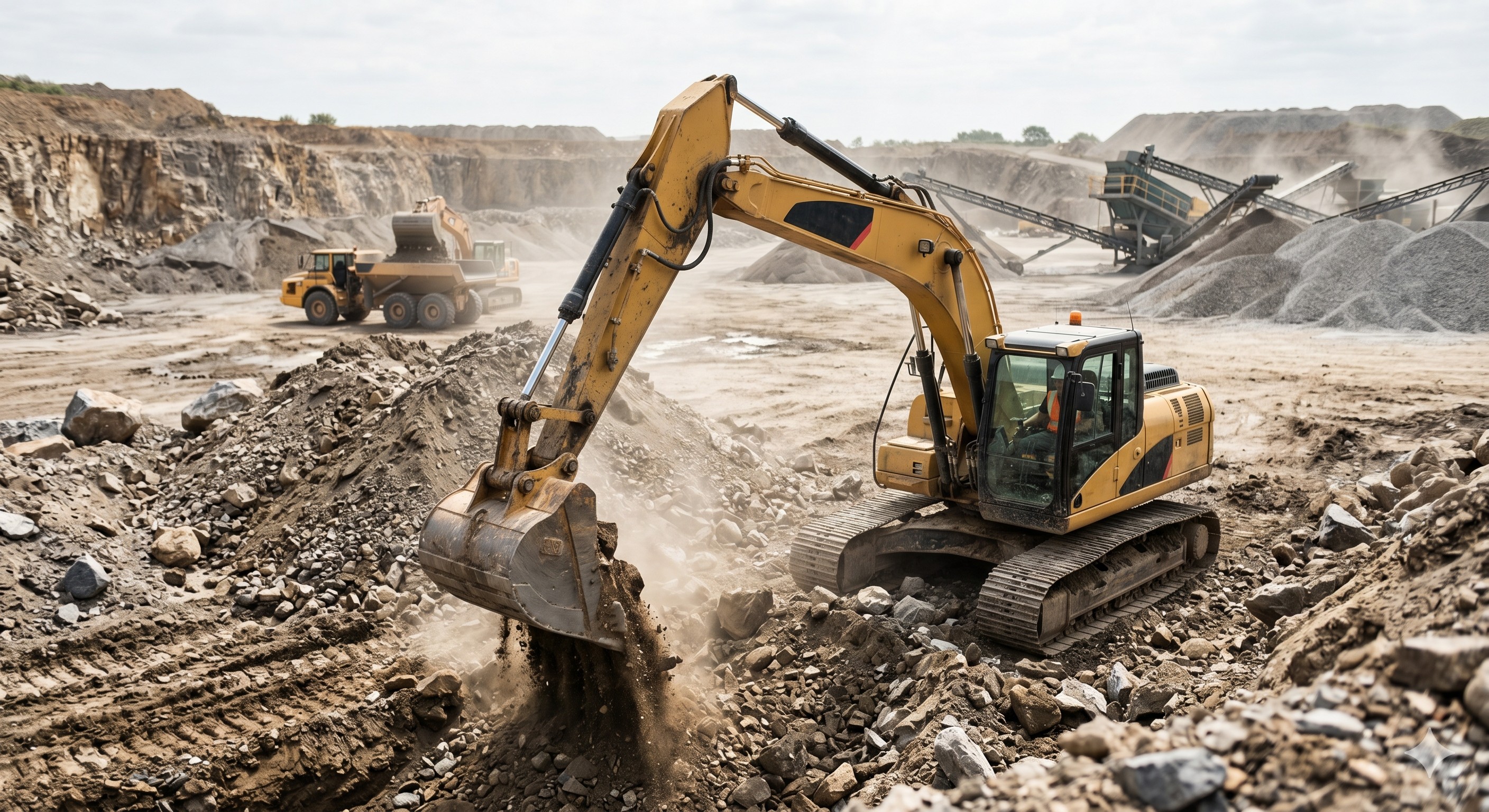
Heavy-Duty Application Scenarios – Construction, Mining Support & Earthmoving

While compact, landscaping excavators excel in delegated heavy tasks:

  • Utility Trenching: 0.3–0.6 m width, 1.2 m depth, ±5 mm laser-guided grade. Equipped with tiltrotator (ISO 13031 quick coupler) increases productivity 35%.
  • Mountain Road Drainage: Long arm option (3.2 m reach) with 4.5 m dumping height cleans ditches without platform repositions.
  • Precision Demolition: Hydraulic breaker (180–300 J impact) with anti-blank firing and dust suppression nozzle.
  • Landscape Grading: 6-way dozer blade (float, angle, tilt) with laser receiver → finish grade tolerance ±5 mm/3 m.

Conclusion – Future-Ready Productivity Through Data-Driven Selection

The 2026 landscaping excavator is no longer a miniaturized backhoe but a precision mechatronic platform integrating telematics (ISO 15143), emission compliance, and load-sensing efficiency. For fleet owners, prioritize hydraulic flow-on-demand, undercarriage ground pressure, and dealer support for ECU diagnostics. With fuel costs rising and emission zones expanding, investing in a modern Tier 4 Final / Stage V unit directly reduces TCO and expands contract bidding capability for sensitive urban and landscaping projects.