

Overview
A wings open box van semi trailer is an enclosed freight trailer equipped with hydraulically operated side panels that lift upward to provide wide loading access. This design allows forklifts to load and unload cargo from the sides, making it suitable for logistics operations, warehouse distribution, palletized freight, and commercial transportation.
Compared with conventional enclosed trailers, wing-opening trailers offer greater side access but require additional hydraulic components, structural reinforcement, and maintenance. Buyers should evaluate cargo requirements, payload capacity, body dimensions, hydraulic equipment, chassis specifications, safety features, and operating costs before selecting a configuration.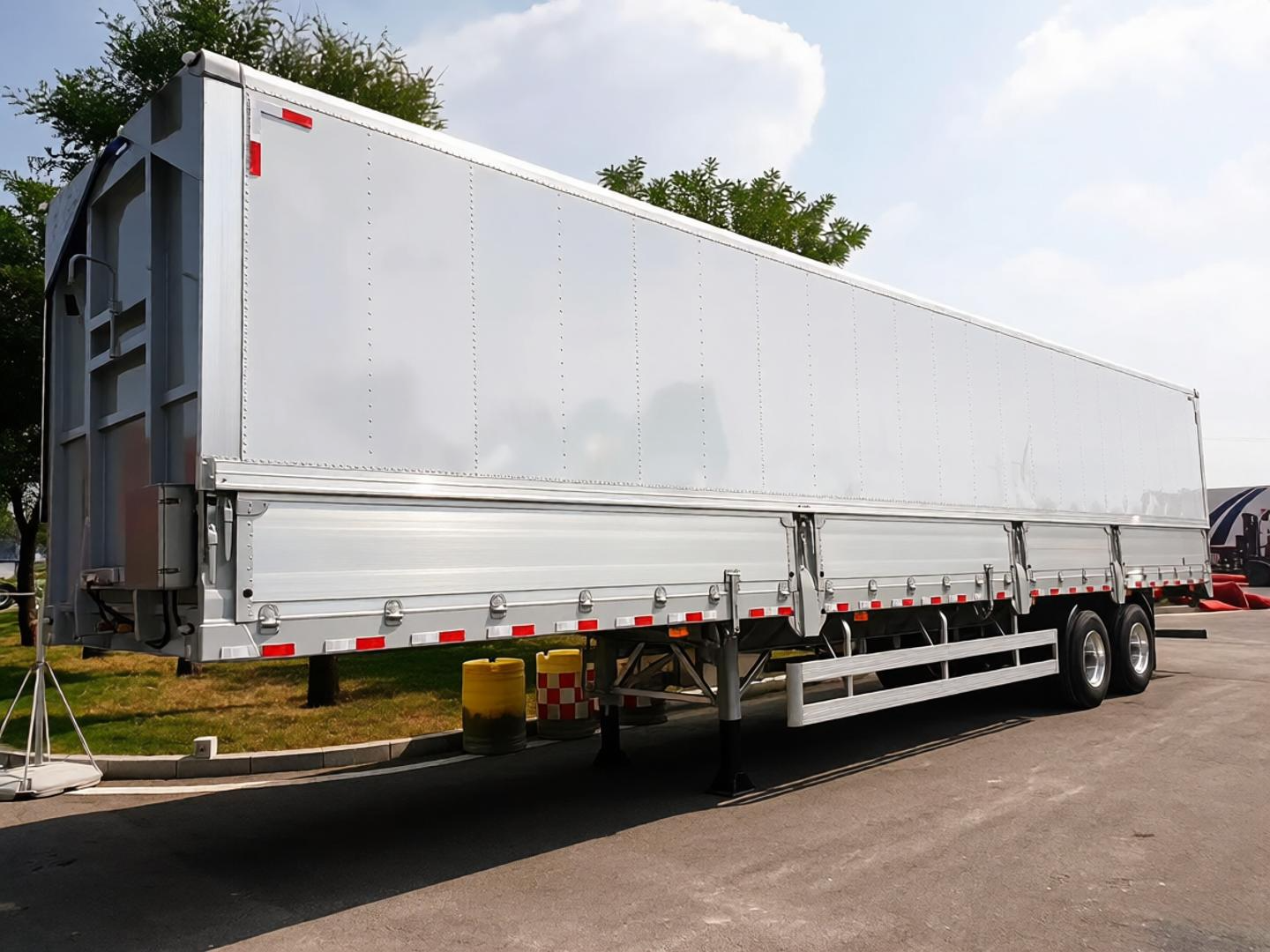
Frequently Asked Questions
Q1: What is a wings open box van semi trailer?
A wings open box van semi trailer is an enclosed cargo trailer with hydraulically lifting side panels that allow cargo to be loaded and unloaded from either side.
The wing panels open upward, creating broad access for forklifts and other loading equipment. When closed, the trailer provides an enclosed cargo space that helps protect goods from weather and external exposure.
Common applications include:
-
Palletized goods and packaged products.
-
Warehouse and distribution freight.
-
Industrial equipment and manufactured goods.
-
Retail goods and general cargo transportation.
Q2: What is the payload capacity of a wings open box van semi trailer?
The payload capacity of a wings open box van semi trailer varies according to chassis design, tare weight, axle configuration, suspension, tires, and legal weight restrictions.
Typical industry configurations: Some commercial wing-body semi trailers are designed for payloads of approximately 30–40 tonnes, but this is only an illustrative range and is not applicable to every model or market.
Before purchasing, confirm:
-
Rated payload and gross vehicle weight.
-
Trailer tare weight.
-
Axle ratings and axle configuration.
-
Kingpin load and tractor compatibility.
-
Tire load ratings.
-
Applicable road and axle-weight regulations.
The manufacturer's official specification and the legal limits applicable to the operating route determine the usable payload.
Q3: How does the hydraulic wing system work on a wings open box van semi trailer?
The hydraulic wing system uses hydraulic cylinders to lift and lower the trailer's side panels for cargo loading and unloading.
Depending on the design, the system may include a hydraulic pump, power unit, cylinders, hoses, control valves, switches or remote controls, and safety locking components. The operating mechanism and opening angle vary by manufacturer and trailer configuration.
Buyers should check:
-
Hydraulic cylinder specifications and mounting design.
-
Opening angle and required operating clearance.
-
Hydraulic power source and control method.
-
Wing locking and safety mechanisms.
-
Emergency operation procedures.
-
Hydraulic hose routing and protection.
Operators must keep clear of moving wing panels and follow the manufacturer's operating instructions.
Q4: What are the advantages of a wings open box van semi trailer over a conventional box trailer?
A wings open box van semi trailer provides wider side-loading access, which can improve loading and unloading efficiency at facilities equipped for side forklift operations.
Key advantages include:
-
Wide side access: Forklifts can access cargo from the sides.
-
Flexible loading: Cargo can be loaded or unloaded at different positions along the body.
-
Enclosed cargo protection: The closed body protects freight from external exposure.
-
Warehouse compatibility: Side loading can support certain distribution and handling workflows.
However, wing trailers have additional hydraulic components and moving structures that require inspection and maintenance. They also need sufficient overhead clearance during opening.
Q5: What dimensions and configurations are available for wings open box van semi trailers?
Wings open box van semi trailers are available in different lengths, widths, heights, axle arrangements, and cargo-body configurations to match regional transport requirements.
Available configurations may include:
-
Different trailer lengths and cargo compartment dimensions.
-
Tandem or multiple-axle arrangements.
-
Air suspension or other approved suspension systems.
-
Different floor materials and cargo restraint arrangements.
-
Rear doors in addition to side-opening wings.
-
Optional lighting, tracking, and safety equipment.
Buyers should request a detailed technical drawing showing overall dimensions, internal dimensions, wing-opening clearance, tare weight, floor specifications, and axle ratings. The actual manufacturer specification controls the final selection.
Q6: What maintenance is required for a wings open box van semi trailer?
A wings open box van semi trailer requires routine inspection of the hydraulic wing mechanism, chassis, suspension, brakes, tires, electrical system, and cargo body.
Recommended inspection areas include:
-
Hydraulic system: Check fluid level, hoses, cylinders, seals, and connections for leakage or damage.
-
Wing structure: Inspect hinges, mounting points, locking devices, and structural components.
-
Chassis: Check for cracks, corrosion, damaged welds, and deformation.
-
Running gear: Inspect tires, wheel fasteners, axles, suspension, and brakes.
-
Electrical system: Check lights, connectors, wiring, and applicable ABS indicators.
-
Cargo body: Inspect floor panels, roof, rear doors, seals, and cargo restraint components.
Service intervals, hydraulic fluid specifications, lubrication points, and replacement procedures must follow the manufacturer's maintenance manual.
Q7: What safety features should a wings open box van semi trailer have?
A wings open box van semi trailer should have appropriate wing locking devices, stable hydraulic operation, reliable braking equipment, and compliant lighting and safety components.
Depending on the design and destination market, buyers should evaluate:
-
Mechanical or hydraulic wing locking arrangements.
-
Emergency lowering or recovery procedures.
-
Protected hydraulic hoses and electrical wiring.
-
ABS and braking system configuration.
-
Rear impact protection and reflective markings where required.
-
Cargo restraint points and floor loading requirements.
Safety equipment and regulatory compliance should be verified against the intended market's requirements and the manufacturer's documentation.
Q8: What should buyers consider when purchasing a wings open box van semi trailer?
Buyers should compare payload, dimensions, chassis components, hydraulic system quality, customization options, warranty conditions, and total purchasing costs.
Before placing an order, evaluate:
-
Cargo requirements: Cargo dimensions, weight, loading method, and transport conditions.
-
Trailer configuration: Axles, suspension, tires, brakes, floor, and wing-opening system.
-
Manufacturing quality: Structural materials, weld quality, corrosion protection, and assembly.
-
Customization: Body dimensions, cargo restraints, hydraulic controls, and optional equipment.
-
After-sales support: Spare parts, warranty terms, maintenance documentation, and technical assistance.
-
Total cost: Purchase price, transportation, maintenance, replacement components, and operating costs.
Request a detailed quotation and technical specification rather than comparing prices alone. Confirm that the trailer configuration meets local road regulations and the operating requirements of your fleet.
Conclusion
A wings open box van semi trailer combines enclosed cargo protection with wide side-loading access, making it suitable for freight operations that require efficient forklift handling. Choosing the right configuration requires careful evaluation of payload, dimensions, hydraulic systems, chassis components, safety requirements, and maintenance support. A verified technical specification and a clear purchase agreement are essential for a successful procurement decision.