

Introduction
Commercial transportation companies face increasing pressure to improve driver visibility, reduce vehicle accidents, control operating costs, and minimize downtime. Semi trailers create significant visibility challenges because their length, rear structure, cargo configuration, and blind spots can make reversing, maneuvering, and monitoring difficult. A wireless camera for a semi trailer can help drivers observe areas that are not easily visible through conventional mirrors.
A wireless trailer camera system typically consists of one or more cameras, a wireless video transmitter, a receiver or display, mounting hardware, and a power supply. Depending on the system, it may support rear-view monitoring, side-view coverage, cargo-area observation, or multiple camera feeds.
An important technical distinction is that Bluetooth and Wi-Fi are not interchangeable video transmission technologies. Bluetooth is designed primarily for short-range, low-power communication and is generally unsuitable for continuous high-resolution video streaming. Many products marketed as wireless trailer cameras use Wi-Fi Direct, proprietary 2.4 GHz radio links, or other dedicated wireless transmission technologies. Some systems use Bluetooth only for initial pairing, configuration, or control.
Buyers should therefore verify the actual communication protocol rather than relying solely on the phrase "Bluetooth camera." For commercial semi trailer applications, transmission stability, operating distance, image quality, weather resistance, power reliability, and compatibility with the towing vehicle are more important than the wireless label alone.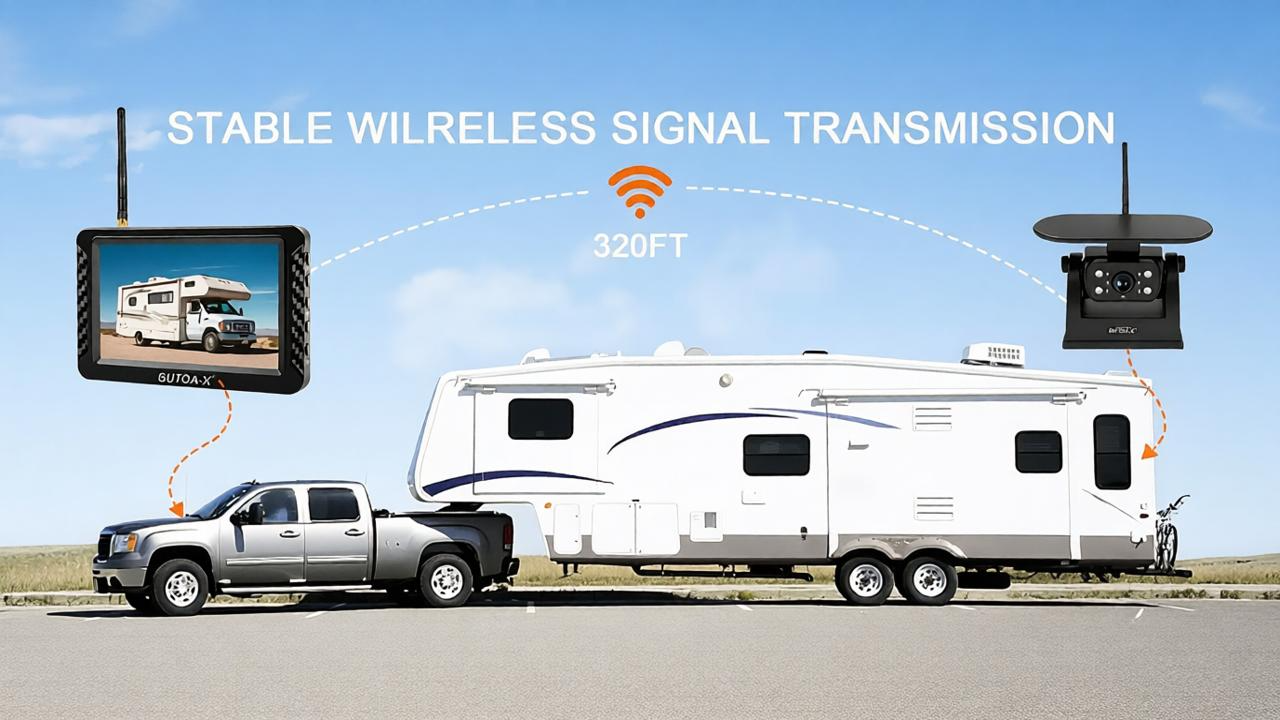
Core Powertrain and Structural Design
A wireless semi trailer camera is an electronic monitoring accessory rather than a powered trailer component. Its performance depends on camera optics, image processing, wireless communication, electrical power, mounting structure, and display integration. These components must work together to provide a stable image under normal transportation conditions.
Wireless Connectivity and Video Transmission
The wireless communication system determines how video travels from the trailer-mounted camera to the driver's display.
Common connection methods include:
-
Bluetooth: A short-range, low-power wireless standard suitable for device pairing, control signals, and limited data transfer. Its bandwidth is generally insufficient for dependable continuous high-resolution video.
-
Wi-Fi Direct: Allows compatible devices to communicate without requiring a conventional wireless router. Some wireless camera systems use this method for video transmission.
-
Proprietary 2.4 GHz systems: Use dedicated transmitter and receiver hardware designed for camera communication. Performance depends on antenna design, transmission power, interference, and system architecture.
-
Cellular connectivity: Uses mobile networks to transmit video or images over longer distances. This approach may require a SIM card, data subscription, and compatible network coverage.
For a semi trailer, wireless signal reliability is particularly important because the camera and display may be separated by a long vehicle structure. Metal trailer bodies, cargo, tractor components, and surrounding vehicles can affect radio propagation.
Buyers should verify the manufacturer's stated operating range under realistic conditions. A range measured in an open environment may not represent actual performance when the camera is mounted behind a loaded trailer.
Camera Sensor, Lens, and Image Processing
The camera determines the quality of the captured image. Important components include the image sensor, lens, image processor, infrared illumination where fitted, and protective housing.
Key camera characteristics include:
-
Resolution: Higher resolution can reveal more detail, but it also increases data requirements and may require a compatible display and transmission system.
-
Field of view: A wider lens can cover more of the area behind the trailer, although excessive wide-angle distortion may make distance judgment difficult.
-
Low-light performance: Sensor sensitivity and image processing influence visibility at night, in poorly lit loading areas, and during adverse weather.
-
Night vision: Infrared illumination or other low-light technologies may improve visibility when ambient lighting is limited.
-
Image orientation: Rear cameras may support mirrored or adjustable image modes to provide a practical reversing view.
-
Frame rate: A suitable frame rate helps drivers interpret movement when reversing or maneuvering.
A camera's advertised resolution should not be evaluated independently. Image quality also depends on lens performance, lighting, display quality, transmission stability, and video compression.
Power Supply and Electrical Integration
A trailer-mounted wireless camera requires a dependable power source. Common arrangements include connection to the trailer's electrical circuit, a dedicated auxiliary power supply, or a rechargeable battery.
A camera connected to the trailer's electrical system can operate when the appropriate circuit is energized. This arrangement may be practical for cameras intended to remain available during reversing or transportation.
Battery-powered cameras can simplify installation because they may not require permanent wiring. However, operating time depends on battery capacity, recording frequency, transmission activity, temperature, and standby power consumption.
Buyers should confirm:
-
Rated input voltage and acceptable voltage range.
-
Current consumption during normal operation.
-
Power requirements for the camera and wireless transmitter.
-
Battery capacity and expected operating time, if applicable.
-
Protection against reverse polarity and electrical transients.
-
Compatibility with the tractor and trailer electrical systems.
Electrical integration should follow the camera manufacturer's wiring instructions and applicable vehicle electrical requirements. Incorrect connections can cause intermittent operation, battery drain, blown fuses, or interference with other vehicle circuits.
Mounting Structure and Environmental Durability
A semi trailer camera must withstand vibration, road impacts, moisture, dust, temperature changes, and repeated exposure to outdoor conditions.
Mounting hardware should keep the camera stable while maintaining the intended viewing angle. Rear crossmembers, upper rear structures, side mounting points, and designated equipment brackets may be considered depending on the trailer design and camera purpose.
Important structural considerations include:
-
Secure mounting brackets and corrosion-resistant fasteners.
-
Protection against vibration and accidental impacts.
-
Adequate clearance from doors, loading equipment, and moving components.
-
Cable protection where wired power connections are required.
-
Appropriate sealing around electrical connectors.
-
A mounting position that minimizes obstruction from cargo or trailer components.
An enclosure's IP rating indicates its level of protection against dust and water under specified test conditions. For example, an IP67-rated enclosure is designed to provide dust-tight protection and temporary immersion resistance under defined testing conditions. It should not automatically be interpreted as suitable for every pressure-washing or high-temperature cleaning environment.
Display, Recording, and System Integration
The driver's display is a critical part of the camera system. Some products include a dedicated monitor, while others connect to compatible vehicle displays or mobile devices.
A dedicated monitor may provide a more consistent installation for commercial vehicles. Mobile-device systems can offer flexibility but depend on device compatibility, software support, screen availability, and reliable wireless connections.
Additional functions may include:
-
Automatic activation when reverse gear is selected.
-
Multiple-camera switching.
-
Split-screen viewing.
-
Adjustable brightness and contrast.
-
Video recording to local storage.
-
Motion-triggered recording.
-
Audio support, where included.
-
Integration with fleet monitoring equipment.
Not every wireless camera supports recording or continuous monitoring. Buyers should distinguish between live-view systems and systems designed for video evidence or remote fleet supervision.
Technical Specifications
The technical requirements of a wireless Bluetooth camera for a semi trailer depend on the intended application. A reversing camera needs dependable real-time video and a useful rear viewing angle, while a cargo-monitoring camera may prioritize recording, storage, and access to footage.
The following table identifies important purchasing parameters. Values should be verified against the specific product manufacturer's documentation rather than treated as universal camera specifications.
|
Key Parameter |
Typical Technical Specification |
Operational Significance |
|---|---|---|
|
Wireless protocol |
Bluetooth, Wi-Fi Direct, or proprietary radio |
Determines video transmission capability and compatibility |
|
Camera resolution |
Common commercial options include 720p and 1080p |
Influences image detail and data requirements |
|
Viewing angle |
Varies by lens design and application |
Determines the area visible behind or beside the trailer |
|
Power supply |
Vehicle electrical circuit or rechargeable battery |
Affects operating reliability and installation complexity |
|
Environmental protection |
Manufacturer-rated IP enclosure |
Indicates resistance to dust and water |
|
Night visibility |
Low-light sensor or infrared illumination |
Supports monitoring in dark operating environments |
|
Display |
Dedicated monitor or compatible mobile device |
Determines driver visibility and system integration |
|
Operating temperature |
Manufacturer-specified temperature range |
Determines suitability for seasonal and outdoor operation |
Choosing the Right Camera Configuration
A single rear camera may be sufficient for basic reversing assistance. However, longer trailers, complex loading operations, and frequent maneuvering may benefit from additional side or interior cameras.
A multi-camera configuration can improve coverage, but it also introduces additional costs, wiring or power requirements, display complexity, and maintenance points.
The most appropriate configuration should be based on the driver's actual visibility requirements rather than the number of cameras included in a package.
Comparative Advantages TCO and ROI
Wireless semi trailer cameras can improve visibility without requiring a complex wired video installation throughout the trailer. However, they should be compared with wired camera systems, mirror-only monitoring, and more advanced fleet camera solutions before purchase.
Wireless Cameras vs. Wired Camera Systems
Wireless cameras can reduce the amount of signal cabling required between the trailer and the display. This may simplify installation, particularly when trailers are frequently coupled and uncoupled from different tractors.
Potential advantages include:
-
Reduced video-cable installation work.
-
Flexible camera placement.
-
Easier installation on certain existing trailers.
-
Less need to modify long trailer wiring routes.
-
Compatibility with some removable or transferable camera configurations.
However, wireless systems depend on radio communication. Signal interference, physical obstructions, antenna positioning, and transmitter performance can affect image reliability.
Wired systems generally provide a more direct communication path and can be preferable for installations requiring consistent video transmission. Their disadvantages include longer cable routes, connector maintenance, and potential cable damage during trailer operation.
Wireless Cameras vs. Conventional Mirrors
Conventional mirrors remain essential for commercial vehicle operation. They do not require electrical power or wireless communication and can provide a continuous view of surrounding traffic.
However, mirrors have limitations. Their viewing angles depend on adjustment and driver position, and they may not provide a clear view of every area immediately behind or alongside a trailer.
A camera system can supplement mirrors by displaying additional viewing angles. It should not automatically replace legally required mirrors or other mandatory visibility equipment.
Total Cost of Ownership
The total cost of ownership (TCO) of a wireless trailer camera system includes more than its purchase price.
Relevant cost categories include:
-
Camera, transmitter, receiver, and display purchase costs.
-
Mounting brackets and electrical components.
-
Initial installation and configuration.
-
Battery replacement or charging requirements.
-
Periodic cleaning and inspection.
-
Replacement of damaged cameras, antennas, or connectors.
-
Software or cellular data subscriptions, where applicable.
-
Downtime associated with system faults.
A low-cost camera may be economical for occasional use, but frequent commercial operation can justify a more durable system with replaceable components and technical support.
ROI and Operational Benefits
Return on investment should be evaluated using measurable operational improvements rather than assumed accident-prevention savings.
For example, a fleet could compare the cost of installing cameras on 10 semi trailers with its current expenses for reversing-related vehicle damage, inspection time, and equipment downtime.
The calculation should include the following assumptions:
-
Initial purchase and installation costs per trailer.
-
Average annual camera maintenance and replacement costs.
-
Actual number of relevant reversing or maneuvering incidents.
-
Documented repair expenses before and after installation.
-
Changes in inspection or maneuvering time.
-
Camera system utilization and service life.
If camera installation reduces documented repair expenses or improves operational efficiency, those benefits can be compared with the total system cost. However, camera systems cannot guarantee accident prevention, and any financial benefit depends on driver training, operating conditions, equipment quality, and actual usage.
Heavy Duty Application Scenarios
Wireless cameras can support several commercial transportation applications. The appropriate camera position, viewing angle, power arrangement, and transmission technology depend on the trailer type and operating environment.
Reversing and Docking Operations
Reversing a semi trailer into a loading dock can be challenging because the trailer blocks much of the driver's direct rearward view.
A rear-mounted camera can provide a live view of the area behind the trailer, helping drivers identify obstacles, dock structures, vehicles, and personnel.
Useful features include:
-
Stable real-time video transmission.
-
A wide but practical viewing angle.
-
Automatic reverse activation.
-
A clearly visible display.
-
Suitable low-light performance.
-
A secure rear mounting position.
The camera should supplement mirror checks, direct observation where safe, and trained spotter assistance when required.
Long-Haul Transportation
Long-haul fleets may use trailer cameras to monitor rearward visibility, inspect external trailer conditions, or support selected cargo-monitoring applications.
For these operations, equipment durability and electrical reliability are important. Cameras should remain securely mounted despite prolonged vibration, temperature changes, rain, and road debris.
A system intended for continuous operation should have a power arrangement suitable for extended use rather than relying on frequent manual charging.
Refrigerated and Enclosed Trailers
Refrigerated trailers and enclosed dry vans can present additional visibility and monitoring challenges.
External rear cameras can assist with reversing and docking. Additional cameras may be installed in suitable positions to observe cargo areas or loading operations, subject to hygiene, temperature, and environmental requirements.
For refrigerated applications, buyers should confirm that the camera and its power supply can tolerate the actual temperature and moisture conditions at the installation location.
Construction and Industrial Transportation
Construction sites, industrial yards, and equipment depots often contain uneven surfaces, temporary obstacles, workers, and moving machinery.
A camera system can help improve visibility when semi trailers maneuver through restricted areas.
Recommended considerations include:
-
Impact-resistant mounting.
-
Protected electrical connections.
-
Reliable transmission around metal structures.
-
Adequate low-light performance.
-
Easy cleaning after exposure to dust and mud.
-
A display positioned within the driver's normal field of view.
For frequent off-road or rough-yard operation, the camera housing and mounting system should be selected for the actual vibration and impact environment.
Fleet Monitoring and Security
Some advanced camera systems support local recording or remote video access. These features can help fleet managers review selected operational events, investigate damage, or monitor loading and unloading procedures.
However, remote monitoring generally requires additional communication capabilities. Bluetooth alone is not a practical solution for long-distance remote video access.
Fleet buyers should verify whether the system supports local storage, Wi-Fi access, cellular transmission, or integration with a separate fleet-management platform.
Selection and Maintenance Considerations
Selecting a wireless camera for a semi trailer requires checking the communication technology, camera performance, electrical compatibility, environmental protection, installation method, and long-term support.
1. Verify Whether the System Actually Supports Bluetooth Video
The term "Bluetooth camera" can describe different product configurations.
Before purchasing, ask the supplier:
-
Is Bluetooth used for video transmission or only device pairing?
-
Does the system use Wi-Fi Direct or a proprietary wireless link?
-
Is a separate receiver required?
-
Can the camera stream continuously?
-
Does the system support multiple cameras?
-
Is the display included?
-
Can it operate without a mobile phone?
For continuous trailer video, confirm that the actual transmission method has sufficient bandwidth and stability.
2. Match Camera Coverage to Trailer Dimensions
A rear camera should provide a useful view of the area behind the trailer without excessive distortion.
For longer trailers or complex operating environments, additional side cameras may be appropriate.
Check:
-
Camera field of view.
-
Mounting height and angle.
-
Blind areas around the trailer.
-
Display size and visibility.
-
Compatibility with other installed cameras.
-
Whether the image can be adjusted or mirrored.
A wider field of view is not always better. Excessive distortion can make it difficult to judge the distance between the trailer and nearby objects.
3. Check Power Compatibility
Confirm that the camera's voltage and current requirements match the available trailer electrical supply or approved auxiliary power source.
For battery-powered cameras, evaluate battery life under realistic conditions, charging time, low-temperature performance, and battery replacement availability.
Avoid assuming that a camera designed for a passenger vehicle can be connected directly to a commercial trailer circuit without checking its electrical specifications.
4. Evaluate Weather and Vibration Protection
A commercial trailer camera is exposed to outdoor operating conditions throughout the year.
Look for:
-
A suitable manufacturer-rated IP protection level.
-
Sealed electrical connectors.
-
Corrosion-resistant mounting hardware.
-
Vibration-resistant brackets.
-
A temperature range appropriate for the operating region.
-
Lens protection against dust, water, and road debris.
For winter operations, inspect the camera regularly for ice, salt deposits, and snow accumulation that may obstruct the lens.
5. Confirm Display and Vehicle Compatibility
The display should be easy to read and positioned so that it does not create unnecessary driver distraction.
Check whether the system is compatible with:
-
Dedicated reversing monitors.
-
Existing vehicle displays.
-
Supported mobile devices.
-
Multiple camera channels.
-
Reverse-trigger wiring.
-
Available recording equipment.
If a camera is expected to activate automatically during reversing, confirm that the trigger connection and display behavior are supported by the selected system.
6. Establish a Preventive Maintenance Routine
Routine inspection helps maintain image quality and reduces the risk of unexpected camera failure.
Before operation:
-
Confirm that the camera powers on.
-
Check the live image for clarity.
-
Verify the wireless connection.
-
Inspect the lens for dirt, water, or obstruction.
-
Confirm that the monitor displays the correct camera view.
During scheduled maintenance:
-
Inspect mounting brackets and fasteners.
-
Check wiring, connectors, and antenna condition.
-
Examine the camera housing for cracks or water ingress.
-
Clean the lens using suitable materials.
-
Check battery condition where applicable.
-
Test reverse activation and multi-camera switching.
-
Review recording and storage functions if fitted.
Damaged seals, loose mounts, corroded connectors, and unstable power connections should be corrected promptly.
7. Evaluate Supplier Support and Warranty Coverage
A commercial camera system should be supported by accessible replacement parts and clear technical documentation.
Before purchasing, ask the supplier about:
-
Warranty duration and coverage.
-
Replacement camera availability.
-
Receiver and monitor compatibility.
-
Firmware or software support.
-
Installation instructions.
-
Technical troubleshooting assistance.
-
Battery and antenna replacement options.
-
Availability of additional camera units.
A system with replaceable components can be easier to maintain than one requiring complete replacement when a single part fails.
Conclusion
A wireless Bluetooth camera for a semi trailer can be a useful part of a commercial vehicle visibility system, particularly for reversing, docking, maneuvering, and selected monitoring applications. However, buyers must distinguish between Bluetooth pairing functions and the Wi-Fi or proprietary radio technologies generally used for continuous video transmission.
The most important purchasing factors are reliable wireless communication, suitable image resolution, practical viewing angles, dependable power, weather resistance, secure mounting, and compatibility with the tractor and trailer electrical systems.
For commercial fleets, the best camera configuration is the one that meets actual visibility requirements while remaining reliable and economical to maintain. A properly selected and maintained wireless camera system can complement mirrors, driver training, and established safety procedures, supporting more controlled trailer operations and better long-term fleet management.