

Introduction
Trucking companies and commercial fleet operators in Wisconsin face ongoing pressure to control transportation costs, maintain vehicle availability, and select equipment that can handle demanding operating conditions. Trailer selection directly affects payload capacity, fuel consumption, loading efficiency, maintenance requirements, and long-term fleet productivity.
Wisconsin semi trailer sales cover a broad range of commercial equipment, including dry van trailers, refrigerated trailers, flatbeds, dump trailers, lowboy trailers, tank trailers, and specialized equipment. Buyers can choose between new and used units depending on their budgets, operating requirements, delivery schedules, and expected service life.
Wisconsin's transportation and industrial sectors create demand for trailers used in freight distribution, agriculture, construction, manufacturing, forestry, and regional logistics. Buyers should evaluate more than the advertised purchase price. Axle ratings, suspension condition, braking systems, corrosion protection, tire condition, legal dimensions, and dealer after-sales support all influence the actual cost of ownership.
Whether purchasing one replacement trailer or expanding a commercial fleet, a structured evaluation helps identify equipment that matches the intended cargo, route conditions, and operating budget.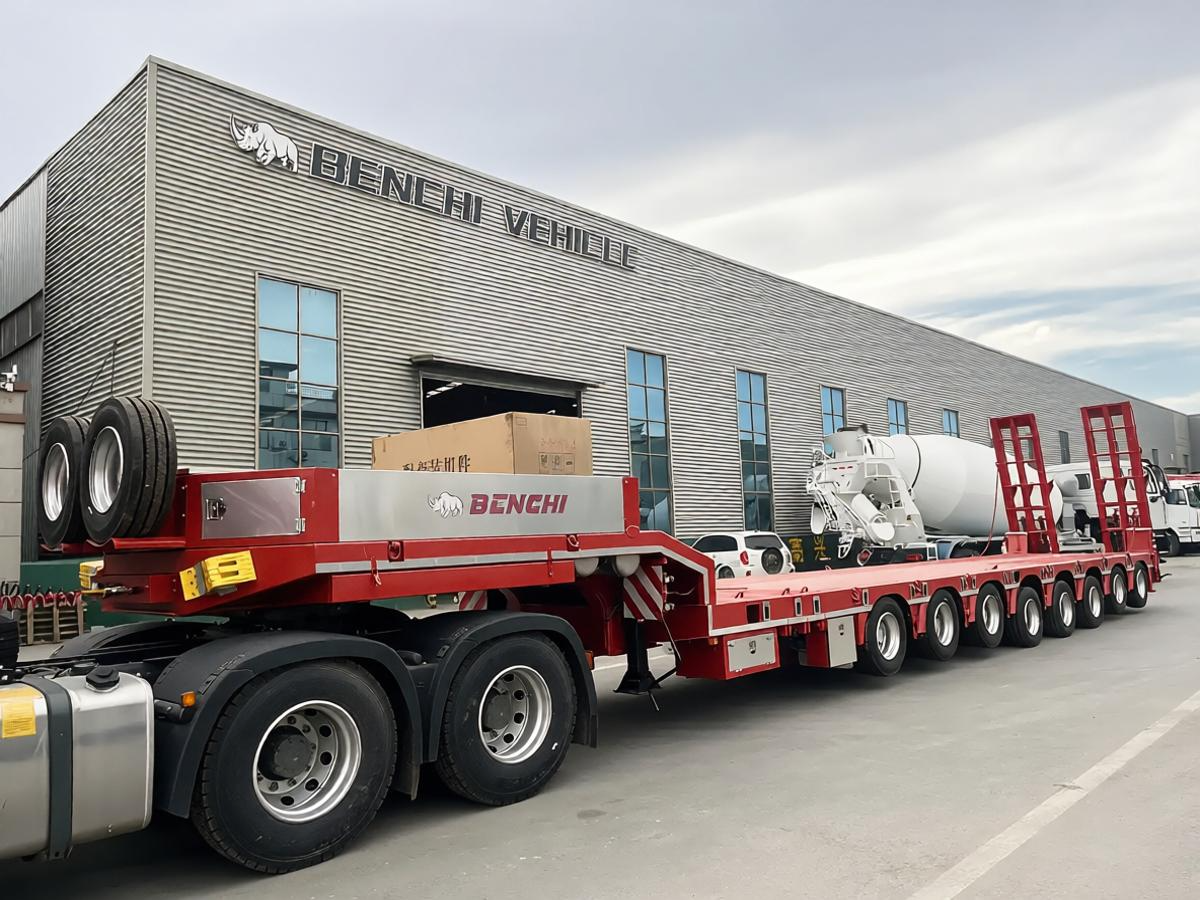
Core Powertrain and Structural Design
A semi trailer does not normally have an independent propulsion system. It is coupled to a powered tractor unit, and its performance depends on the compatibility of the trailer structure, running gear, braking system, and tractor.
Tractor Compatibility and Coupling System
Before purchasing a semi trailer in Wisconsin, buyers should verify compatibility with the tractors already operating in their fleet.
Important considerations include:
-
Kingpin specification: The kingpin must match the tractor's fifth-wheel arrangement and applicable load requirements.
-
Fifth-wheel height: Trailer coupling height affects deck level, clearance, and weight distribution.
-
Gross combination weight: The tractor and trailer must operate within their applicable ratings and legal limits.
-
Electrical connections: Lighting, ABS, and other electronic systems must be compatible.
-
Air connections: Service and emergency air connections must match the trailer braking system.
A trailer that is structurally sound may still require modifications or adjustments if it is not compatible with the fleet's tractors.
Hydraulic Systems for Specialized Trailers
Hydraulic systems are common on dump trailers, walking-floor trailers, liftgate trailers, and certain specialized equipment.
A dump trailer uses hydraulic cylinders to raise the body for unloading. A walking-floor trailer uses a hydraulic drive system to move the floor and discharge cargo without conventional tipping. Liftgate trailers use hydraulic power to raise or lower goods at delivery locations.
Buyers should evaluate:
-
Hydraulic cylinder condition and capacity.
-
Pump and power-source compatibility.
-
Hose routing and protection.
-
Control-valve operation.
-
Hydraulic connections and seals.
-
Availability of replacement components.
For used equipment, signs of leakage, damaged hoses, uneven cylinder movement, and excessive wear should be investigated before purchase.
Chassis, Axles, and Structural Durability
The chassis carries cargo loads and transfers them through the suspension and axles to the road surface. Its condition has a direct effect on safety, payload capability, and maintenance costs.
Key inspection areas include:
-
Main frame rails and crossmembers.
-
Kingpin mounting area.
-
Landing gear and support structure.
-
Axle mounts and suspension brackets.
-
Floor condition and crossmember spacing.
-
Welds, fasteners, and previous repairs.
-
Corrosion around structural joints.
Wisconsin operating conditions can expose trailers to moisture, road salt, and seasonal temperature changes. Buyers should pay particular attention to corrosion on the undercarriage, brake components, electrical connections, and structural sections.
Suspension, Braking, and Tire Systems
Common semi-trailer suspension options include air suspension and mechanical spring suspension. The right choice depends on cargo sensitivity, road conditions, maintenance preferences, and the trailer's intended application.
Air suspension may provide improved ride characteristics and adjustable ride height on compatible equipment. Mechanical suspension may offer a simpler arrangement for certain heavy-duty applications.
Braking systems should be checked for serviceability and compatibility with the tractor. Buyers should inspect brake chambers, air lines, valves, drums or rotors, slack adjusters where fitted, and ABS components.
Tire condition also affects operating cost. Uneven wear can indicate alignment problems, suspension issues, incorrect inflation, or axle-related defects.
Safety and Serviceability
Commercial trailers should provide accessible inspection points and maintainable components.
Important safety and service features include:
-
Functional lighting and conspicuity markings.
-
Secure cargo tie-down points.
-
Properly rated landing gear.
-
Serviceable brakes and tires.
-
Accessible air and electrical connections.
-
Appropriate underride and side-protection equipment where required.
-
Clearly documented maintenance and repair history.
Buyers should also confirm that the trailer meets applicable federal and Wisconsin transportation requirements for its intended use.
Technical Specifications
The specifications of semi trailers available in Wisconsin vary significantly by type, manufacturer, model year, and configuration. A dry van, refrigerated trailer, flatbed, dump trailer, and lowboy are designed for different cargo requirements and operating conditions.
The following table provides a practical comparison of the main parameters to review when evaluating equipment for sale. Actual ratings must be verified from the trailer identification plate, manufacturer documentation, and inspection records.
|
Key Parameter |
Typical Technical Specification |
Operational Significance |
|---|---|---|
|
Trailer type |
Dry van, reefer, flatbed, dump, lowboy, or tanker |
Determines suitable cargo and operating application |
|
Overall length |
Common commercial configurations vary by market and regulation |
Affects cargo capacity and route compliance |
|
Axle configuration |
Single, tandem, or multi-axle arrangements |
Influences load distribution and legal capacity |
|
Suspension |
Air or mechanical spring suspension |
Affects ride quality and maintenance |
|
Braking system |
Pneumatic service brakes with ABS where equipped |
Supports safe and controlled braking |
|
Payload capacity |
Depends on trailer rating and legal weight limits |
Determines usable cargo capacity |
|
Deck or body design |
Enclosed, open, refrigerated, tipping, or specialized |
Determines loading and unloading capability |
|
Tire configuration |
Size, load rating, and approved wheel arrangement |
Influences load support and operating cost |
Matching Specifications to the Application
For general freight distribution, dry van trailers provide enclosed cargo protection. Refrigerated trailers require suitable insulation, refrigeration equipment, and temperature-control performance.
Flatbed trailers are suitable for cargo that needs open access, while dump trailers are designed for bulk materials such as aggregates, soil, and certain construction products.
Lowboy trailers provide a lower deck for transporting tall machinery and equipment. Tank trailers require specialized vessel construction, material compatibility, inspection, and regulatory compliance.
The correct specification should be selected according to the cargo's dimensions, weight, loading method, route, and frequency of use.
Comparative Advantages TCO and ROI
When evaluating Wisconsin semi trailer sales, buyers typically compare new trailers, used trailers, and specialized configurations. Each option has different purchase costs, maintenance risks, and expected operating benefits.
New Semi Trailers vs. Used Semi Trailers
New semi trailers offer several advantages:
-
Known manufacturing configuration and specifications.
-
New structural, braking, and suspension components.
-
Manufacturer warranty according to its terms.
-
Greater opportunity to specify optional equipment.
-
Lower initial uncertainty about maintenance history.
However, new trailers generally require a larger initial investment and may involve longer manufacturing or delivery lead times depending on availability.
Used semi trailers can reduce the initial purchase cost and may be available for immediate deployment. They can be suitable for fleet expansion, seasonal demand, or applications where a new trailer is not financially justified.
Their condition must be assessed carefully. Previous operating hours, cargo type, maintenance history, accident repairs, corrosion, and component wear can significantly affect future costs.
Standard Trailers vs. Specialized Trailers
Standard dry vans and flatbeds can serve a broad range of transportation needs. Specialized trailers are designed for particular cargo or loading requirements.
Examples include:
-
Refrigerated trailers for temperature-sensitive products.
-
Dump trailers for bulk construction materials.
-
Lowboy trailers for heavy machinery.
-
Tank trailers for approved liquid or bulk products.
-
Walking-floor trailers for suitable loose materials.
A specialized trailer may improve operational efficiency when it matches a frequent transport requirement. However, it may have a narrower resale market and higher maintenance or compliance costs.
Total Cost of Ownership
The purchase price is only one part of trailer ownership. A realistic total cost of ownership calculation should include:
-
Purchase price and financing.
-
Registration, title, and applicable taxes.
-
Insurance.
-
Tires and wheel-end maintenance.
-
Brake and suspension repairs.
-
Structural and corrosion-related repairs.
-
Hydraulic or refrigeration system maintenance.
-
Inspection and compliance expenses.
-
Downtime and replacement transport costs.
Wisconsin buyers should also consider seasonal operating conditions. Winter road salt and moisture can increase corrosion-related maintenance, making undercarriage condition and protective coatings important factors.
Return on Investment
The financial return from a trailer depends on utilization, cargo revenue, maintenance expenses, and the cost of alternative transportation.
For example, a fleet considering an additional flatbed trailer should estimate the annual number of loads, average revenue per trip, expected empty mileage, driver costs, fuel consumption, maintenance, and financing expenses.
A used trailer with a lower purchase price may provide an attractive return if it is mechanically sound and used regularly. However, significant repairs or extended downtime can eliminate the initial price advantage.
The most reliable buying decision comes from comparing the expected annual operating cost of each trailer against the transportation work it will perform.
Heavy Duty Application Scenarios
Wisconsin semi trailers support a range of commercial applications across freight transportation, agriculture, construction, manufacturing, and industrial logistics.
Freight and Distribution
Dry van trailers are widely used for transporting packaged goods, pallets, consumer products, and general freight.
Important selection factors include:
-
Interior dimensions and usable cargo volume.
-
Door configuration.
-
Floor strength and condition.
-
Cargo restraint equipment.
-
Roof and wall integrity.
-
Axle and suspension ratings.
Fleet operators should also evaluate dock compatibility and loading efficiency at distribution centers.
Agriculture and Food Transportation
Agricultural and food-related operations may require dry vans, refrigerated trailers, tank trailers, or specialized bulk transport equipment.
Refrigerated trailers must be evaluated for insulation condition, refrigeration-unit performance, temperature monitoring, and maintenance history.
For agricultural bulk materials, the trailer body and unloading system should match the material's density, moisture characteristics, and discharge requirements.
Construction and Infrastructure
Construction companies often require flatbed, dump, and lowboy trailers.
-
Flatbeds transport steel, lumber, building materials, and equipment.
-
Dump trailers move aggregates, soil, and other compatible loose materials.
-
Lowboy trailers transport excavators, loaders, bulldozers, and other heavy machinery.
Buyers should confirm deck height, ramp configuration, axle ratings, tie-down capacity, and compatibility with the machinery being transported.
Manufacturing and Industrial Logistics
Manufacturers may need specialized trailers for machinery, fabricated steel, industrial components, and oversized cargo.
The trailer must provide sufficient deck length, width, payload rating, and cargo restraint capability. For unusually large or heavy loads, route planning and special transport approvals may also be necessary.
Regional and Long-Distance Trucking
Fleet operators working across Wisconsin and neighboring states should consider route length, highway use, seasonal conditions, maintenance availability, and interstate compatibility.
Trailer reliability becomes especially important when equipment operates over long distances and must meet delivery schedules. Tire condition, braking performance, suspension maintenance, and lighting reliability all contribute to fleet availability.
Selection and Maintenance Considerations
A successful semi trailer purchase begins with defining the intended application and inspecting the equipment against a consistent checklist.
Choose the Correct Trailer Type
Start with the cargo and loading requirements.
-
Choose a dry van for enclosed general freight.
-
Choose a refrigerated trailer for temperature-controlled cargo.
-
Choose a flatbed for open-deck transportation.
-
Choose a dump trailer for compatible loose bulk materials.
-
Choose a lowboy for machinery and equipment requiring a low loading deck.
-
Choose a tank trailer only when its vessel specifications and regulatory approvals match the intended product.
The trailer type should be selected before comparing individual listings.
Inspect Used Semi Trailers Carefully
A physical inspection is particularly important when buying used equipment.
Recommended inspection points include:
-
Check the VIN and identification plate against the sales documents.
-
Inspect the main frame, crossmembers, and structural welds.
-
Examine the kingpin and fifth-wheel contact area.
-
Check landing gear for damage and proper operation.
-
Inspect tires, wheels, hubs, and axle alignment.
-
Examine suspension components and mounting brackets.
-
Test the braking and ABS systems.
-
Check lights, wiring, and electrical connectors.
-
Inspect the floor, doors, roof, and body panels.
-
Review maintenance records and previous repair documentation.
For refrigerated, hydraulic, tank, and other specialized trailers, additional application-specific inspections are necessary.
Consider Wisconsin Operating Conditions
Wisconsin's winter conditions make corrosion prevention and undercarriage inspection important parts of trailer ownership.
Buyers should check for:
-
Frame and crossmember corrosion.
-
Damaged protective coatings.
-
Rust around suspension brackets.
-
Corrosion on brake chambers and air fittings.
-
Electrical connector deterioration.
-
Tire condition after seasonal operation.
Regular washing, appropriate corrosion protection, and timely repairs can help preserve structural condition.
Verify Legal and Regulatory Compliance
Before purchase, confirm that the trailer meets applicable federal and Wisconsin requirements for its intended operation.
Relevant areas include:
-
Vehicle registration and title documentation.
-
Applicable gross vehicle and axle-weight limits.
-
Required lighting and conspicuity markings.
-
Brake-system and ABS requirements where applicable.
-
Periodic inspection requirements.
-
Cargo securement provisions.
-
Special permits for oversized or overweight loads.
Tank trailers and other regulated equipment may have additional inspection, material, and operating requirements.
Evaluate Dealer and After-Sales Support
When comparing Wisconsin semi trailer dealers, buyers should consider more than inventory and advertised prices.
Useful questions include:
-
Is the trailer new or used?
-
Is the title documentation available?
-
Can the dealer provide maintenance records?
-
Is an independent inspection permitted?
-
Are financing options available?
-
What warranty coverage is included?
-
Can the dealer arrange delivery?
-
Are replacement parts and repair services available?
-
Does the dealer support the specific trailer type?
For fleet purchases, parts availability and repair support can be as important as the initial purchase price.
Conclusion
Wisconsin semi trailer sales offer fleet operators access to equipment for freight distribution, agriculture, construction, manufacturing, and specialized transportation. Choosing the right trailer requires matching its body design, payload rating, axle configuration, suspension, braking system, and structural condition to the intended application.
New trailers can provide known specifications and manufacturer support, while used trailers may reduce initial capital requirements when their condition and maintenance history are satisfactory. In either case, buyers should evaluate the complete ownership cost rather than focusing only on the advertised price.
For Wisconsin trucking businesses, a careful assessment of trailer compatibility, corrosion condition, legal compliance, dealer support, and expected utilization helps build a more reliable and cost-effective fleet.