

Introduction
Transportation companies in Wisconsin face ongoing pressure to control fuel expenses, improve fleet utilization, reduce maintenance downtime, and meet delivery schedules throughout the year. Choosing the right semi trailer is an important part of managing these operating demands. Wisconsin semi trailer sales serve a diverse market that includes trucking companies, agricultural businesses, construction contractors, manufacturers, distributors, and independent owner-operators.
A semi trailer is an unpowered transport unit supported partly by its own axles and partly by a towing tractor through a fifth-wheel coupling. It is designed to carry cargo while transferring a portion of its vertical load to the tractor. Common configurations include dry vans, refrigerated trailers, flatbeds, step decks, dump trailers, tank trailers, and specialized equipment haulers.
Buyers searching for semi trailers for sale in Wisconsin should evaluate more than the advertised price. Trailer type, payload capacity, axle configuration, suspension, braking system, deck or interior dimensions, tire condition, structural integrity, and service history all affect long-term operating performance.
Wisconsin's climate also deserves attention. Snow, road salt, moisture, and seasonal temperature changes can accelerate corrosion and affect braking components, electrical connections, tires, and structural parts. A trailer suitable for year-round operation therefore needs appropriate materials, protective finishes, maintenance access, and a realistic inspection plan.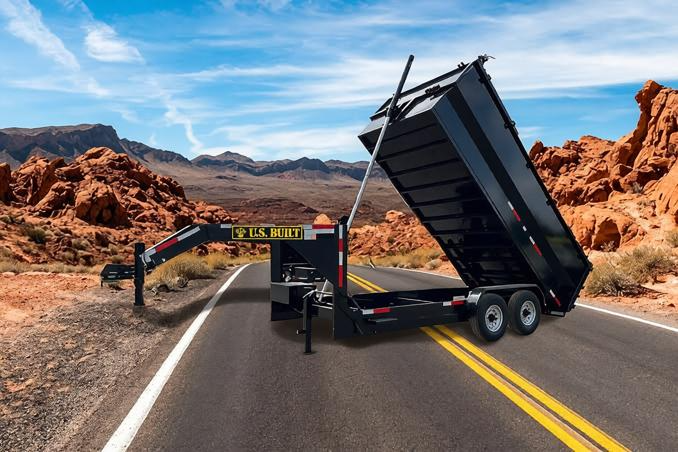
Core Powertrain and Structural Design
Unlike a powered truck, a conventional semi trailer does not have its own main engine or transmission. Its operating performance depends on the towing tractor, trailer chassis, suspension, axles, braking equipment, and cargo-support structure. Some specialized trailers have auxiliary power units or hydraulic systems, but these are configuration-dependent features rather than standard equipment on every trailer.
Tractor Compatibility and Transmission
The towing tractor supplies the propulsion required to move the trailer. Its engine power, torque, transmission ratios, fifth-wheel position, and gross combination weight rating must be compatible with the loaded trailer and intended route.
A trailer's loaded weight influences acceleration, climbing performance, braking distance, and fuel consumption. Buyers should therefore evaluate the tractor and trailer as one operating combination rather than selecting a trailer independently.
Important compatibility factors include:
-
Fifth-wheel height and position: These determine coupling geometry, load distribution, and trailer clearance.
-
Kingpin specification: The kingpin must match the tractor's fifth-wheel coupling.
-
Gross combination weight rating: The tractor and trailer combination must remain within applicable vehicle ratings and legal limits.
-
Axle distribution: Load placement must maintain appropriate weight distribution across the tractor and trailer axles.
-
Electrical and air connections: The tractor must support the trailer's lighting, braking, and auxiliary electrical requirements.
A properly matched combination helps reduce uneven tire wear, excessive axle loading, handling problems, and unnecessary mechanical stress.
Hydraulic System
Hydraulic equipment is relevant to specific semi trailer categories, including dump trailers, walking-floor trailers, and certain specialized loading systems. Standard dry vans and many flatbeds do not require an onboard hydraulic power system.
For a hydraulic dump trailer, the system typically includes a hydraulic pump, reservoir, control valve, cylinders, hoses, and associated fittings. The system raises the trailer body to discharge material.
Buyers should consider:
-
Hydraulic cylinder configuration and lifting geometry.
-
Required operating pressure and flow rate.
-
Pump compatibility with the tractor's power take-off, where applicable.
-
Hose routing and protection against abrasion.
-
Seal condition, leakage, and ease of maintenance.
-
Availability of replacement hydraulic components.
Hydraulic specifications should be checked against the manufacturer's documentation. A higher lifting capacity should never be assumed solely from the number or size of hydraulic cylinders.
Chassis and Structural Durability
The chassis is the primary load-bearing structure of a semi trailer. It transfers cargo forces through the crossmembers, main beams, suspension mounting points, axles, kingpin, and landing gear.
Common structural materials include high-strength steel and aluminum. Steel frames are widely used where impact resistance, structural strength, and repairability are important. Aluminum can reduce empty trailer weight, potentially increasing legal payload capacity where weight limits permit.
Key structural components include:
-
Main beams: Carry major longitudinal loads and support the trailer deck or body.
-
Crossmembers: Distribute cargo loads across the chassis width.
-
Kingpin and upper coupler plate: Connect the trailer to the tractor and transfer coupling forces.
-
Landing gear: Supports the front of the uncoupled trailer.
-
Axle mounting structure: Transfers suspension and road forces into the chassis.
-
Deck or cargo enclosure: Supports and protects the transported goods.
For Wisconsin operations, corrosion protection is particularly important. Road salt and moisture can damage exposed steel, fasteners, brake components, wiring connectors, and suspension hardware. Buyers should inspect frame surfaces, welds, mounting brackets, and concealed areas where water or debris can accumulate.
Suspension, Braking, and Operator Safety
Trailer suspension influences ride quality, tire contact, cargo protection, and axle load distribution. Common configurations include mechanical leaf-spring suspension and air-ride suspension.
Air-ride suspension uses air springs to support the trailer and can help reduce vibration transmitted to sensitive cargo. Mechanical suspension is often valued for its relatively straightforward construction and service requirements.
Trailer braking systems commonly use compressed air and may incorporate anti-lock braking systems (ABS). Electronic braking systems (EBS) are available on certain configurations and markets.
Buyers should inspect:
-
Brake chambers and air lines.
-
Brake drums or discs, depending on configuration.
-
ABS wiring and wheel-speed sensors.
-
Air reservoirs and drainage arrangements.
-
Tires, wheels, and wheel-end components.
-
Reflective markings, lighting, and conspicuity equipment.
-
Landing gear stability and locking mechanisms.
In the United States, applicable Federal Motor Vehicle Safety Standards and Federal Motor Carrier Safety Regulations should be considered when evaluating trailer braking, lighting, inspection, and roadworthiness requirements. Actual compliance obligations depend on vehicle type, operating conditions, and applicable regulations.
Technical Specifications
Semi trailer specifications vary considerably according to body style, manufacturer, model, axle arrangement, and intended cargo. Buyers comparing Wisconsin semi trailer sales should request the manufacturer's specification sheet and verify the trailer's identification plate, weight ratings, dimensions, and installed equipment.
The following table summarizes the main parameters to evaluate. It is a purchasing checklist, not a set of universal specifications.
|
Key Parameter |
Typical Technical Specification |
Operational Significance |
|---|---|---|
|
Trailer configuration |
Dry van, flatbed, reefer, dump, tank, or lowboy |
Determines cargo suitability and loading method |
|
Overall length |
Common highway configurations include 48 ft and 53 ft |
Affects cargo space and route compatibility |
|
Trailer width |
Common North American highway width is approximately 8.5 ft where permitted |
Influences cargo dimensions and legal clearance |
|
Axle configuration |
Tandem, spread axle, or other approved arrangements |
Affects load distribution and maneuverability |
|
Suspension |
Air ride or mechanical leaf spring |
Influences ride quality and maintenance requirements |
|
Braking system |
Air brakes, with ABS and other available controls |
Supports braking performance and regulatory compliance |
|
Frame material |
Steel, aluminum, or mixed construction |
Affects empty weight, durability, and corrosion management |
|
Payload capacity |
Determined by rated weights, empty weight, axle ratings, and legal limits |
Determines usable cargo capacity |
Understanding Weight Ratings
Weight ratings are among the most important specifications when buying a semi trailer.
-
GVWR (Gross Vehicle Weight Rating): The maximum permitted total weight of the loaded trailer as specified by its manufacturer.
-
GAWR (Gross Axle Weight Rating): The maximum rated load for an individual axle or axle group, as applicable.
-
Tare weight: The trailer's empty operating weight.
-
Payload: The cargo weight the trailer can legally and safely carry under the applicable weight limits.
A trailer with a high GVWR does not automatically provide the highest usable payload. Its empty weight, axle ratings, tire ratings, tractor capacity, and applicable road-weight restrictions must all be considered.
Comparative Advantages TCO and ROI
Buyers in Wisconsin can generally compare three purchasing approaches: new trailers, used trailers, and specialized or custom-built trailers. Each option has different acquisition costs, maintenance risks, and operational advantages.
New Semi Trailers
New semi trailers typically offer the advantage of documented specifications, known manufacturing history, and access to applicable manufacturer warranty coverage.
Potential advantages include:
-
Lower initial uncertainty about structural condition.
-
Access to current available braking and suspension configurations.
-
Greater flexibility when ordering specific dimensions or equipment.
-
A clearer maintenance baseline from the beginning of ownership.
The main disadvantage is the higher initial purchase cost compared with many used alternatives. Buyers should also consider manufacturing lead times, delivery costs, financing, and optional equipment expenses.
Used Semi Trailers
Used semi trailers can reduce the initial investment and may be suitable for businesses expanding capacity or replacing equipment on a limited budget.
However, purchase price alone does not determine value. A low-priced trailer may require immediate tire replacement, brake repairs, structural work, electrical troubleshooting, or corrosion treatment.
A used trailer inspection should include:
-
Frame alignment and visible structural damage.
-
Cracks around welds and suspension mounting points.
-
Rust, corrosion, and evidence of previous repairs.
-
Tire tread depth, sidewall condition, and tire age.
-
Brake condition and air-system leakage.
-
Landing gear operation.
-
Lighting, wiring, and electrical connectors.
-
Floor, roof, doors, or tank condition, depending on trailer type.
-
Maintenance records and available ownership documentation.
A professional inspection can help identify problems that are difficult to detect during a brief visual review.
Specialized and Custom Semi Trailers
Specialized trailers are designed for cargo or operating conditions that standard equipment may not accommodate efficiently. Examples include lowboys for heavy machinery, refrigerated trailers for temperature-sensitive products, and tank trailers for liquid or bulk transportation.
Custom configurations may improve operational suitability, but they can also increase initial cost, maintenance complexity, and parts requirements. Buyers should confirm that the design meets the cargo requirements and applicable road regulations before placing an order.
Total Cost of Ownership and ROI
Total cost of ownership (TCO) includes the purchase price and the expenses incurred throughout the trailer's operating life.
Important cost categories include:
-
Initial purchase price and financing.
-
Registration, taxes, and applicable fees.
-
Tires, brakes, bearings, and suspension maintenance.
-
Structural repairs and corrosion protection.
-
Fuel-related costs associated with trailer weight and aerodynamic performance.
-
Insurance and operating expenses.
-
Downtime and replacement transportation costs.
-
Resale value at the end of ownership.
For example, consider a fleet comparing a new trailer with a used trailer over a five-year ownership period. The used option may have a lower purchase price, but its actual financial advantage depends on repair costs, tire condition, downtime, utilization, financing, and resale value.
A useful comparison is:
Five-year TCO = Purchase cost + financing + maintenance + tires + operating-related costs + downtime costs − resale value
To estimate return on investment, fleet managers should compare the additional investment in a more suitable trailer with measurable benefits such as increased legal payload, fewer repairs, reduced loading time, or improved cargo protection.
Any ROI calculation should use actual fleet utilization, local labor rates, fuel prices, maintenance records, and realistic resale assumptions. No trailer configuration guarantees a specific financial return.
Heavy Duty Application Scenarios
Wisconsin has a broad commercial and industrial transportation market. Different industries require different trailer configurations, loading systems, and structural capacities.
Construction and Heavy Equipment Transportation
Flatbed, step deck, and lowboy trailers are commonly considered for transporting construction machinery, agricultural equipment, and industrial components.
Selection factors include:
-
Equipment operating weight and transport dimensions.
-
Deck height and loading clearance.
-
Ramp capacity and loading angle.
-
Axle configuration and load distribution.
-
Tie-down points and cargo-restraint requirements.
-
Tractor compatibility and route restrictions.
For heavy machinery, the loading method and securement system are as important as the trailer's rated capacity.
Agriculture and Bulk Material Transportation
Agricultural operations may require flatbeds, grain trailers, hopper trailers, or dump trailers, depending on the material and unloading process.
Seasonal work can create high utilization during planting and harvesting periods. Buyers should consider loading speed, unloading equipment, corrosion protection, tire capacity, and the availability of replacement components.
For bulk materials, trailer selection must account for material density, moisture, discharge method, and the possibility of uneven loading.
Manufacturing and General Freight
Dry van trailers are commonly used to transport packaged products, manufactured goods, pallets, and general freight.
Important considerations include:
-
Interior dimensions and usable cargo volume.
-
Door opening dimensions.
-
Floor condition and load-bearing capability.
-
Interior wall protection and cargo restraint.
-
Roof integrity and water resistance.
-
Suspension performance for sensitive goods.
For businesses handling frequent dock loading, door reliability, floor durability, and compatibility with warehouse equipment can significantly affect daily productivity.
Refrigerated Transportation
Refrigerated semi trailers, commonly called reefers, are designed to maintain controlled cargo temperatures during transportation.
Their configuration may include insulated walls, specialized doors, a refrigeration unit, temperature monitoring, and drainage arrangements.
Buyers should evaluate the refrigeration unit's operating condition, temperature-control capability, maintenance history, insulation integrity, and service availability. The required temperature range depends on the cargo and shipping requirements.
Industrial and Infrastructure Projects
Infrastructure contractors may need trailers for transporting steel sections, precast components, pipes, machinery, or other oversized materials.
These applications can involve unusual cargo dimensions and concentrated loads. A standard trailer should not be assumed suitable simply because its overall weight rating appears sufficient. Engineering review, cargo securement planning, axle-load calculations, and route-permit requirements may be necessary.
Selection and Maintenance Considerations
Choosing the right semi trailer in Wisconsin requires a structured purchasing process. Fleet managers should begin with cargo requirements and operating conditions, then compare trailer specifications, supplier support, and total ownership costs.
1. Match Trailer Type to Cargo
Start by identifying the cargo's weight, dimensions, shape, loading method, and environmental requirements.
-
Choose a dry van for enclosed general freight.
-
Choose a refrigerated trailer for temperature-controlled cargo.
-
Choose a flatbed for cargo loaded from the side or above.
-
Choose a step deck when additional vertical clearance is needed.
-
Choose a lowboy for suitable heavy equipment and machinery transport.
-
Choose a dump trailer for compatible loose materials.
-
Choose a tank trailer for liquids or other specified bulk products.
The correct choice depends on both cargo characteristics and the transportation process.
2. Verify Dimensions and Weight Ratings
Confirm overall length, width, height, deck height, axle configuration, GVWR, GAWR, tire ratings, and kingpin specifications.
Do not rely only on an advertised payload figure. Confirm the trailer's actual empty weight and calculate the available legal payload after considering tractor, axle, tire, and road-weight limitations.
For oversized or overweight cargo, check route restrictions and permit requirements before purchasing.
3. Evaluate Wisconsin Climate Resistance
Wisconsin's winter conditions can expose trailers to road salt, moisture, freezing temperatures, and repeated temperature changes.
Buyers should prioritize:
-
Effective corrosion protection on steel components.
-
Inspection access around frame members and suspension mounts.
-
Durable electrical connectors and protected wiring.
-
Proper air-line routing and drainage.
-
Regular cleaning of salt and road debris.
-
Suitable tires and brakes for the intended operating conditions.
For used trailers, inspect areas where corrosion may be hidden beneath coatings, around crossmembers, and near suspension attachments.
4. Check Parts Availability and Dealer Support
A semi trailer purchase is a long-term equipment decision. Local service capability can influence downtime and operating costs.
Before buying, ask the seller about:
-
Availability of replacement axles, brakes, suspension parts, and landing gear.
-
Access to compatible tires and wheel components.
-
Warranty terms and exclusions.
-
Repair facilities and mobile service options.
-
Technical documentation and maintenance guidance.
-
Delivery arrangements and post-sale support.
A supplier's ability to provide parts and technical assistance can be particularly important for fleets operating on tight delivery schedules.
5. Establish a Preventive Maintenance Program
Routine inspection helps identify developing problems before they cause roadside failures or expensive repairs.
A practical maintenance program should include:
Before each trip:
-
Check tires, wheels, and visible suspension components.
-
Inspect brake connections and air lines.
-
Test lights and electrical connections.
-
Check landing gear and coupling security.
-
Confirm cargo securement and door operation.
During scheduled maintenance:
-
Inspect brake wear and adjustment.
-
Check wheel-end condition and bearing lubrication where applicable.
-
Examine frame members, welds, and suspension mounts.
-
Inspect air springs, leaf springs, and mounting hardware.
-
Check floor, roof, doors, and seals.
-
Clean corrosion-prone areas and repair damaged protective coatings.
Maintenance intervals should follow the manufacturer's instructions, applicable inspection requirements, and actual operating conditions.
6. Compare the Full Purchase Offer
When evaluating Wisconsin semi trailer sales, compare suppliers using the same specification requirements.
A complete quotation should identify:
-
Trailer type and model.
-
New or used condition.
-
Manufacturing year, where applicable.
-
Overall dimensions and weight ratings.
-
Axle and suspension configuration.
-
Tire and braking specifications.
-
Included accessories and optional equipment.
-
Warranty coverage.
-
Delivery costs and estimated lead time.
-
Available after-sales services.
For used equipment, request maintenance documentation and arrange an independent inspection when the purchase value or condition warrants it.
Conclusion
Buying the right semi trailer in Wisconsin requires balancing cargo requirements, structural durability, legal weight limits, operating conditions, maintenance needs, and total ownership cost. New trailers can provide a clearer equipment history and configuration options, while used trailers may offer a lower initial investment when their condition and maintenance records are satisfactory.
For Wisconsin fleets, corrosion resistance, reliable braking equipment, accessible replacement parts, and consistent preventive maintenance deserve particular attention because of seasonal weather and winter road conditions.
The most effective purchasing decision is based on verified specifications, tractor compatibility, realistic payload calculations, and dependable supplier support. By evaluating these factors together, trucking companies, contractors, agricultural operators, and independent owner-operators can select semi trailers that support safe transportation, reliable fleet operation, and long-term commercial value.