

Introduction
Distribution centers face continuous pressure to increase cargo throughput, shorten vehicle turnaround times, control labor costs, and reduce loading delays. As warehouse operations expand and cross-docking becomes more important, transportation equipment must support efficient cargo handling as well as reliable road performance.
A wing van semi trailer is a commercial trailer with large side panels that open upward, creating wide side access to the cargo compartment. The raised panels function as protective covers when closed and allow forklifts or other suitable material-handling equipment to access cargo from the sides when open. Depending on the design, the wings may be operated by hydraulic mechanisms or other manufacturer-specified systems.
For distribution centers, the main advantage is side-loading accessibility. Unlike a conventional enclosed dry van, which generally relies on rear-door access, a wing van can support loading and unloading along a substantial portion of its cargo area. This can be useful for facilities with suitable side-loading lanes, forklift access, and cross-docking workflows.
Wing van semi trailers are particularly relevant to:
-
Regional distribution centers handling palletized goods.
-
Cross-docking facilities transferring cargo between vehicles.
-
Manufacturing plants distributing finished products.
-
Retail and wholesale warehouse networks.
-
Logistics operators handling frequent multi-stop deliveries.
-
Industrial facilities requiring side access to packaged materials.
However, a wing van is not automatically the best choice for every distribution center. Buyers must evaluate cargo dimensions, loading equipment, warehouse layout, hydraulic reliability, structural strength, weather protection, and transportation regulations before selecting a configuration.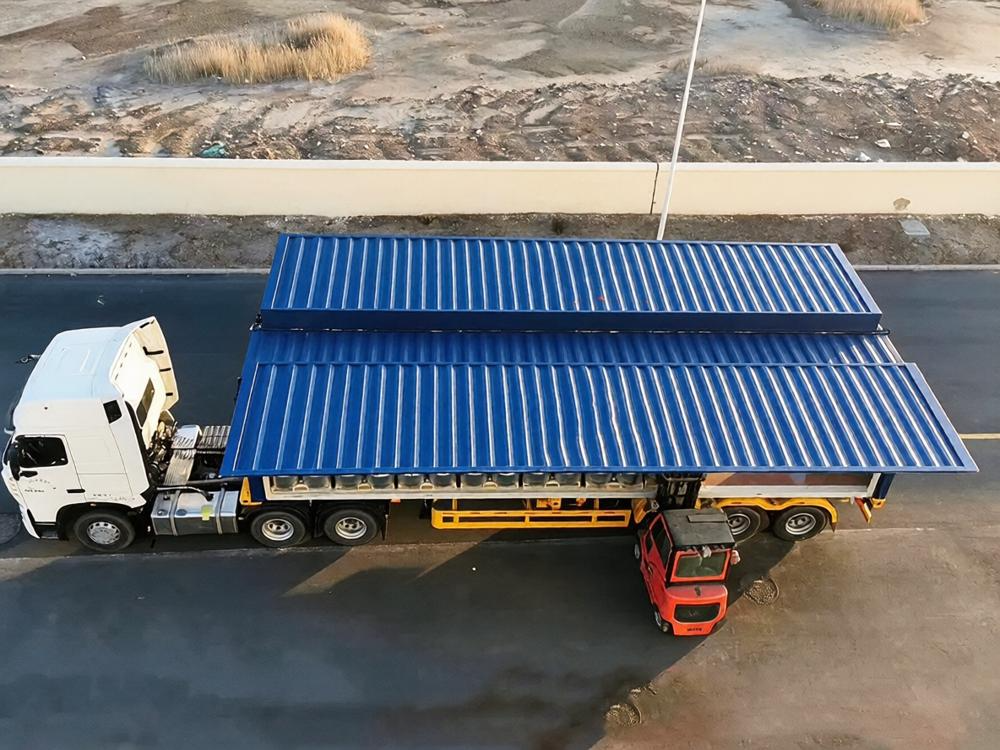
Core Powertrain and Structural Design
A wing van semi trailer is an unpowered transport unit. Its performance depends on the towing tractor, chassis structure, axle and suspension arrangement, braking equipment, cargo enclosure, and wing-opening mechanism. Unlike a conventional dry van, its side panels and supporting structure require additional engineering to accommodate repeated opening and closing cycles.
Tractor and Transmission Compatibility
The towing tractor provides the engine power and transmission required to move the loaded trailer. Its rated capacity must be suitable for the trailer's gross vehicle weight rating, actual cargo weight, route conditions, and applicable road-weight restrictions.
When selecting a wing van for distribution center operations, buyers should verify:
-
Fifth-wheel compatibility: The tractor's fifth wheel must match the trailer's kingpin and coupling arrangement.
-
Coupling height: Tractor and trailer geometry should maintain appropriate deck level and clearance.
-
Gross combination weight: The loaded combination must remain within the applicable vehicle ratings and legal limits.
-
Axle load distribution: Cargo placement must not create excessive loading on individual axles or axle groups.
-
Electrical and air connections: The tractor must support the trailer's lighting and braking systems.
-
Auxiliary power availability: If the wing mechanism uses an electrically powered hydraulic pump, the required power supply must be compatible with the trailer configuration.
A suitable tractor-trailer combination supports stable operation, predictable braking, and efficient transportation between distribution centers.
Hydraulic Wing System
The hydraulic wing system is one of the defining components of many wing van semi trailers. It raises and lowers the side panels to provide access to the cargo compartment.
A typical hydraulic arrangement may include:
-
Hydraulic power unit or pump.
-
Hydraulic reservoir.
-
Control valves.
-
Hydraulic cylinders.
-
Hoses and fittings.
-
Electrical controls or other specified actuation equipment.
-
Mechanical locks and safety devices.
When activated, hydraulic cylinders apply force to raise the wing panels. The opening geometry depends on the hinge arrangement, cylinder position, panel weight, and structural design.
For distribution centers with frequent loading cycles, hydraulic reliability directly affects vehicle availability. Buyers should examine cylinder capacity, hose protection, seal quality, operating controls, and the availability of replacement components.
Important purchasing considerations include:
-
Smooth and controlled wing movement.
-
Consistent opening and closing performance.
-
Protection against accidental operation.
-
Reliable mechanical locking when the wings are closed.
-
Safe maintenance access to hydraulic components.
-
Emergency procedures for hydraulic failure.
Hydraulic pressure, cylinder dimensions, pump output, and operating time should be taken from the manufacturer's specifications. They should not be assumed from the trailer's external dimensions or appearance.
Chassis and Structural Durability
The chassis supports the cargo compartment and transfers loads between the kingpin, suspension, axles, and trailer body. A wing van must also support the additional structural forces associated with its side panels, hinges, lifting mechanisms, and opening operation.
Major structural components include:
-
Main longitudinal beams: Carry the primary loads along the trailer.
-
Crossmembers: Distribute cargo loads across the chassis.
-
Floor structure: Supports palletized goods and forklift wheel loads.
-
Kingpin and upper coupler plate: Connect the trailer to the tractor.
-
Axle and suspension mounting points: Transfer road and cargo forces into the running gear.
-
Wing hinges and support structures: Carry the loads associated with the opening panels.
-
Side and roof framework: Maintain enclosure rigidity and weather protection.
The wing panels must remain sufficiently rigid to resist operational vibration and environmental loads. Their supporting structure should also maintain alignment during repeated opening and closing cycles.
Material selection varies by manufacturer and design. Steel is commonly used for load-bearing chassis structures, while aluminum and composite materials may be used in selected body components to manage weight. Buyers should compare empty weight, structural strength, corrosion resistance, and repair requirements rather than choosing materials based on weight alone.
Cargo Floor and Loading Equipment Compatibility
Distribution centers frequently use forklifts, pallet trucks, and other material-handling equipment. The trailer floor must therefore be suitable for the expected cargo and loading method.
Important considerations include:
-
Floor material and thickness.
-
Concentrated forklift wheel loads.
-
Floor reinforcement and crossmember spacing.
-
Surface traction and resistance to wear.
-
Interior clearance and usable cargo width.
-
Loading equipment turning space.
-
Compatibility with pallet dimensions and cargo restraints.
A trailer's overall payload rating does not automatically establish its floor's suitability for every forklift. Concentrated wheel loads and repeated forklift movements should be checked against the manufacturer's floor-loading specifications.
Operator Safety and Service Access
Wing van operation introduces additional safety requirements because large panels move above and alongside the cargo compartment.
Potential hazards include unexpected wing movement, hydraulic failure, wind loading, overhead obstructions, and personnel entering the operating area.
A suitable design should incorporate appropriate locking arrangements, controlled operation, stable support, and clear operating procedures.
Service access is also important. Hydraulic hoses, cylinders, hinges, electrical controls, and locking components should be accessible for routine inspection and repair.
Technical Specifications
Wing van semi trailer specifications vary according to manufacturer, trailer length, body design, axle arrangement, materials, and intended cargo. Distribution center buyers should evaluate the entire loading system rather than focusing only on the trailer's external dimensions.
The following table summarizes key parameters to verify when comparing wing van semi trailers.
|
Key Parameter |
Typical Technical Specification |
Operational Significance |
|---|---|---|
|
Trailer configuration |
Full wing or other side-opening body design |
Determines cargo access and loading workflow |
|
Overall dimensions |
Manufacturer-specific length, width, and height |
Determines route, parking, and warehouse compatibility |
|
Wing opening mechanism |
Hydraulic or other specified operating system |
Affects opening speed, reliability, and maintenance |
|
Cargo floor |
Manufacturer-rated floor and concentrated-load capacity |
Determines forklift and pallet-handling suitability |
|
Axle configuration |
Tandem or other approved axle arrangement |
Influences load distribution and road compliance |
|
Body materials |
Steel, aluminum, composite, or mixed construction |
Affects empty weight, durability, and repair requirements |
|
Payload capacity |
Determined by rated weights, empty weight, axle ratings, and legal limits |
Establishes usable cargo capacity |
|
Cargo restraint system |
Load bars, anchor points, straps, or other approved equipment |
Helps secure cargo during transportation |
Wing Opening Dimensions and Warehouse Clearance
The usable side opening is a critical specification for distribution centers. A large opening can improve forklift access, but the actual working space also depends on the wing's height, opening angle, hinge position, and surrounding obstacles.
Before purchasing, verify:
-
Clear side-opening height and width.
-
Internal cargo compartment dimensions.
-
Wing opening height above ground.
-
Required operating clearance around the trailer.
-
Clearance from warehouse roofs, lighting, power lines, and overhead structures.
-
Space required for forklifts and loading personnel.
A wing van that fits the warehouse parking area may still be unsuitable if its raised panels interfere with overhead structures or nearby vehicles.
Payload and Weight Distribution
The usable payload depends on the trailer's rated weight, tare weight, axle ratings, tire ratings, tractor capacity, and applicable legal limits.
Buyers should request the actual empty weight of the proposed configuration rather than relying on a generic figure. Additional hydraulic equipment, reinforcement, flooring, and wing structures can influence the trailer's tare weight.
Cargo should be distributed evenly and secured according to the trailer manufacturer's instructions and applicable cargo-securement requirements.
Comparative Advantages TCO and ROI
Wing van semi trailers are designed for operations where side access can improve cargo handling. Their commercial value depends on whether the distribution center's loading process can use that access efficiently.
The closest alternatives include conventional dry van trailers and curtain-side trailers. Each has different structural characteristics and operational advantages.
Wing Van vs. Conventional Dry Van
A conventional dry van generally has an enclosed body with rear access. It provides protected cargo space and is suitable for distribution centers that use loading docks and rear-loading procedures.
A wing van adds side-opening panels, allowing cargo to be accessed from the side when the panels are raised.
Potential advantages of a wing van include:
-
Side access along a substantial part of the cargo compartment.
-
Greater flexibility for selected loading and unloading layouts.
-
Potentially more efficient access to cargo positioned at different points inside the trailer.
-
Suitability for operations that use side-loading forklifts.
-
Support for certain cross-docking and multi-point loading processes.
However, the wing structure and hydraulic system introduce additional components that require inspection and maintenance. The body may also have different weight and structural characteristics from a conventional dry van.
A dry van may remain more economical where rear-dock loading is already efficient and side access offers little operational benefit.
Wing Van vs. Curtain-Side Trailer
A curtain-side trailer uses flexible side curtains that slide or retract to provide side access. It is commonly used for palletized freight, building materials, and other cargo that benefits from side loading.
A wing van uses rigid or semi-rigid opening panels rather than flexible curtains.
|
Comparison Factor |
Wing Van Semi Trailer |
Curtain-Side Trailer |
|---|---|---|
|
Side access |
Large opening panels raise upward |
Flexible curtains retract along the sides |
|
Opening mechanism |
Often hydraulic or mechanically assisted |
Usually sliding curtain and tensioning hardware |
|
Side structure |
Rigid panel and supporting framework |
Flexible curtain with supporting posts and rails |
|
Maintenance focus |
Hydraulic system, hinges, locks, and panels |
Curtain fabric, rollers, tensioners, and fasteners |
|
Loading environment |
Requires overhead clearance for raised wings |
Requires sufficient lateral space for curtain operation |
|
Cargo protection |
Depends on panel design, seals, and locking system |
Depends on curtain material, tension, and sealing design |
Neither configuration is universally superior. The correct choice depends on loading frequency, cargo characteristics, required protection, warehouse layout, and maintenance resources.
Total Cost of Ownership
Total cost of ownership (TCO) includes the purchase price and all operating expenses incurred throughout the trailer's service life.
For a wing van semi trailer, important cost categories include:
-
Initial trailer purchase price.
-
Financing, registration, and applicable taxes.
-
Hydraulic pump, cylinder, hose, and valve maintenance.
-
Hinge, locking, and wing-panel repairs.
-
Tire, brake, axle, and suspension maintenance.
-
Floor repairs and structural inspections.
-
Cleaning and corrosion protection.
-
Downtime during loading-system or trailer repairs.
-
Resale value at the end of ownership.
A wing van may have a higher initial cost than a conventional dry van because of its additional opening structure and operating equipment. However, the additional investment may be commercially justified if side access improves loading efficiency or supports a distribution process that cannot be handled effectively by a rear-loading trailer.
ROI and Loading Productivity
Return on investment should be evaluated using actual distribution center operating data.
For example, a logistics operator could compare a conventional dry van with a wing van over a defined ownership period. The analysis could include:
-
Average loading and unloading time per trip.
-
Number of daily loading cycles.
-
Labor hours required per loading operation.
-
Forklift availability and utilization.
-
Trailer purchase and financing costs.
-
Hydraulic system maintenance expenses.
-
Cost of loading-related downtime.
-
Annual operating days and expected service life.
If the wing van reduces loading time, the operator may be able to increase vehicle utilization or reduce labor requirements. However, this benefit depends on warehouse layout, forklift capacity, cargo arrangement, operator training, and the actual loading process.
A practical ROI calculation is:
ROI = (Total financial benefits − Total additional investment) ÷ Total additional investment × 100%
The calculation should use measured improvements rather than assumed productivity gains. A wing van does not guarantee faster loading if the distribution center lacks suitable side access or if the cargo must still be handled individually.
Heavy Duty Application Scenarios
Wing van semi trailers are particularly useful in transportation networks where cargo needs to be accessed from the side rather than exclusively through rear doors.
Distribution Centers and Cross-Docking Facilities
Cross-docking involves transferring goods from inbound vehicles to outbound vehicles with limited or no long-term storage.
Wing van trailers can support this workflow by providing side access for suitable forklift operations.
Potential operational benefits include:
-
Access to cargo without relying exclusively on rear doors.
-
Flexible positioning of forklifts during loading.
-
Easier handling of selected palletized products.
-
Support for transfer operations between different transport vehicles.
-
More flexible loading arrangements where the facility has appropriate space.
For effective use, distribution centers should provide designated side-loading lanes and sufficient clearance for raised wings.
Retail and Wholesale Distribution
Retail distribution often involves transporting multiple product categories to stores, regional warehouses, or wholesale customers.
A wing van can be suitable when cargo is palletized or arranged to allow practical side access.
Relevant cargo may include:
-
Packaged consumer goods.
-
Boxed merchandise.
-
Household products.
-
General retail supplies.
-
Selected industrial and commercial materials.
For multi-stop delivery operations, cargo arrangement is important. Products intended for earlier deliveries should be positioned to reduce unnecessary unloading and reloading.
Manufacturing Plants
Manufacturers often move finished products, components, packaging materials, and production supplies between factories and distribution facilities.
A wing van can provide flexible access when loading operations take place at different points along a production or dispatch area.
Important considerations include:
-
Product dimensions and weight.
-
Forklift handling requirements.
-
Cargo protection during transportation.
-
Floor load capacity.
-
Loading sequence and unloading frequency.
-
Availability of suitable loading areas.
For heavy industrial components, the trailer's floor, tie-down points, and structural ratings should be checked carefully.
Warehouse-to-Warehouse Transportation
Regional logistics operators may transport goods between distribution centers on scheduled routes.
Wing van trailers can be useful when the receiving facility does not rely exclusively on conventional rear loading docks.
The operating plan should consider:
-
Side access at both origin and destination.
-
Yard traffic and vehicle positioning.
-
Space for wing opening.
-
Forklift movement and pedestrian separation.
-
Weather conditions during loading.
-
Secure closure before road travel.
Building Materials and Industrial Supplies
Some building materials and industrial supplies are long, bulky, or difficult to handle through a rear door.
A wing van may provide practical side access for suitable cargo, provided that the cargo dimensions, weight, and securement requirements match the trailer's design.
Cargo must be supported and restrained to prevent movement during braking, cornering, and road vibration. Loads should never be carried in a configuration that exceeds the trailer's structural or legal ratings.
Selection and Maintenance Considerations
Selecting a wing van semi trailer for a distribution center requires coordination between transportation managers, warehouse managers, equipment operators, and maintenance personnel.
The best configuration is determined by the entire loading and transportation process.
1. Match Trailer Dimensions to Distribution Center Layout
Before ordering a trailer, measure the available loading and parking areas.
Check:
-
Maximum trailer length and width permitted at the facility.
-
Internal cargo compartment dimensions.
-
Side-opening height and width.
-
Clearance required above the raised wings.
-
Available space for forklift movement.
-
Turning radius and yard maneuvering conditions.
-
Access to loading areas and emergency routes.
A trailer with suitable cargo capacity may still create operational problems if its wings cannot open fully within the facility.
2. Evaluate Hydraulic System Reliability
The hydraulic system should be suitable for the expected number of daily opening and closing cycles.
Ask the manufacturer for information about:
-
Hydraulic pump and power source.
-
Cylinder specifications.
-
Operating pressure and flow requirements.
-
Hose and fitting specifications.
-
Control and emergency-stop arrangements.
-
Wing locking mechanisms.
-
Recommended inspection and service intervals.
Where the trailer will operate at high utilization, replacement hydraulic components should be readily available.
3. Check Cargo Floor and Forklift Compatibility
Forklift operations create concentrated loads that differ from evenly distributed cargo loads.
Confirm the trailer floor's rated capacity and suitability for the actual forklift model, wheel configuration, loaded weight, and operating method.
Also verify the internal clearance, floor surface, and reinforcement around areas exposed to repeated forklift traffic.
4. Verify Cargo Restraint and Weight Distribution
Wide side access does not eliminate the need for proper cargo securement.
The trailer should have suitable anchor points, load bars, straps, or other approved restraint equipment for the intended cargo.
Before transportation:
-
Distribute cargo weight appropriately.
-
Prevent movement in longitudinal and lateral directions.
-
Check axle and tire loading.
-
Secure all cargo according to applicable requirements.
-
Confirm that the wings are completely closed and locked.
For US operations, applicable Federal Motor Carrier Safety Regulations, including cargo-securement requirements under 49 CFR Part 393, should be considered.
5. Inspect Structural Components and Weather Protection
Wing panels and their supporting structures experience repeated movement and exposure to outdoor conditions.
Inspect:
-
Panel alignment and hinge condition.
-
Welds and structural mounting points.
-
Hydraulic cylinder attachment areas.
-
Locks and closing mechanisms.
-
Roof and side-panel seals.
-
Corrosion around joints and fasteners.
-
Signs of water penetration.
-
Floor wear and damage.
The panels should close evenly and provide the weather protection intended by the manufacturer.
6. Establish a Preventive Maintenance Schedule
Regular maintenance helps reduce unexpected failures and prolong the useful service life of the trailer.
Before daily operation:
-
Check that the wings are fully closed and secured.
-
Inspect visible hydraulic hoses for leakage or damage.
-
Check the condition of hinges and locking devices.
-
Confirm that trailer lights and braking connections work correctly.
-
Inspect tires and visible suspension components.
-
Check for structural damage or loose fittings.
During scheduled maintenance:
-
Inspect hydraulic cylinders, seals, valves, and hoses.
-
Check hydraulic fluid condition and level according to manufacturer instructions.
-
Examine wing hinges, pivots, and mounting points.
-
Inspect locks and safety mechanisms.
-
Check chassis welds and crossmembers.
-
Inspect the cargo floor for wear or deformation.
-
Examine brake components, suspension, axles, and wheel ends.
-
Clean and repair corrosion-prone areas.
Maintenance intervals should be based on the manufacturer's recommendations, actual operating cycles, environmental exposure, and applicable inspection requirements.
7. Evaluate Supplier Capability and After-Sales Support
Wing van trailers contain specialized components that may not be interchangeable with standard dry van parts.
Before purchasing, ask the manufacturer or supplier about:
-
Availability of hydraulic cylinders and pumps.
-
Replacement hinges and locking components.
-
Wing-panel repair procedures.
-
Structural warranty coverage.
-
Spare-parts delivery times.
-
Technical documentation.
-
Service support and maintenance training.
-
Customization options for distribution center operations.
A supplier with reliable technical support can help reduce downtime when specialized components require repair or replacement.
Conclusion
Wing van semi trailers offer distribution centers a practical alternative to conventional rear-loading trailers when cargo handling requires wide side access. Their opening panels can support forklift loading, cross-docking, manufacturing logistics, and warehouse-to-warehouse transportation.
The main purchasing considerations are wing opening dimensions, hydraulic system reliability, chassis strength, cargo floor capacity, payload, tractor compatibility, and warehouse clearance. Buyers must also account for the additional maintenance requirements associated with hydraulic cylinders, hinges, locking mechanisms, and moving panels.
A wing van is most commercially effective when the distribution center is designed to use its side-loading capability. By matching trailer specifications to cargo characteristics, forklift operations, facility layout, and transportation requirements, fleet operators can make a more informed investment and build a reliable distribution system with manageable long-term operating costs.