

Introduction
Commercial transport operators face increasing pressure to improve payload utilization, reduce fuel consumption, control maintenance costs, and minimize vehicle downtime. Selecting the right semi trailer is therefore an important fleet investment, particularly for companies operating across different road conditions, cargo categories, and regulatory environments.
A Wielton semi trailer is a commercial road trailer manufactured by Wielton, a European trailer producer. Its product portfolio covers several transport applications, including general cargo, construction materials, agricultural products, and specialized freight. Depending on the model and configuration, buyers can consider curtainsider trailers, flatbed trailers, tipper trailers, and other transport solutions.
The correct choice depends on more than the manufacturer's name. Fleet managers should evaluate payload requirements, tractor compatibility, axle configuration, suspension, braking equipment, loading methods, operating conditions, and local regulations. A trailer designed for palletized general cargo, for example, may not be suitable for repeated heavy-duty construction-site operations.
This guide examines the engineering characteristics and commercial considerations involved in selecting a Wielton semi trailer, helping transport companies compare configurations and estimate long-term operating value.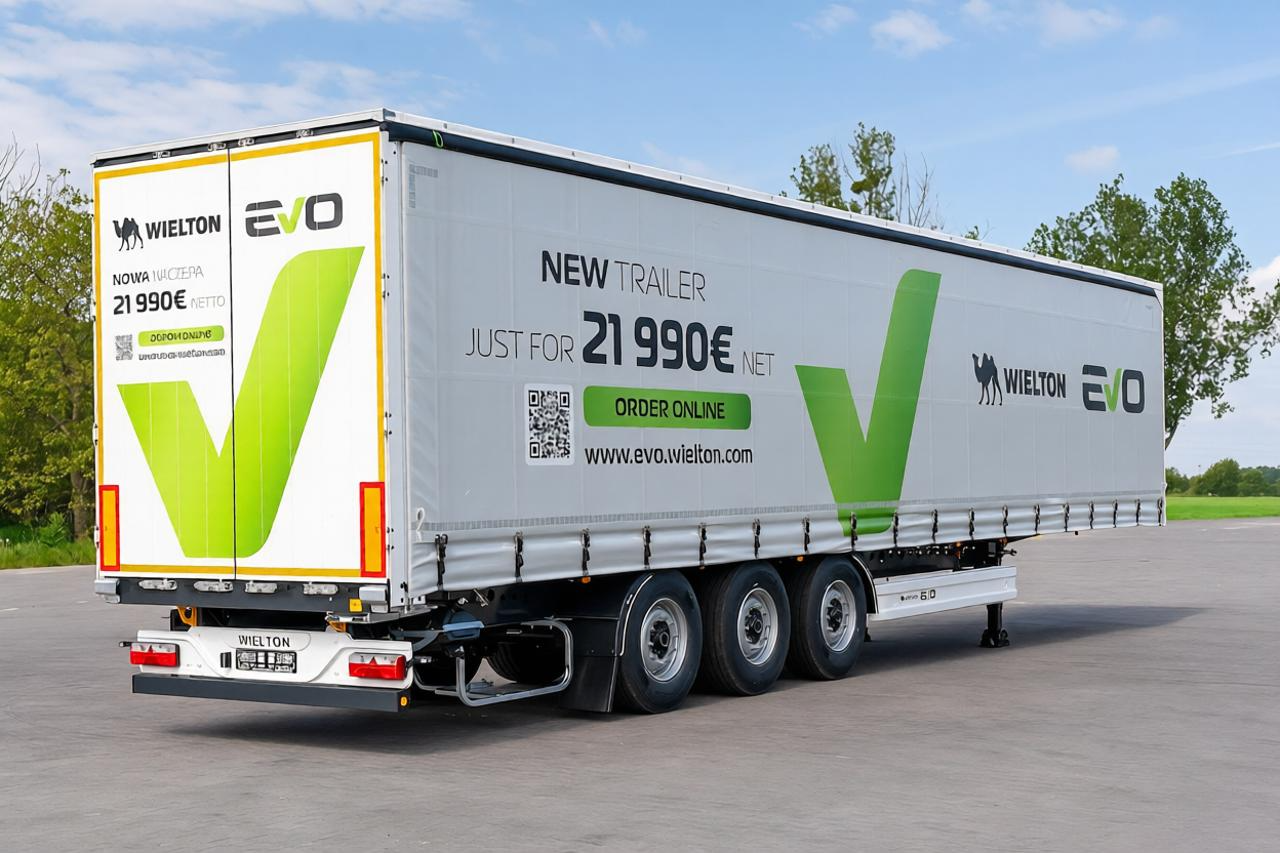
Core Powertrain and Structural Design
Engine and Transmission: Tractor Compatibility
A semi trailer does not have its own conventional engine or transmission. It is connected to a powered tractor unit through a fifth-wheel coupling and kingpin arrangement. The tractor provides the propulsion, steering, and most of the vehicle's braking control.
When selecting a Wielton semi trailer, buyers should confirm compatibility with the tractor's:
-
Fifth-wheel height and coupling specifications.
-
Permitted gross combination weight.
-
Axle-load limits and available traction.
-
Electrical and pneumatic connections.
-
ABS or EBS braking interfaces.
-
Hydraulic connections where required by a tipper or other powered trailer system.
The tractor's engine power should be matched to the combined vehicle weight, route gradients, operating speed, and expected duty cycle. A high-capacity trailer does not automatically require a specific horsepower rating; the appropriate tractor depends on the complete vehicle combination and local operating conditions.
Hydraulic System
Hydraulic equipment is relevant to particular Wielton semi trailer configurations, especially tipper trailers. Hydraulic systems use pressurized fluid to operate lifting cylinders and other powered mechanisms.
A tipper trailer may use a hydraulic lifting cylinder to raise its body and discharge bulk material. System performance depends on cylinder design, hydraulic pressure, oil flow, lifting geometry, load distribution, and the tractor's hydraulic supply.
Before purchasing a hydraulic trailer, buyers should verify:
-
Hydraulic connection compatibility with the tractor.
-
Required operating pressure and oil flow.
-
Cylinder configuration and lifting arrangement.
-
Hose routing and protection.
-
Safe operating procedures during unloading.
Not every Wielton semi trailer uses hydraulic equipment. Curtainsider and conventional flatbed configurations generally rely on mechanical loading and securing systems rather than a powered tipping mechanism.
Chassis and Structural Durability
The chassis is one of the most important components of a semi trailer because it supports the cargo load and transfers forces to the suspension, axles, and tractor coupling.
A typical heavy-duty semi trailer chassis includes longitudinal beams, cross-members, a kingpin assembly, landing legs, suspension mounting points, and rear structural components. The design must distribute loads appropriately during loading, braking, cornering, and operation over uneven roads.
Different Wielton trailer categories use different structural arrangements:
-
Curtainsider trailers: Designed for general cargo and side or rear loading, with a supporting chassis, floor, curtain framework, and roof structure.
-
Flatbed trailers: Use an open loading platform for cargo that may be too large or unsuitable for enclosed trailers.
-
Tipper trailers: Incorporate a tipping body, reinforced structural components, and lifting equipment for bulk-material discharge.
Material selection, weld quality, corrosion protection, floor construction, and maintenance condition all influence service life. Buyers should assess the trailer's intended payload and loading pattern rather than comparing chassis appearance alone.
Axles, Suspension and Braking
Axle and suspension configuration affects payload distribution, road stability, tire wear, and maintenance requirements.
Depending on the model and market configuration, a Wielton semi trailer may be equipped with different axle arrangements and suspension options. Buyers should confirm the number of axles, axle ratings, lift-axle functions where fitted, and compatibility with the tractor and local weight regulations.
Air suspension is commonly used in modern European commercial trailers. It uses air springs to support the trailer and help maintain an appropriate ride height. Depending on the configuration, it can also provide ride-height adjustment and improve handling of sensitive cargo.
The braking system is equally important. Modern heavy commercial trailers commonly use pneumatic braking systems with ABS or EBS equipment, depending on specification and market requirements.
Electronic Braking System (EBS) coordinates braking functions electronically and can provide additional monitoring and control features compared with a conventional pneumatic-only arrangement. The exact functionality depends on the installed system and its compatibility with the tractor.
Safety and Serviceability
Trailer safety depends on structural condition, correct loading, tire condition, braking performance, lighting, coupling integrity, and operator procedures.
Important components to inspect include:
-
Kingpin and fifth-wheel contact areas.
-
Landing legs and support mechanisms.
-
Axles, suspension arms, and air springs.
-
Brake chambers, air lines, and electronic connections.
-
Tires, wheels, and wheel fasteners.
-
Rear underrun protection and side protection where required.
-
Lighting, reflectors, and electrical connections.
Service access is also an important ownership consideration. Components that are easy to inspect and replace can help reduce maintenance downtime. Fleet operators should confirm the availability of replacement parts and qualified service support in the regions where their trailers will operate.
Technical Specifications
Wielton semi trailer specifications vary by product family, model, production year, market, and optional equipment. Buyers should use the manufacturer's documentation for the exact model rather than assuming that every trailer in the brand's portfolio shares the same payload, dimensions, or axle configuration.
The following parameters are useful when evaluating a Wielton semi trailer for commercial operation.
|
Key Parameter |
Specification to Verify |
Operational Significance |
|---|---|---|
|
Trailer category |
Curtainsider, flatbed, tipper, or specialized model |
Determines suitable cargo and loading methods |
|
Overall dimensions |
Length, width, and height |
Affects cargo capacity, route access, and legal compliance |
|
Payload capacity |
Model-specific permitted payload |
Determines the amount of cargo transported per trip |
|
Gross vehicle weight |
Manufacturer-rated and legally permitted values |
Establishes the maximum allowable loaded trailer weight |
|
Axle configuration |
Number, type, and rating of axles |
Influences load distribution and legal axle limits |
|
Suspension system |
Air suspension or other specified arrangement |
Affects ride quality, stability, and maintenance |
|
Braking system |
Pneumatic braking with specified ABS or EBS equipment |
Supports safe and controlled braking |
|
Loading equipment |
Curtains, doors, floor, tipping system, or securing points |
Determines loading efficiency and cargo compatibility |
Other important details include kingpin specification, coupling height, tire size, floor material, landing-leg capacity, electrical connections, and optional equipment. Actual specifications vary by model, configuration, operating conditions, and local regulations.
Comparative Advantages TCO and ROI
A Wielton semi trailer should be compared with alternatives according to its intended application, structural configuration, purchase price, service requirements, and expected utilization. Comparing different trailer categories only by purchase cost can lead to an unsuitable fleet investment.
Wielton Semi Trailer Compared with Other Trailer Brands
When comparing Wielton with another European or international trailer manufacturer, fleet buyers should evaluate equivalent configurations.
A meaningful comparison should include:
-
Payload and permitted gross vehicle weight.
-
Chassis construction and corrosion protection.
-
Axle and suspension brands or specifications.
-
Braking and electronic safety equipment.
-
Floor strength and cargo-securing arrangements.
-
Tire configuration and replacement costs.
-
Warranty coverage and service network.
-
Spare-parts availability and delivery times.
A lower purchase price may be attractive, but it should be evaluated alongside expected maintenance expenses, downtime, resale value, and the suitability of the trailer for the actual transport operation.
Comparing Different Wielton Trailer Types
The choice between a curtainsider, flatbed, and tipper trailer depends primarily on cargo characteristics.
Curtainsider trailers are suitable for many palletized and packaged goods. Their flexible side curtains can simplify loading and unloading, particularly at distribution centers and industrial facilities.
Flatbed trailers are more suitable for machinery, steel products, construction materials, and oversized cargo that requires open access from the sides or above.
Tipper trailers are designed for bulk materials that need to be discharged by raising the body. They can improve unloading efficiency in suitable applications but require additional attention to hydraulic systems, stability, and safe tipping conditions.
A trailer should be selected according to the cargo and loading process rather than assuming one configuration can perform every transport task efficiently.
Total Cost of Ownership
Total cost of ownership (TCO) includes all major expenses associated with purchasing and operating a trailer throughout its service life.
Typical cost categories include:
-
Initial purchase price and financing.
-
Tires, wheels, and replacement components.
-
Brake and suspension maintenance.
-
Structural inspections and repairs.
-
Hydraulic maintenance for applicable configurations.
-
Insurance, registration, and regulatory inspections.
-
Downtime and lost transport opportunities.
-
Depreciation and eventual resale value.
A trailer with a higher purchase price may still be commercially attractive if it offers better suitability for the intended work, reliable component support, and manageable maintenance costs. However, these advantages must be assessed using actual quotations, service records, and operating data.
ROI Evaluation
A practical return-on-investment calculation should consider the additional revenue or operating savings generated by the trailer.
For example, a fleet operator evaluating a new curtainsider can estimate the financial effect of improved loading efficiency or increased annual utilization. The calculation should use actual loading times, trips per year, freight rates, operating expenses, and maintenance assumptions.
A basic calculation is:
Payback period = Initial investment ÷ Annual net financial benefit
The annual net benefit should account for additional operating costs and should not be based solely on theoretical payload or loading improvements. Results will vary according to route conditions, freight demand, utilization, and maintenance performance.
Heavy Duty Application Scenarios
Wielton semi trailers serve different transport requirements depending on their product category and configuration. The following applications illustrate where particular trailer types may be appropriate.
General Cargo and Distribution
Curtainsider semi trailers are widely used for transporting palletized goods, packaged products, and industrial materials.
Typical applications include:
-
Distribution center deliveries.
-
Retail and consumer-goods transport.
-
Industrial components and packaged materials.
-
Cross-border road freight.
-
Warehouse-to-warehouse logistics.
The main selection priorities are internal dimensions, floor capacity, loading access, cargo-securing equipment, and compatibility with loading docks.
Construction and Infrastructure
Construction transport often involves heavy, irregular, or bulky materials. Flatbed and tipper configurations can support different parts of the construction supply chain.
Flatbed trailers may transport steel sections, building materials, machinery, and other cargo requiring open loading access.
Tipper trailers are suitable for bulk materials such as sand, gravel, and aggregates when the trailer's body and rated capacity are appropriate for the material.
For construction applications, buyers should consider:
-
Actual material density and payload.
-
Axle-load distribution.
-
Road and site access conditions.
-
Chassis and floor durability.
-
Tipping stability where applicable.
-
Cleaning and maintenance requirements.
Agriculture and Bulk Transport
Agricultural logistics may involve grain, fertilizer, feed, and other bulk products. Tipper trailers can be suitable for certain unloading operations, while other specialized configurations may be used depending on cargo handling facilities.
The trailer's internal volume, loading height, discharge method, and protection against moisture should match the material being transported.
Agricultural operators should also consider seasonal utilization. Trailers used intensively during harvest periods may experience different maintenance demands from those operating at a steady year-round frequency.
Industrial and Manufacturing Logistics
Manufacturers often require trailers for steel products, machinery components, building materials, and finished goods.
Flatbed trailers can provide flexibility for oversized or irregular cargo, while curtainsider trailers are useful when goods require weather protection and efficient loading access.
Cargo-securing equipment is particularly important. The trailer must provide suitable lashing points and a loading floor capable of supporting the cargo and the forces generated during transport.
Long-Distance and Cross-Border Transport
International transport places additional demands on trailer reliability, legal compliance, and service support.
Fleet operators should verify:
-
Permitted dimensions and gross weights in destination countries.
-
Axle-load restrictions.
-
Lighting and braking compliance.
-
Tire specifications and condition.
-
Required documentation and inspections.
-
Availability of replacement parts along operating routes.
A trailer configuration suitable for one country may require adjustments or additional equipment for another market.
Selection and Maintenance Considerations
Selecting the right Wielton semi trailer requires a clear understanding of the transport operation. Buyers should evaluate the complete vehicle combination, cargo characteristics, route conditions, and expected annual utilization before choosing a model.
Selecting the Appropriate Trailer Configuration
Start by identifying the main cargo category and loading method.
-
Choose a curtainsider when flexible side access and weather protection are important for general cargo.
-
Choose a flatbed when cargo dimensions or loading requirements make an open platform more practical.
-
Choose a tipper when bulk materials need to be discharged through a lifting body.
-
Consider a specialized configuration when cargo requires particular loading, unloading, or environmental protection features.
The selection should also account for the tractor's fifth-wheel height, permitted towing weight, braking connections, and hydraulic capability where applicable.
Verify Payload and Legal Weight Limits
Payload is the amount of cargo that can be carried within the permitted weight limits. It is not the same as the trailer's gross vehicle weight.
Buyers should verify:
-
Trailer tare weight.
-
Manufacturer-rated gross vehicle weight.
-
Maximum axle loads.
-
Kingpin load limits.
-
Applicable national and international road-weight restrictions.
The usable payload depends on the trailer's actual configuration and the legal limits of the complete vehicle combination. Overloading can increase braking distances, accelerate component wear, and create serious safety and compliance risks.
Inspect the Trailer Before Purchase
For a new or used Wielton semi trailer, a structured inspection can help identify potential problems.
Important inspection points include:
-
Chassis: Check for cracks, deformation, corrosion, and signs of previous structural repairs.
-
Kingpin: Inspect wear, damage, and coupling compatibility.
-
Axles and suspension: Check alignment, air springs, suspension components, and abnormal wear.
-
Braking system: Confirm the condition and operation of pneumatic and electronic braking components.
-
Tires: Review tread depth, uneven wear, sidewall damage, and tire age.
-
Floor and body: Inspect for cracks, water damage, deformation, and weakened areas.
-
Electrical system: Test lights, connectors, and electronic equipment.
-
Hydraulic equipment: For tipper models, inspect cylinders, hoses, connections, and signs of leakage.
For used trailers, request available maintenance records, previous inspection reports, ownership documents, and information about accident or repair history.
Preventive Maintenance
A preventive maintenance program helps reduce unexpected failures and extend component service life.
Recommended maintenance activities include:
-
Inspecting brakes, tires, and suspension regularly.
-
Checking wheel fasteners according to manufacturer procedures.
-
Examining air lines and electrical connections.
-
Lubricating specified moving components.
-
Inspecting the kingpin and fifth-wheel contact surfaces.
-
Checking chassis and body structures for cracks or corrosion.
-
Maintaining hydraulic components on applicable tipper models.
-
Cleaning and protecting the trailer floor and cargo-securing equipment.
Maintenance intervals should follow Wielton's documentation and the specifications of the installed component manufacturers. Heavy loads, poor road surfaces, frequent braking, and high annual mileage may require more frequent inspections.
Spare Parts, Warranty and After-Sales Support
For international fleet operators, after-sales support is a major factor in trailer ownership cost.
Before purchasing, confirm the availability of replacement axles, suspension components, brake parts, lighting equipment, landing legs, and model-specific body components.
Buyers should also clarify:
-
Warranty duration and coverage conditions.
-
Availability of authorized service facilities.
-
Replacement-part lead times.
-
Technical documentation and maintenance instructions.
-
Support for electronic braking and diagnostic systems.
-
Procedures for warranty claims and repairs.
A reliable parts supply can reduce downtime, particularly for fleets operating across multiple countries.
Conclusion
A Wielton semi trailer can be considered for a wide range of commercial transport operations, from general cargo distribution to construction, bulk-material handling, and industrial logistics. The manufacturer's different trailer categories allow buyers to evaluate configurations according to cargo type, loading requirements, and operating conditions.
The most important purchasing factors are trailer configuration, payload, chassis construction, axle and suspension specifications, braking equipment, tractor compatibility, maintenance requirements, and after-sales support. Buyers should verify the exact technical documentation for the selected model rather than relying on general brand-level descriptions.
For fleet managers and transport companies, the best Wielton semi trailer is the configuration that meets legal weight limits, supports the required cargo-handling process, maintains reliable operation, and delivers acceptable total cost of ownership over its working life.