

Introduction
Rising fuel costs, payload restrictions, tire replacement expenses, and pressure to improve fleet utilization make tire selection an important part of commercial transportation management. For semi trailer operators, the choice between conventional dual tires and wide single tires can influence vehicle weight, rolling resistance, maintenance workload, and operating performance.
A wide semi trailer tire, often called a wide-base tire or super single tire, is a large-width commercial tire designed to replace a pair of conventional tires on a compatible axle position. Instead of two narrower tires mounted side by side, a wide single configuration uses one wider tire and a suitable wheel assembly.
Wide-base tires are used in selected heavy-duty truck and semi trailer applications, including long-distance freight, regional distribution, and some specialized transport operations. Their potential advantages include reduced tire and wheel count, lower assembly weight, and changes in rolling resistance. However, they also require careful consideration of load capacity, tire pressure, road conditions, replacement availability, and fleet maintenance practices.
The best choice depends on the complete vehicle configuration. A wide tire is not automatically more efficient or more durable than dual tires. Fleet managers should compare the tire's rated load, dimensions, approved rim, inflation requirements, and operating characteristics with the demands of the trailer and its routes.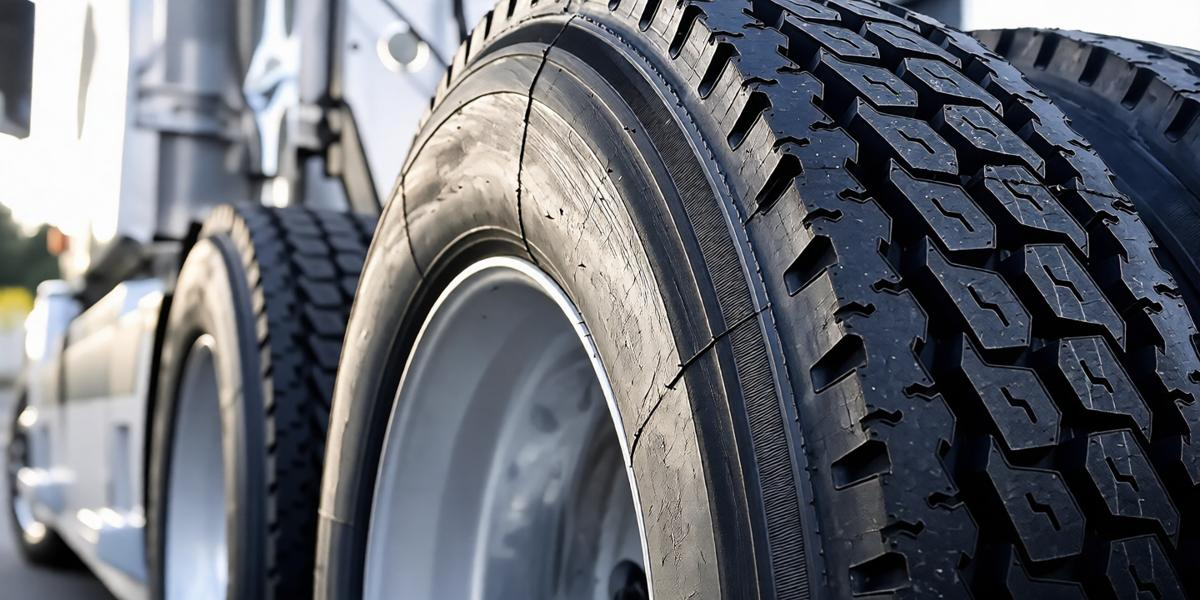
Core Tire Design and Structural Engineering
Tire Construction and Load Support
A wide semi trailer tire is engineered to carry substantial vertical loads while maintaining stability during highway operation. Its structure generally includes several key components:
-
Tread: The road-contact surface that provides traction, wear resistance, and water evacuation.
-
Casing: The main structural body of the tire, designed to support the load and maintain its shape.
-
Sidewall: The flexible outer section that protects the casing and accommodates deformation during operation.
-
Bead: The reinforced section that secures the tire to the wheel rim.
-
Belt package: Reinforcing layers beneath the tread that help maintain tread stability and distribute contact forces.
Commercial wide-base tires commonly use reinforced radial construction. Radial tires have casing cords arranged approximately perpendicular to the direction of travel, with belt layers beneath the tread providing additional structural stability.
The exact construction, belt materials, tread compound, and casing design vary by manufacturer and product line.
Wide Single Tires and Dual Tire Configuration
The main engineering difference between wide-base tires and conventional dual tires is the number and arrangement of tire assemblies on each axle position.
A conventional dual configuration uses two tires mounted side by side. A wide single configuration replaces that pair with one tire designed and approved for the intended axle load.
This changes several operating characteristics:
-
The number of tires and wheels required per axle position.
-
The overall tire footprint and contact-pressure distribution.
-
The unsprung mass associated with the wheel and tire assembly.
-
The consequences of an individual tire failure.
-
The replacement and maintenance procedures.
Unsprung mass refers to vehicle components that are not supported by the suspension springs, including wheels, tires, and certain axle components. Reducing unsprung mass may influence suspension response and vehicle handling, although the actual effect depends on the complete vehicle design.
A wide single tire must never be treated as a direct replacement for dual tires without confirming axle, wheel, tire, and vehicle approval.
Tire Pressure, Heat and Cooling
Inflation pressure is one of the most important factors affecting commercial tire performance. A tire operating below its specified pressure can experience excessive sidewall flexing, increased heat generation, irregular wear, and a higher risk of structural damage.
Overinflation can also create problems, including altered contact-pressure distribution and uneven tread wear.
Wide-base tires should be inflated according to the manufacturer's load-and-inflation tables and the actual load carried by the tire. The correct pressure depends on tire size, load, speed rating, operating conditions, and approved application.
Heat management is especially important in long-distance freight operations. Excessive heat can accelerate rubber degradation and damage internal tire components. Maintaining correct inflation, avoiding overloading, and inspecting tires regularly help control operating temperatures.
Wheel, Rim and Axle Compatibility
A wide semi trailer tire requires a compatible wheel rim with the correct width, diameter, load rating, and mounting specification.
Before installation, fleet operators should verify:
-
Approved rim dimensions.
-
Wheel offset and mounting arrangement.
-
Bolt pattern and fastening requirements.
-
Axle and hub compatibility.
-
Tire-to-suspension and tire-to-body clearance.
-
Brake and wheel-end component clearance.
The wheel assembly must also be compatible with the trailer's axle rating and the manufacturer's approved configuration.
A tire that physically fits a wheel is not necessarily approved for that application. Using an unsuitable rim or mounting arrangement can compromise safety and tire performance.
Tread Design and Rolling Resistance
Tread design affects traction, water evacuation, noise, wear, and rolling resistance.
For semi trailer applications, common tread characteristics include:
-
Rib patterns for highway and regional road operation.
-
Grooves designed to help evacuate water.
-
Compounds formulated to balance wear resistance and rolling resistance.
-
Reinforced shoulder areas to manage operating stresses.
Rolling resistance is the force opposing a tire's movement as it rolls over a surface. It is partly caused by repeated deformation of the tire structure. Lower rolling resistance can reduce the energy required to move a vehicle, but actual fuel savings depend on the tractor, trailer, tire pressure, load, speed, road surface, and driving conditions.
Wide-base construction alone does not guarantee lower rolling resistance. Buyers should compare verified product data for the specific tire models under consideration.
Technical Specifications
The specifications of a wide semi trailer tire determine whether it can safely support the trailer's axle loads and perform reliably under the intended operating conditions. Tire size, load index, speed rating, approved rim, and inflation pressure should always be evaluated together.
The following table identifies the main parameters buyers should check. Exact values are product-specific and should be obtained from the tire manufacturer's technical documentation.
|
Key Parameter |
Typical Technical Specification |
Operational Significance |
|---|---|---|
|
Tire configuration |
Wide single or wide-base radial |
Determines compatibility with the axle and wheel arrangement |
|
Tire size |
Manufacturer-designated width, aspect ratio, and rim diameter |
Affects clearance, fitment, and load capability |
|
Load index |
Product-specific rated load |
Establishes the permitted load under specified conditions |
|
Speed rating |
Manufacturer-designated speed category |
Defines the tire's approved operating speed limit |
|
Inflation pressure |
Manufacturer's load-and-inflation table |
Controls load support, heat generation, and tire wear |
|
Rim specification |
Approved wheel width and diameter |
Ensures correct tire seating and structural support |
|
Tread pattern |
Rib, groove, and shoulder design |
Influences traction, water evacuation, and wear |
|
Rolling resistance |
Product-specific test or performance data |
Helps estimate potential energy and fuel-efficiency effects |
The tire's load capacity must be sufficient for the actual axle load, including uneven load distribution and the operating conditions specified by the manufacturer. Fleet operators should not rely on nominal tire dimensions alone when selecting replacement tires.
Comparative Advantages TCO and ROI
Wide semi trailer tires are often compared with conventional dual tire configurations. Both systems can be suitable for commercial transport, but they have different characteristics involving weight, tire quantity, maintenance, and failure management.
Wide Single Tires Compared with Dual Tires
A wide-base tire can replace two conventional tires at a compatible axle position. This reduces the number of tire and wheel assemblies required, which may simplify certain maintenance tasks.
Potential advantages include:
-
Fewer tire and wheel assemblies to purchase.
-
Potential reduction in overall wheel-end weight.
-
Fewer individual tire positions to inspect.
-
Potentially lower rolling resistance for selected products.
-
More available space around the wheel assembly in some designs.
However, wide single tires also have limitations.
A wide single tire carries the load that would otherwise be shared by two tires. If it experiences a serious failure, the entire tire position loses its load-supporting function. In a dual configuration, the remaining tire may provide some temporary support, although operating on a damaged or overloaded remaining tire is not necessarily safe.
Other considerations include:
-
Replacement availability in the operating region.
-
Potentially higher individual tire replacement costs.
-
Different roadside service requirements.
-
Compatibility with existing fleet wheels and axles.
-
Sensitivity to inflation pressure and load management.
The best configuration depends on route conditions, maintenance capability, tire supply, and the fleet's risk-management requirements.
Fuel Efficiency and Payload Considerations
A wide-base tire may reduce rolling resistance when the selected product is designed for low-energy highway operation. However, the actual fuel benefit depends on the entire vehicle combination.
Factors affecting fuel consumption include:
-
Tractor engine and drivetrain efficiency.
-
Trailer aerodynamics.
-
Vehicle speed and acceleration patterns.
-
Cargo weight and axle loading.
-
Tire pressure and tread condition.
-
Road surface and weather.
-
Driver behavior.
Reducing tire and wheel assembly weight may also affect the vehicle's available payload, subject to legal gross-weight and axle-load restrictions. The actual weight difference must be confirmed by comparing the complete approved assemblies, not just tire weights.
Total Cost of Ownership
Total cost of ownership (TCO) includes the purchase price, installation, maintenance, replacement, downtime, and operational effects of the tire configuration.
Important cost categories include:
-
Tire purchase and replacement.
-
Compatible wheel and mounting equipment.
-
Tire inspection and inflation maintenance.
-
Roadside service and tire-related downtime.
-
Fuel consumption over the tire's operating life.
-
Tire casing condition and retreading suitability where applicable.
-
Disposal and replacement logistics.
A wide single tire may reduce the total number of tires in a fleet, but this does not automatically mean the lowest overall cost. Tire prices, mileage performance, repairability, replacement availability, and downtime all influence the final result.
ROI Evaluation
Fleet managers can estimate the return on investment by comparing the full operating costs of wide single and dual configurations.
A simplified calculation is:
Annual net benefit = Annual operating savings − Additional annual costs
Payback period = Initial conversion cost ÷ Annual net benefit
For a meaningful comparison, the calculation should use:
-
Actual tire and wheel purchase prices.
-
Expected annual mileage.
-
Measured fuel consumption.
-
Tire service life based on fleet records.
-
Maintenance and roadside service expenses.
-
Any payload-related revenue benefit.
-
Conversion costs and compatibility requirements.
For example, a fleet considering conversion should compare fuel use over the same routes, loads, tractor types, and operating periods. A theoretical rolling-resistance advantage should not be treated as guaranteed fuel savings.
Heavy Duty Application Scenarios
Wide semi trailer tires are most relevant to applications where the tire configuration, load rating, and road conditions are compatible with the demands of commercial transport.
Long-Distance Highway Freight
Long-distance freight operations often involve high annual mileage and relatively consistent highway speeds. In these conditions, tire rolling resistance, heat management, tread life, and inflation maintenance are important considerations.
Wide-base tires may be considered for:
-
General cargo transportation.
-
Distribution between regional logistics centers.
-
Long-distance palletized freight.
-
Regular highway transport routes.
Fleet operators should prioritize highway-approved tread designs, correct load ratings, and reliable tire inspection procedures.
Regional Distribution
Regional distribution vehicles frequently operate on a mixture of highways, urban roads, industrial access roads, and loading facilities.
Tires in this application may experience more braking, turning, and low-speed maneuvering than long-haul highway tires.
Selection priorities include:
-
Resistance to irregular shoulder wear.
-
Suitable wet-road performance.
-
Sidewall protection.
-
Compatibility with frequent stop-and-start operation.
-
Availability of replacement tires near operating routes.
The appropriate wide-base tire must be selected according to its approved application and the vehicle manufacturer's requirements.
Construction Material Transport
Semi trailers transporting construction materials may operate under heavier loads and encounter rougher road conditions than standard highway freight vehicles.
Potential cargo includes steel products, building materials, machinery, and other heavy industrial goods.
For these operations, buyers should carefully evaluate:
-
Actual axle loads.
-
Tire load capacity.
-
Resistance to impact and sidewall damage.
-
Road surface conditions.
-
Low-speed maneuvering requirements.
-
Tire inspection frequency.
Not every wide-base tire is suitable for severe construction-site conditions. A tire designed primarily for highway operation may experience accelerated damage on rough access roads.
Agricultural and Industrial Logistics
Agricultural and industrial transport may involve seasonal demand, variable cargo density, and routes with changing road quality.
Wide-base tires can be considered when the trailer and axle configuration are approved for the application. Operators should also account for exposure to mud, debris, sharp materials, and frequent loading-area maneuvering.
A suitable tire choice should balance load capacity, tread durability, traction, and replacement availability.
Selection and Maintenance Considerations
Selecting the correct wide semi trailer tire requires more than matching the old tire's visible dimensions. Fleet managers should confirm that the new tire is approved for the specific axle, rim, load, speed, and vehicle configuration.
How to Select the Right Wide Semi Trailer Tire
Before purchasing, review the following factors:
-
Tire size: Confirm the exact size specified by the trailer or axle manufacturer.
-
Load index: Ensure that the tire can support the required load at the specified inflation pressure and speed.
-
Speed rating: Select a tire approved for the vehicle's operating speed.
-
Rim compatibility: Verify the approved rim width, diameter, and mounting arrangement.
-
Tread pattern: Choose a design suitable for highway, regional, or mixed-road operation.
-
Rolling resistance: Compare product-specific performance information rather than assuming all wide tires provide the same efficiency.
-
Operating climate: Consider temperature extremes, wet conditions, and seasonal road hazards.
-
Replacement availability: Confirm that compatible tires are available in the fleet's operating regions.
The tire manufacturer's technical documentation and the trailer or axle manufacturer's approval should take priority over general product descriptions.
Check Load Distribution and Inflation Pressure
Correct load distribution is essential for commercial trailer tire safety.
An overloaded axle or uneven cargo arrangement can place excessive stress on individual tires even when the trailer's total weight appears to be within the permitted limit.
Operators should:
-
Verify the actual axle loads.
-
Distribute cargo according to the trailer manufacturer's loading instructions.
-
Check cold inflation pressure using an accurate gauge.
-
Use the manufacturer's load-and-inflation tables.
-
Inspect tires for damage before long-distance operation.
-
Avoid operating with overloaded or underinflated tires.
Cold inflation pressure means tire pressure measured before the tire has been significantly heated by operation. Pressure should not be reduced simply because a tire becomes warmer during normal driving.
Preventive Tire Maintenance
A structured inspection program helps identify problems before they cause roadside failures.
Recommended checks include:
-
Inspecting tread depth and wear patterns.
-
Checking sidewalls for cuts, bulges, and impact damage.
-
Looking for embedded objects and punctures.
-
Monitoring inflation pressure.
-
Checking wheel condition and fastening.
-
Inspecting valve stems and caps.
-
Checking for abnormal vibration or temperature differences.
-
Recording tire mileage and replacement history.
Uneven wear may indicate alignment problems, incorrect inflation, suspension faults, overloading, or unsuitable operating conditions.
Tire rotation and replacement procedures should follow manufacturer guidance and the fleet's approved maintenance program. Repairs must be performed by qualified tire technicians using methods permitted for the specific tire construction and damage location.
Tire Pressure Monitoring and Fleet Management
Tire pressure monitoring systems (TPMS) can help detect abnormal inflation pressure and reduce the likelihood of operating with an underinflated tire.
Depending on the system, monitoring may include:
-
Individual tire pressure.
-
Tire temperature.
-
Pressure-loss warnings.
-
Fleet-level monitoring and alerts.
TPMS should complement, rather than replace, physical tire inspections. Sensors also require suitable installation, calibration, and maintenance.
Fleet operators can improve tire management by recording tire identification, installation dates, mileage, pressure checks, repairs, and removal reasons. These records help identify recurring problems and compare the actual operating cost of different tire configurations.
Regulatory and Safety Requirements
Commercial tire selection must comply with the requirements applicable to the vehicle's operating market.
In the United States, Federal Motor Vehicle Safety Standard No. 119 addresses new pneumatic tires for vehicles other than passenger cars, including relevant commercial vehicle tire categories. Other markets may apply different tire approval, marking, load, and vehicle inspection requirements.
Fleet managers should confirm the applicable requirements for the tire, wheel, trailer, and complete vehicle combination before changing from dual tires to wide singles.
Conclusion
Wide semi trailer tires offer an alternative to conventional dual tire configurations for compatible commercial trailers. Their potential benefits include fewer tire assemblies, possible reductions in wheel-end weight, and rolling-resistance advantages with suitable tire products. However, these benefits depend on the exact tire design, vehicle configuration, operating conditions, and maintenance practices.
The most important selection factors are load capacity, tire size, approved rim, inflation pressure, speed rating, tread design, axle compatibility, and replacement availability. Fleet managers should also assess the consequences of individual tire failure and the cost of converting existing equipment.
For long-distance and regional freight operators, a wide-base tire can be a practical option when its technical ratings and operating characteristics match the transport duty cycle. The best investment is the configuration that delivers safe load support, predictable tire life, manageable maintenance costs, and reliable performance throughout the trailer's working life.