

Introduction
Increasing freight volumes, fuel costs, driver shortages, vehicle maintenance expenses, and tighter delivery schedules are putting pressure on commercial transport operators to select reliable and cost-effective trailers. For fleet owners, the right semi trailer can improve payload utilization, reduce unnecessary operating expenses, and support consistent transportation performance.
CIMC semi trailer refers to semi trailers manufactured by companies within the CIMC group, widely associated with commercial vehicle bodies, trailers, and transportation equipment. CIMC-related manufacturing businesses offer different trailer configurations for general cargo, container transportation, bulk material handling, construction equipment, and other specialized applications.
A semi trailer is a non-powered transport unit connected to a tractor through a fifth-wheel coupling. Its load is supported by a combination of the tractor's coupling system and the trailer's axle and suspension assemblies. The tractor provides propulsion and steering, while the trailer provides the cargo platform, structural support, braking equipment, and load-securement provisions.
CIMC trailer selection should be based on the cargo type, required payload, road conditions, axle configuration, loading method, local regulations, and after-sales support. A flatbed trailer designed for steel products, for example, has different structural and loading requirements from a container chassis or a hydraulic lowbed trailer.
Understanding these differences helps procurement managers, logistics companies, construction contractors, and fleet operators choose a CIMC semi trailer that matches their actual transportation requirements.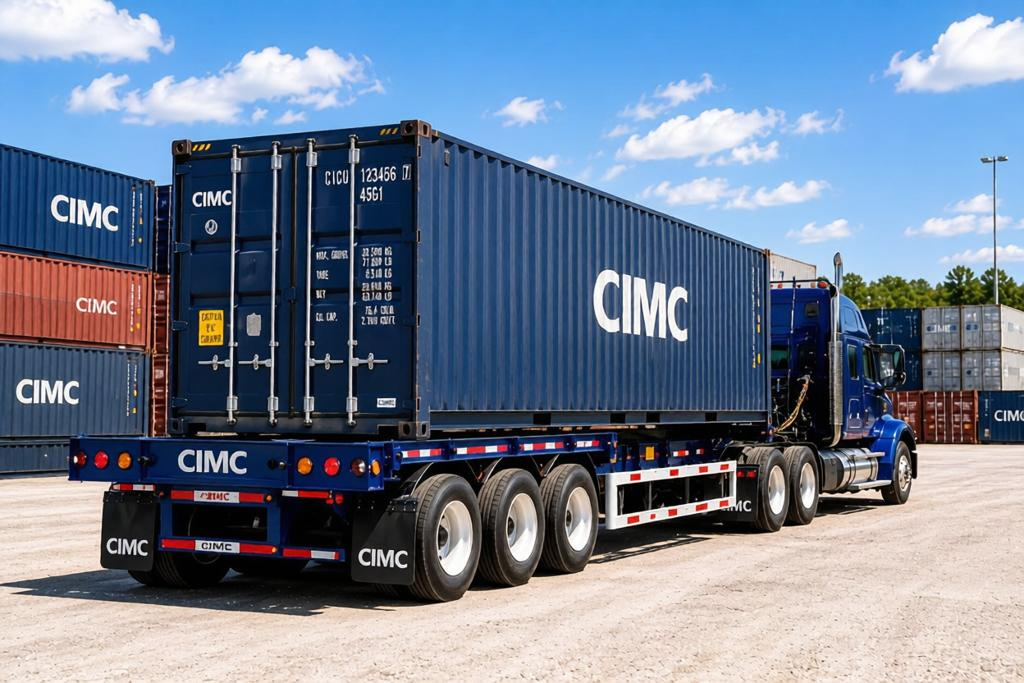
Core Powertrain and Structural Design
Unlike a powered truck, a semi trailer does not normally have its own engine or transmission. Its operating performance depends on the tractor unit, chassis structure, suspension, axles, braking system, tires, and electrical connections.
Tractor Compatibility and Fifth-Wheel Coupling
The tractor and trailer operate as a connected vehicle combination. The fifth-wheel coupling transfers a portion of the trailer's vertical load to the tractor while allowing the combination to articulate during turning.
Important compatibility factors include:
-
Fifth-wheel height: Must match the trailer's kingpin and coupling geometry.
-
Kingpin specification: Must be compatible with the tractor's fifth wheel.
-
Maximum coupling load: Must remain within the tractor manufacturer's permitted limits.
-
Gross combination weight: Must comply with the tractor, trailer, and local road regulations.
-
Electrical and pneumatic connections: Must support the trailer's lighting, braking, and auxiliary systems.
Incorrect tractor-trailer matching can cause poor load distribution, excessive coupling stress, tire wear, or handling problems.
Suspension and Axle System
The axle and suspension assemblies support the trailer's cargo and transfer road forces to the tires. CIMC semi trailer configurations may use different axle arrangements and suspension designs depending on the intended application and target market.
Common suspension options include:
-
Mechanical leaf spring suspension: Uses layered steel springs and is widely used in heavy-duty commercial transport.
-
Air suspension: Uses air springs to support the trailer and control ride characteristics.
-
Specialized suspension systems: May be used for heavy haulage or unusual load-distribution requirements.
The axle configuration affects payload distribution, turning characteristics, tire loading, and regulatory axle-weight compliance.
A two-axle, three-axle, or multi-axle arrangement should be selected according to the trailer design, cargo weight, road conditions, and legal axle-load limits. More axles do not automatically mean that a trailer can carry any desired payload; the complete vehicle combination must remain within its rated and legal limits.
Braking System
The braking system is a critical safety component of a CIMC semi trailer. Most commercial semi trailers use pneumatic braking systems connected to the tractor's compressed-air supply.
Typical components include:
-
Service brake chambers.
-
Brake shoes or disc brake assemblies, depending on configuration.
-
Air reservoirs.
-
Pneumatic control valves.
-
Brake pipes and connectors.
-
Anti-lock braking system components where specified.
ABS (Anti-lock Braking System) helps reduce wheel lock during braking under appropriate operating conditions. Some configurations may also include electronic braking systems or additional stability-related functions, depending on the market and vehicle specification.
Regular inspection of brake linings, air leakage, brake adjustment, and pneumatic connections is essential for safe operation.
Chassis and Structural Durability
The chassis is the main load-bearing structure of a semi trailer. It transfers cargo forces to the suspension and axles while resisting bending, twisting, vibration, and dynamic loads during transportation.
Typical structural elements include:
-
Main longitudinal beams.
-
Crossmembers.
-
Reinforcement plates.
-
Kingpin mounting structure.
-
Landing gear supports.
-
Suspension mounting brackets.
-
Rear impact protection and other safety components.
Material selection, steel grade, section geometry, welding quality, and corrosion protection all influence structural durability.
The chassis should be designed for the intended cargo and loading conditions. A flatbed carrying steel coils may experience different concentrated loading forces from a container chassis carrying a standardized shipping container.
Tires, Wheels, and Landing Gear
Tires and wheels influence rolling resistance, load capacity, braking performance, and operating stability.
Fleet operators should evaluate tire size, load index, speed rating, inflation pressure, tread pattern, and availability of replacement tires in the operating region.
Landing gear supports the trailer when it is disconnected from the tractor. Its rated capacity and mounting structure must be appropriate for the trailer's design and operating procedure.
For trailers that frequently connect and disconnect at logistics yards, landing gear durability and ease of operation are particularly important.
Technical Specifications
CIMC semi trailer specifications vary according to trailer type, model, manufacturing entity, configuration, and destination market. Buyers should request the technical drawing, specification sheet, identification plate information, and applicable conformity documentation for the exact trailer being quoted.
The following table summarizes the main parameters that should be evaluated during procurement. It does not represent one universal CIMC model specification.
|
Key Parameter |
Specification to Verify |
Operational Significance |
|---|---|---|
|
Trailer type |
Flatbed, container chassis, tipper, lowbed, or other design |
Determines suitable cargo and loading method |
|
Payload capacity |
Manufacturer-rated payload and legal limit |
Establishes permitted cargo weight |
|
Axle configuration |
Number, rating, and spacing of axles |
Affects load distribution and road compliance |
|
Suspension |
Mechanical, air, or specialized system |
Influences ride characteristics and maintenance |
|
Chassis material |
Steel grade, beam section, and reinforcement |
Affects structural strength and durability |
|
Braking system |
Pneumatic brakes, ABS, or specified electronic systems |
Supports controlled and safe braking |
|
Tire configuration |
Size, load rating, and quantity |
Influences carrying capacity and operating cost |
|
Overall dimensions |
Length, width, height, and deck height |
Determines cargo compatibility and route suitability |
Payload and Gross Vehicle Weight
Payload is the cargo weight that a trailer can carry within its rated operating limits. It should not be confused with gross vehicle weight, which includes the trailer's own weight and the cargo.
A buyer should confirm:
-
Trailer tare weight.
-
Manufacturer-rated payload.
-
Gross vehicle weight rating.
-
Individual axle ratings.
-
Kingpin load rating.
-
Permitted axle loads under local regulations.
The usable payload may be restricted by the lowest applicable rating among the trailer, tractor, tires, axles, and local road regulations.
Dimensions and Cargo Compatibility
Trailer length, width, deck height, and axle spacing affect the type of cargo that can be transported.
For example, a container chassis must match the container's size and corner-casting positions. A flatbed needs sufficient deck dimensions and suitable tie-down points. A lowbed must provide an appropriate loading platform and structural capacity for heavy equipment.
Buyers should confirm the cargo's actual dimensions and center of gravity before finalizing a configuration.
Comparative Advantages TCO and ROI
Choosing a CIMC semi trailer requires comparing the initial purchase price with operating performance, maintenance requirements, payload utilization, and expected service life.
The most suitable trailer is not necessarily the one with the lowest purchase price. It is the configuration that meets the transportation requirement while maintaining acceptable safety, operating cost, and fleet utilization.
CIMC Semi Trailer vs. Other Trailer Options
CIMC trailers should be compared with competing manufacturers' products using equivalent specifications rather than brand names alone.
Relevant comparison criteria include:
-
Chassis material and structural design.
-
Trailer tare weight and payload rating.
-
Axle and suspension brands and specifications.
-
Brake system configuration.
-
Tire and wheel specifications.
-
Welding quality and corrosion protection.
-
Spare-parts availability.
-
Warranty conditions and service support.
-
Compliance with destination-market regulations.
A lighter trailer may offer greater potential payload within a fixed gross weight limit. However, reducing structural weight must not compromise strength, fatigue resistance, or durability under the intended duty cycle.
Total Cost of Ownership
Total cost of ownership (TCO) includes the purchase price and the expenses associated with operating and maintaining the trailer throughout its working life.
The main cost categories include:
-
Initial purchase price and transportation.
-
Import duties, taxes, and registration.
-
Tires, brakes, bearings, and suspension maintenance.
-
Structural inspections and corrosion protection.
-
Replacement parts and repair labor.
-
Downtime and lost transportation revenue.
-
Insurance and compliance expenses.
-
Resale value at the end of the ownership period.
For international buyers, shipping costs, import procedures, local spare-parts availability, and technical support can significantly affect the final ownership cost.
ROI and Fleet Productivity
Return on investment depends on annual utilization, freight revenue, payload efficiency, maintenance expenses, and the number of trips completed.
For example, consider a fleet operator comparing two trailers for the same transportation route. If one configuration has a lower tare weight while maintaining the required structural rating and legal compliance, it may allow more usable cargo weight per trip where gross-weight limits apply.
The commercial benefit depends on the actual cargo density, road restrictions, freight rates, fuel consumption, and number of annual trips. A lower tare weight does not automatically produce higher profits if the cargo volume, route, or axle-weight restrictions are the limiting factors.
A practical ROI calculation should use:
-
Purchase and delivery cost.
-
Expected annual operating days.
-
Average payload per trip.
-
Annual distance.
-
Maintenance and tire costs.
-
Revenue per trip.
-
Financing and insurance costs.
-
Estimated resale value.
Fleet operators should compare these figures over the same ownership period and operating assumptions.
Heavy Duty Application Scenarios
CIMC semi trailers are associated with multiple commercial transportation applications. Selecting the correct trailer category is essential because cargo shape, weight distribution, loading method, and unloading requirements differ significantly.
Flatbed Semi Trailer for General Cargo
Flatbed semi trailers provide an open platform for transporting cargo that can be loaded from the side, rear, or top using suitable handling equipment.
Typical applications include:
-
Steel plates, beams, and structural materials.
-
Timber and construction materials.
-
Industrial machinery.
-
Palletized cargo.
-
Large packaged equipment.
Buyers should evaluate deck strength, tie-down points, side access, cargo dimensions, and load distribution.
Container Semi Trailer for Logistics
Container chassis trailers transport standardized shipping containers between ports, warehouses, distribution centers, and inland logistics facilities.
Important selection factors include:
-
Compatibility with the intended container sizes.
-
Container locking mechanisms.
-
Chassis strength and weight.
-
Axle configuration.
-
Suspension and braking specifications.
-
Port and road regulations.
Container dimensions and locking positions must match the trailer's approved design.
Tipper Semi Trailer for Bulk Materials
Tipper semi trailers use a lifting mechanism to discharge bulk cargo by raising the body or container section.
Common applications include:
-
Sand and gravel.
-
Crushed stone.
-
Coal and other suitable bulk materials.
-
Construction waste.
-
Certain agricultural bulk products.
Hydraulic lifting capacity, cylinder arrangement, body material, floor design, and stability during unloading are critical considerations.
The trailer must operate on a suitable unloading surface. Raising a loaded body on uneven or unstable ground can create a serious rollover risk.
Lowbed Semi Trailer for Heavy Equipment
Lowbed semi trailers are designed to transport machinery and other heavy or oversized cargo. Their lower loading platforms help accommodate tall equipment within applicable height restrictions.
Typical cargo includes:
-
Excavators.
-
Bulldozers.
-
Wheel loaders.
-
Road construction machinery.
-
Industrial equipment.
The selection process should consider deck height, loading ramps, axle configuration, payload rating, load concentration, and the machine's center of gravity.
Tanker and Specialized Semi Trailers
Specialized trailers are used when cargo requires dedicated containment or handling systems.
Depending on the manufacturing entity and available product configuration, buyers may evaluate tanker trailers or other purpose-built designs for specific industries.
For tanker applications, important requirements include tank material, compartment arrangement, product compatibility, pressure or vacuum requirements where applicable, discharge equipment, and market-specific transport regulations.
Selection and Maintenance Considerations
Selecting the right CIMC semi trailer requires a clear understanding of cargo characteristics, tractor compatibility, operating conditions, and destination-market regulations.
How to Choose the Right CIMC Semi Trailer
Before requesting a quotation, buyers should establish the following information:
-
Cargo type: General cargo, containers, bulk materials, machinery, or liquid products.
-
Cargo weight: Average and maximum cargo weight per trip.
-
Cargo dimensions: Length, width, height, and center of gravity.
-
Loading method: Forklift, crane, hydraulic ramp, conveyor, or other equipment.
-
Tractor specifications: Fifth-wheel height, coupling rating, engine power, and permitted combination weight.
-
Operating routes: Highway, port, construction site, mining area, or mixed road conditions.
-
Destination market: Local vehicle standards, registration rules, and road restrictions.
-
Annual utilization: Expected mileage, trips, and operating days.
Providing this information helps the supplier recommend a suitable configuration rather than quoting a trailer that may not match the actual operating requirement.
Maintenance and Preventive Inspection
A structured maintenance program helps reduce unexpected downtime and extend trailer service life.
Important inspection areas include:
-
Chassis: Check for cracks, corrosion, deformation, and damaged welds.
-
Axles and suspension: Inspect mounting points, springs, air bags, and shock absorbers where fitted.
-
Brakes: Check brake lining or pad wear, air leakage, hoses, and control components.
-
Tires: Monitor inflation pressure, tread depth, uneven wear, and visible damage.
-
Wheel bearings: Inspect for excessive play, abnormal temperature, or lubrication problems.
-
Landing gear: Check mechanical operation, mounting structure, and lubrication.
-
Electrical system: Test lighting, connectors, wiring, and electronic braking components where fitted.
-
Cargo securement: Inspect tie-down points, locks, and other load-restraint equipment.
Inspection frequency should reflect the manufacturer's maintenance schedule, operating mileage, road conditions, and applicable regulations.
Spare Parts and After-Sales Support
For international fleet operators, after-sales support can be as important as the initial trailer specification.
Before purchasing, confirm:
-
Availability of replacement axles, brake components, and suspension parts.
-
Tire and wheel specifications used on the trailer.
-
Access to electrical and pneumatic system components.
-
Availability of technical drawings and maintenance documentation.
-
Warranty coverage and claim procedures.
-
Supplier support for troubleshooting and replacement parts.
-
Local service capabilities in the destination country.
A trailer with readily available replacement components can reduce repair delays and help maintain fleet availability.
Documentation and Regulatory Compliance
International buyers should confirm that the trailer meets the requirements of the country where it will be registered and operated.
Depending on the destination market, relevant documentation may include:
-
Manufacturer's technical specification sheet.
-
Trailer identification and chassis number.
-
Rated weight and axle information.
-
Brake-system documentation.
-
Applicable conformity or approval documents.
-
Inspection and registration documents.
-
Export and shipping documentation.
For European markets, buyers should verify the applicable vehicle approval and conformity requirements for the exact trailer category. For other markets, national vehicle standards and road regulations may differ.
A manufacturer's general statement about compliance should not replace the actual documentation required by the importing authority.
Conclusion
A CIMC semi trailer can be considered for a wide range of commercial transportation requirements, including general cargo, container logistics, bulk materials, construction equipment, and specialized freight.
The most important purchasing decision is selecting the correct trailer type and configuration. Chassis design, axle arrangement, suspension, braking equipment, tires, payload, and tractor compatibility all influence transportation safety and operating efficiency.
For fleet owners and international buyers, the evaluation should extend beyond the initial purchase price. Spare-parts availability, maintenance requirements, destination-market compliance, warranty coverage, and supplier support are essential parts of the total cost of ownership.
A well-matched CIMC semi trailer can support reliable freight operations and long-term fleet value when its specifications are verified against the cargo, tractor, road conditions, and applicable regulations.