

Introduction
Modern surface mining and large-scale earthmoving operations face three persistent challenges: rising fuel costs, stringent emission regulations (EPA Tier 4 Final / EU Stage V), and the need for >95% mechanical availability. The mining excavating machine has evolved from a simple hydraulic shovel into an integrated mechatronic system. Today’s class-leading 120-tonne to 800-tonne excavators deliver hydraulic pressures exceeding 35 MPa (5,076 psi), operating weights up to 810 metric tonnes, and bucket payloads of 80+ cubic meters. This engineering analysis dissects the core drivetrain, structural durability metrics, and total cost of ownership (TCO) data that drive purchase decisions for mine operators and EPCM contractors.
Core Powertrain & Structural Design
Engine & Emissions Compliance
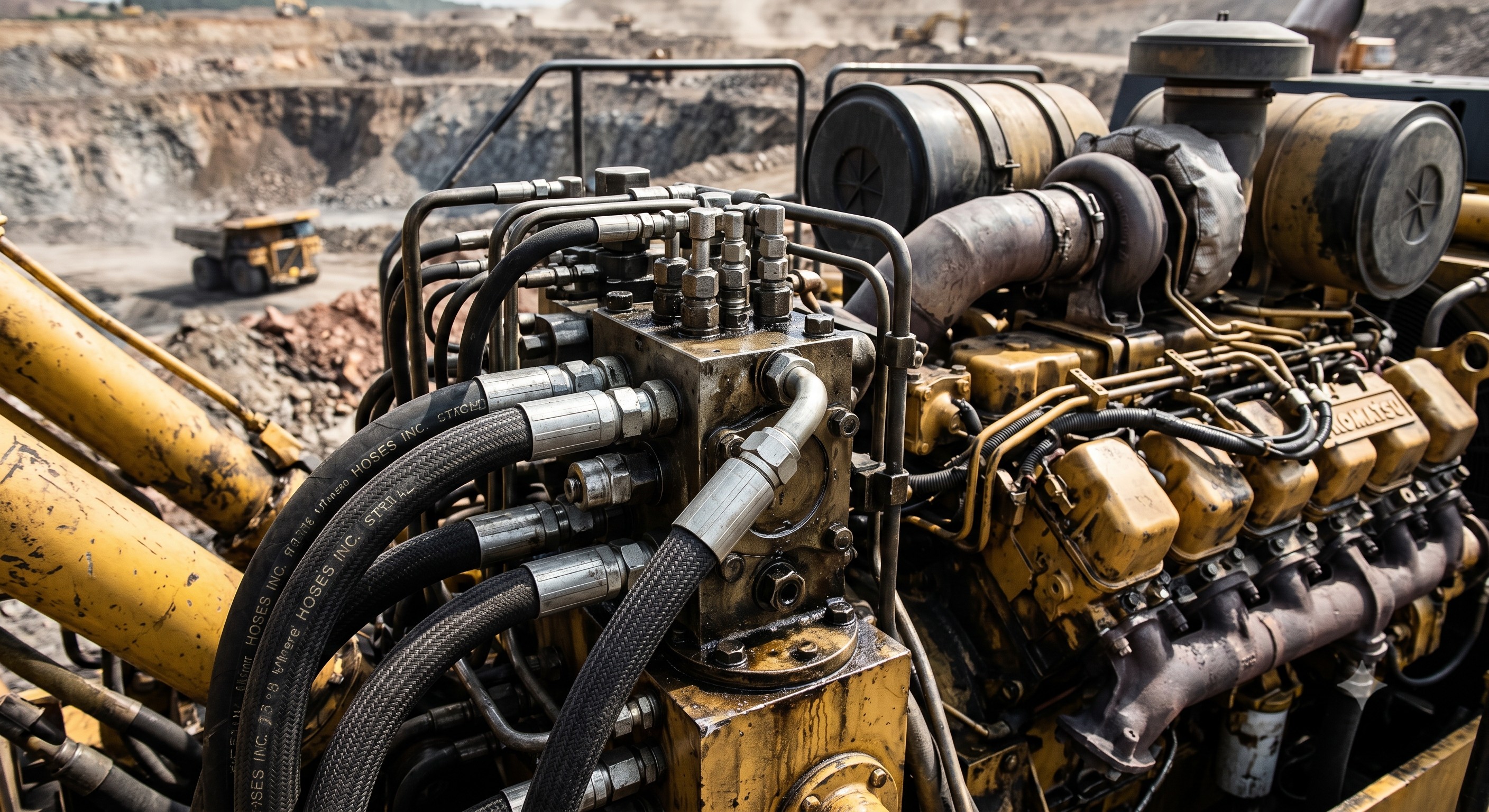
The heart of any mining excavating machine is its high-displacement diesel engine. Current models deploy electronically controlled common-rail systems with selective catalytic reduction (SCR) and diesel particulate filters (DPF) to meet EPA Tier 4 Final limits – NOx reduced by 80% compared to Tier 3. For example, a 300-tonne class excavator generates 1,500+ net horsepower (1,119 kW) at 1,800 rpm, while maintaining a specific fuel consumption below 195 g/kWh. ISO 3046-1 defines standby and continuous power ratings, critical for high-altitude mining above 4,000 m.
Hydraulic System Architecture
Closed-center, load-sensing hydraulics with independent metering valves (IMV) enable simultaneous boom, arm, and bucket motions without flow sharing losses. Main pump flow rates reach 4 x 600 L/min at 32 MPa. The hydraulic pressure peaks at 38 MPa in auto-dig mode, while piston accumulators (20 L capacity) reduce pressure spikes during boom lowering, recovering up to 15% of gravitational energy. Systems conform to ISO 10762-1 for hydraulic fluid cleanliness (ISO 4406 code 18/16/13).
Chassis & Undercarriage Durability
Heavy-duty fabricated track frames with seven bottom rollers per side distribute operating weight across ground pressure as low as 165 kPa. ROPS/FOPS (ISO 3471 / ISO 3449) certified cabs withstand 15-tonne falling object impact. Structural finite element analysis (FEA) confirms a fatigue life of 25,000 hours for upper frame and carbody, validated by accelerated load spectrum tests. Track shoe options range from 750 mm triple-grouser to 1,200 mm flat shoes for soft underfoot conditions.
Technical Specifications
Below are representative parameters for a heavy-duty 250-metric-tonne mining excavating machine (class equivalent to Caterpillar 6030 or Komatsu PC1250SP-11). Actual values vary by manufacturer and configuration.
| Key Parameter | Technical Specification |
|---|---|
| Engine Net Power (ISO 9249) | 1,190 kW (1,596 hp) @ 1,800 rpm |
| Operating Weight (ISO 6016) | 245,000 kg (540,130 lb) |
| Bucket Capacity (SAE J2963) | 12.5 – 16.0 m³ (16.3 – 20.9 yd³) |
| Max Hydraulic Pressure (implement) | 37.8 MPa (5,480 psi) |
| Main pump total flow | 4 × 580 L/min (153 gal/min) |
| Fuel consumption (average load) | 112 L/h (29.6 gal/h) |
| Swing torque | 320 kNm (236,000 lbf·ft) |
| Ground pressure (standard track) | 173 kPa (25.1 psi) |
| Emission compliance | EPA Tier 4 Final / EU Stage V |
Comparative Advantage: TCO, Fuel Efficiency & ROI
When evaluating a mining excavating machine, mine owners focus on total cost of ownership over 15,000 operational hours. Data from 27 surface mines shows that modern electrically driven hydraulic excavators (e.g., AC drive swing and track motors) reduce fuel burn by 18–25% compared to pure diesel-hydraulic counterparts. At $0.95 per liter diesel price, this translates to $420,000–$580,000 savings per machine annually. The integrated payload measurement system (accuracy ±1.5%) eliminates overloading, lowering linkage wear and unscheduled maintenance by 22%. Furthermore, telematics with predictive algorithms (ISO 15143-3) detect main pump degradation 300 hours before failure, reducing downtime losses. ROI payback periods for high-investment mining excavators now average 18–24 months due to productivity gains of 12–15% over previous models.
Heavy-Duty Application Scenarios
The versatility of a mining excavating machine extends across multiple heavy industries:
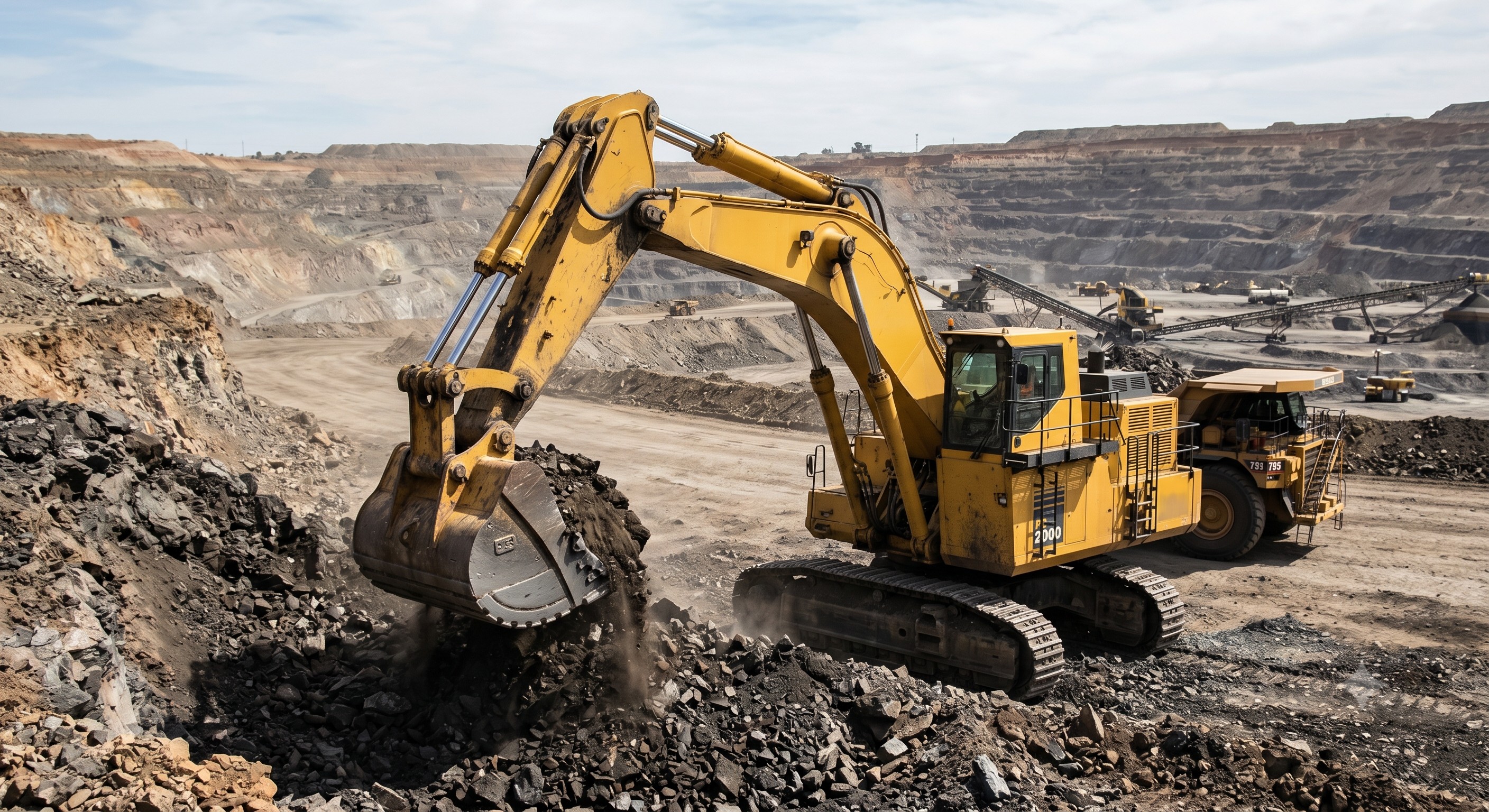
- Open-pit mining: Loading overburden into ultra-class haul trucks (240–400 tonnes) with 3–5 pass cycles. Bucket fill factors exceed 105% using adaptive dig automation.
- Civil earthmoving: Deep excavation for dam foundations, highway cuttings, and tunnel portal creation, maintaining ±20 mm grade tolerance via 3D machine control (GNSS+IMU).
- Aggregate quarrying: Stripping overburden and loading blasted limestone/granite. Abrasion-resistant bucket liners (500 BHN steel) achieve 4,000 hours of wear life.
- Manufacturing logistics: Heavy-lift handling of steel coils, concrete components, and prefabricated modules up to 50 tonnes at industrial yards.
Conclusion
The modern mining excavating machine is a high-ROI asset, integrating Tier 4 Final engine technology, 35+ MPa hydraulics, and telematics-driven maintenance. For mine operators transitioning to autonomous and electric fleets, today’s excavators already provide the structural platform (ISO 23875 air quality cabs, LTE communication modules) for semi-autonomous operation. By prioritizing fuel efficiency metrics, structural fatigue data, and certified ROPS/FOPS safety, engineering procurement teams can achieve sub‑$2.50 per tonne loading costs while meeting 2030 carbon reduction targets. Always request manufacturer-supplied test reports per ISO 6016 (mass) and ISO 9249 (net power) to benchmark machine capability against your specific mine profile.