

Introduction: Overcoming the Reach Barrier in Modern Bridge Construction
Modern bridge construction and civil infrastructure projects consistently face the challenge of working in spatially constrained or environmentally sensitive areas. Whether it's spanning a river valley, reinforcing a levee, or performing deep foundation work, standard excavators often fall short, requiring costly repositioning or temporary works. The long reach excavator emerges as the definitive solution to these operational bottlenecks. Designed with an extended boom and arm, this specialized heavy machinery offers a unique combination of reach, precision, and stability, making it indispensable for complex projects like the new record-breaking suspension bridge over Italy's Varrone River, where its compact size and extended capabilities were critical for high-altitude operations . By minimizing machine movement and maximizing working radius, long reach excavators directly address the industry's demand for enhanced productivity and safety .
Core Powertrain & Structural Design: Engineering for Extended Performance
The efficacy of a long reach excavator in heavy-duty applications like bridge construction is rooted in its robust powertrain and reinforced structural design. Unlike standard units, these machines are engineered to handle the increased leverage and stress imposed by an extended boom.
Engine and Emissions Compliance
At the heart of these machines are powerful, fuel-efficient engines that meet stringent global emission standards. For instance, the Cat® C13 engine in the 352F LRE delivers 408 hp (304 kW) of net power while complying with EU Stage IV emission standards, ensuring high productivity without compromising environmental responsibility . Similarly, Link-Belt's new long front excavators are powered by Isuzu Tier 4 Final engines that cleverly eliminate the need for a Diesel Particulate Filter (DPF), significantly reducing maintenance overhead .
Hydraulic System and Structural Integrity
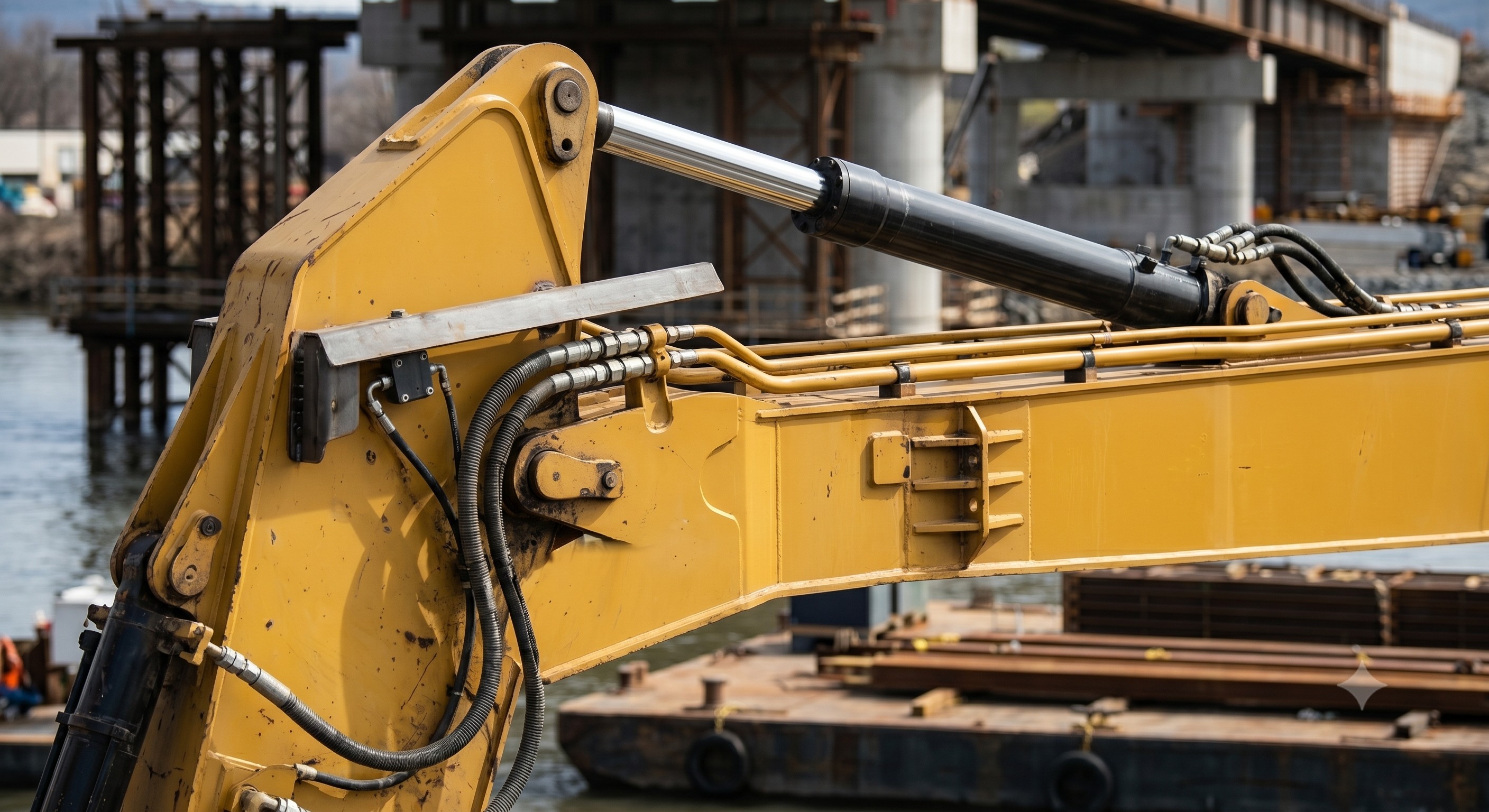
Superior hydraulic systems are paramount for controlling the massive forces at play. The main system can achieve maximum pressures up to 5,076 psi (35,000 kPa), enabling precise bucket control and powerful excavation even at full extension . To counteract the immense forces, these excavators feature heavy-duty boom and arm assemblies with reinforced weld points and oversized pins. This structural reinforcement, complemented by optimized counterweight designs and wide undercarriage configurations, ensures machine stability and operator safety, which are critical when operating over water or on steep slopes .
Technical Specifications: A Benchmark for Performance
To appreciate the engineering behind these machines, a comparison of key technical parameters is essential. Below is a specification benchmark for a leading model in this class.
| Key Parameter | Technical Specification (Cat 352F LRE) |
|---|---|
| Engine Model | Cat® C13 |
| Net Power | 408 hp (304 kW) |
| Operating Weight | 130,955 lb (59,400 kg) |
| Maximum Reach | Up to 100+ feet (30+ meters) |
| Maximum Main Hydraulic Pressure | 5,076 psi (35,000 kPa) |
| Main System Maximum Flow | 203 gal/min (770 L/min) |
| Emissions Standard | EU Stage IV / EPA Tier 4 Final |
| Cab Certification | ROPS / FOPS Level 1 |
Comparative Advantage: ROI, Fuel Efficiency, and Total Cost of Ownership (TCO)
Investing in a long reach excavator offers a compelling value proposition, driven by significant efficiency gains and a lower Total Cost of Ownership (TCO) over its lifecycle.
The primary advantage is the substantial reduction in machine repositioning. By covering a larger working radius from a single setup, these machines streamline workflows, increase hourly productivity, and reduce the need for auxiliary equipment like pontoons or cranes, leading to direct cost savings . Furthermore, the advanced powertrains deliver remarkable fuel efficiency. For example, the SP (Speed Priority) mode on Link-Belt's long front excavators provides a fuel consumption improvement of 3% to 4% compared to previous models . Extended service intervals, such as 500-hour fuel filter intervals and low DEF consumption rates of only 2-3%, minimize downtime and routine maintenance costs, maximizing the machine's return on investment .
Heavy-Duty Application Scenarios in Bridge Construction
The versatility of long reach excavators extends to virtually every phase of bridge construction and related infrastructure projects.
- Foundation and Piling: Installing deep piles (up to 30 feet) and large expansion joints is accomplished with ease, ensuring the stability of the bridge structure .
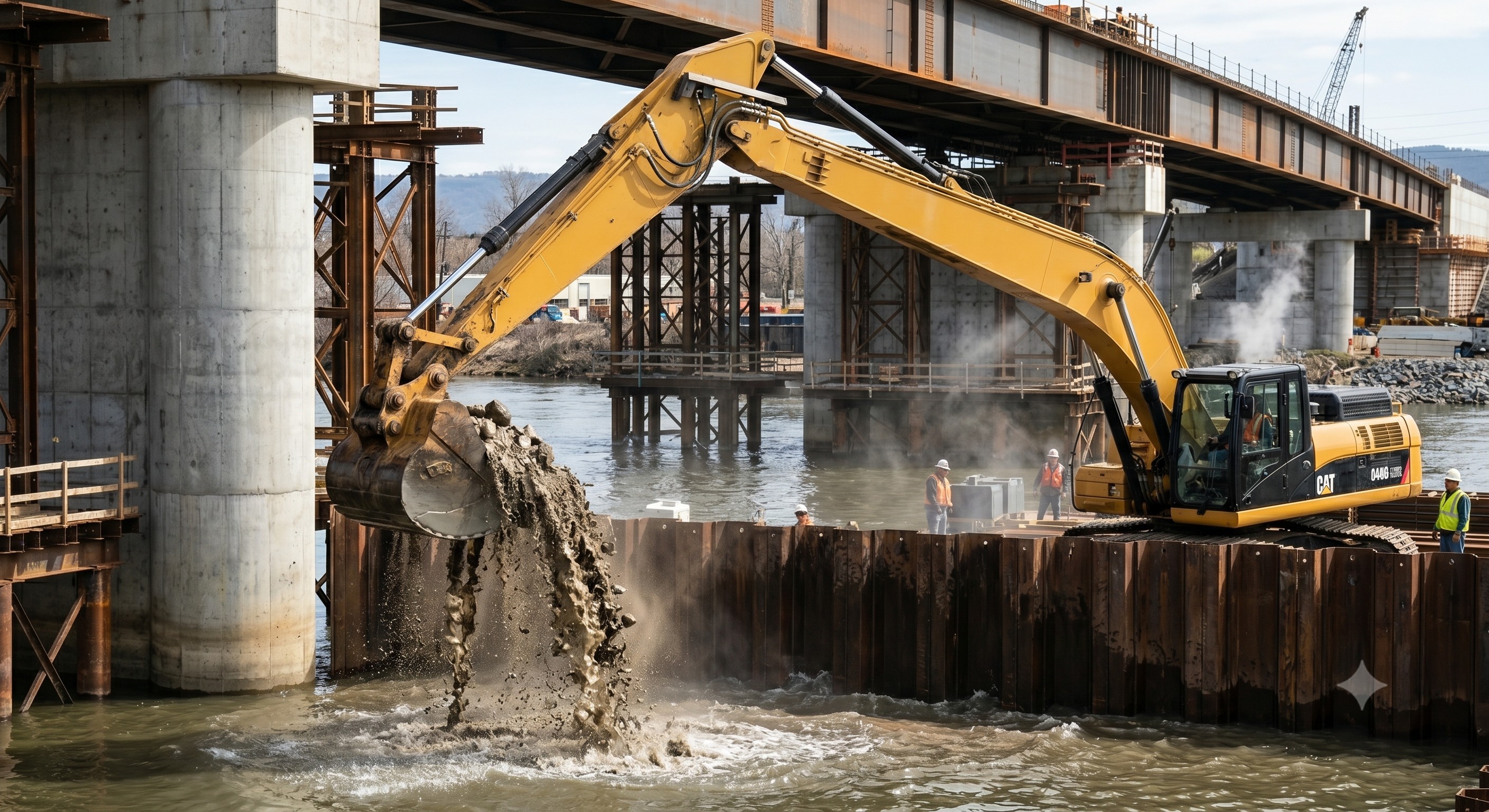
- Dredging and Waterway Maintenance: These machines are ideal for dredging rivers and canals, removing silt, and maintaining navigable waterways beneath the bridge structure without the machine needing to enter the water .
- Slope and Embankment Work: They provide a safe and precise solution for shaping and reinforcing slopes, riverbanks, and embankments along the bridge's approach .
- Demolition and Remediation: For bridge demolition or environmental remediation projects, the extended reach allows operations to be conducted from a safe distance, away from unstable structures or hazardous materials .
Conclusion: The Future of Precision Infrastructure
The long reach excavator has evolved from a niche product to a cornerstone of modern heavy civil engineering. Its ability to deliver extended reach, superior stability, and high efficiency directly translates to safer, more productive, and cost-effective bridge construction projects. As infrastructure demands grow increasingly complex, the specialized capabilities of these machines will continue to be a key driver of industrial productivity and project success.